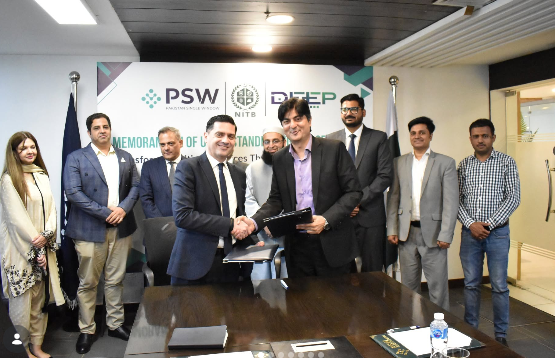
Pakistan’s structural drive toward digital sovereignty requires a calibrated integration of administrative silos to achieve maximum systemic efficiency. Recently, the Pakistan Single Window (PSW) and the National Information Technology Board (NITB) signed a Memorandum of Understanding (MoU) to revolutionize digital public services. This strategic partnership, functioning under the Digital Economy Enhancement Project (DEEP), aims to unify government-to-citizen (G2C) workflows into a seamless, high-performance ecosystem.
A Calibrated Framework for Digital Public Services
The signing ceremony in Islamabad serves as a catalyst for a unified digital public infrastructure. NITB, acting as the primary technology partner for the DEEP initiative, will collaborate with PSW to identify and digitize essential services. Consequently, this alignment ensures that the technical expertise of both organizations streamlines the delivery of accessible services to the general public.
Key technical objectives of this collaboration include:
- Workflow Optimization: Removing redundant administrative layers to increase speed.
- API Enablement: Facilitating secure and real-time data exchange between government departments.
- Interoperability: Ensuring different digital platforms communicate without friction.
- User-Centric Design: Prioritizing the citizen experience in every digital interface.
The Translation: Breaking Down Digital Integration
In technical terms, the DEEP initiative (funded by the World Bank) acts as the baseline for Pakistan’s digital economy. The “silos” mentioned by PSW CEO Syed Aftab Haider represent isolated databases that do not talk to each other. By implementing digital public services through a unified API-driven architecture, the government eliminates these barriers. Specifically, this means a single login or platform can eventually handle diverse requirements, from trade permits to personal identity updates, without the user needing to visit multiple offices.
The Socio-Economic Impact: Precision Governance
How does this structural shift change daily life for the average Pakistani citizen? Furthermore, how does it influence the economic landscape? The impact is three-fold:
- Time Efficiency: Students and professionals will no longer endure manual queues for basic documentation, as services become available with a single click.
- Economic Growth: By digitizing trade-related G2C services, the partnership reduces the cost of doing business, acting as a catalyst for small-to-medium enterprises.
- Transparency: Automated workflows minimize human intervention, which naturally reduces the risk of corruption and increases public trust in government institutions.
The Forward Path: A Momentum Shift
This development represents a significant Momentum Shift for Pakistan’s digital frontier. While previous efforts were often fragmented, the DEEP project provides the necessary financial and technical framework to scale these solutions nationally. The transition from manual to automated digital public services is no longer just a stabilization move; it is a precision-engineered leap toward a competitive digital economy. Maintaining this trajectory will require consistent policy support and continuous infrastructure upgrades to ensure long-term sustainability.