

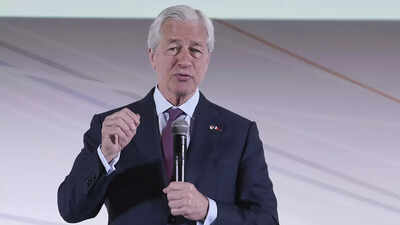
The global architecture of industrial efficiency is facing a structural recalibration as computational intelligence transcends basic automation. Jamie Dimon, CEO of JPMorgan Chase, recently identified this AI technological shift as a primary catalyst that could cure specific cancers and fundamentally shorten the standard workweek in developed economies. In his latest annual shareholder letter, Dimon characterized artificial intelligence as a transformational force comparable to the invention of the steam engine or electricity.
Calibrating the AI Technological Shift in Healthcare
Dimon’s projections emphasize that AI is not merely a speculative bubble but a precision tool for biological advancement. Specifically, he noted that AI could enable the creation of new materials and the development of targeted medical treatments. Consequently, these advancements will allow humans to live longer, safer lives by identifying patterns in oncological data that were previously invisible to researchers. However, Dimon clarified that while AI will “cure some cancers,” it is a long-term strategic objective rather than an immediate medical announcement.
Structural Changes to Labor and Productivity
The adoption of this AI technological shift will likely outpace previous industrial revolutions. JPMorgan anticipates that AI will influence virtually every function and application within the financial sector. Furthermore, Dimon predicted a significant increase in baseline productivity that could eventually reduce the human workweek to approximately three and a half days within the next 30 years. While this transition promises efficiency, it also introduces systemic risks that require careful management.
- Job Transformation: AI will eliminate certain manual roles while creating new technical positions in cybersecurity.
- Workforce Redeployment: JPMorgan plans to support affected employees through internal retraining and structural shifts.
- Emerging Risks: The rise of deepfakes and misinformation remains a critical baseline threat to institutional security.
The “Situation Room” Analysis
The Translation (Clear Context)
Dimon’s perspective represents a pivot from “AI as a feature” to “AI as the infrastructure.” When he mentions curing “some cancers,” he is referring to the strategic use of machine learning to accelerate drug discovery and genomic sequencing. The logic is simple: by processing trillions of data points, AI identifies molecular solutions at a speed humans cannot match. This is a move toward high-precision medicine where technology handles the complexity, allowing doctors to focus on the application.
The Socio-Economic Impact
For the Pakistani citizen, this development signals a dual-layered impact. Locally, the adoption of AI-driven healthcare could democratize diagnostic accuracy in rural areas where specialist oncologists are scarce. Economically, the predicted 3.5-day workweek in developed nations will redefine the global “Gig Economy.” As international standards shift, Pakistani professionals in tech and finance must recalibrate their skills to remain competitive in an AI-augmented global labor market.
The Forward Path (Opinion)
This development represents a Momentum Shift. Dimon is signaling that the era of AI experimentation is over; the era of AI implementation has begun. For a developing nation like Pakistan, this is a catalyst to prioritize STEM education and digital infrastructure. We must view AI not as a threat to employment, but as a structural baseline for national advancement. Failing to integrate these tools now will result in a widening productivity gap that no amount of traditional labor can bridge.








