
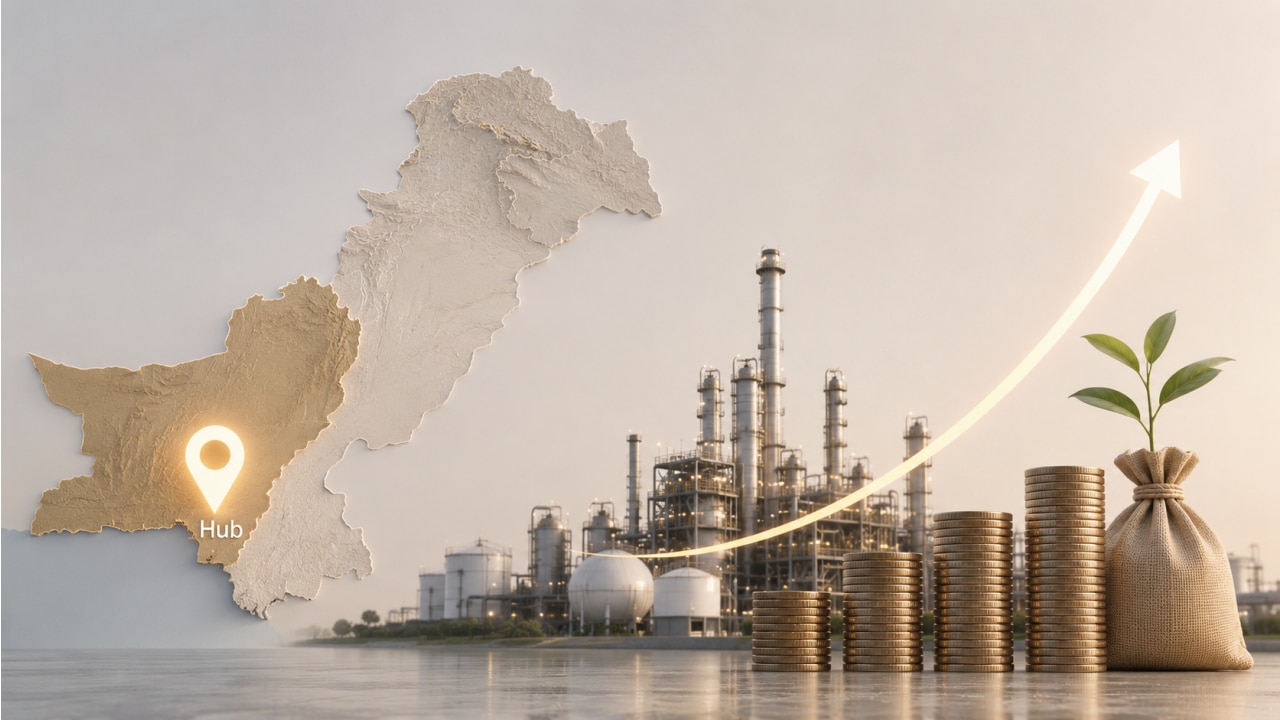
Pakistan’s energy architecture is undergoing a calibrated transition as SPEC Refinery Pvt Ltd initiates a $4.5 billion Greenfield Refinery Project in Hub, Balochistan. This facility will serve as the nation’s first deep conversion plant, strategically designed to slash import dependency and stabilize national energy security. By utilizing advanced processing technology, the project aims to maximize high-value petroleum production while establishing a baseline for industrial self-reliance.
The Tactical Infrastructure of the Greenfield Refinery Project
Federal Minister for Commerce Jam Kamal Khan recently met with a delegation from SPEC Refinery, led by Chairman Zafar Sheikh, to finalize the project’s strategic trajectory. The proposed refinery introduces a modular and flexible processing capability, allowing Pakistan to refine a diverse range of international crude oil grades. Consequently, this operational versatility will significantly enhance the efficiency of the domestic energy supply chain.
Preliminary groundwork has already commenced in Hub, signaling a rapid mobilization phase. The delegation is currently seeking the early issuance of necessary approvals from the Federal Board of Revenue to maintain this momentum. Moreover, the project aligns with the national Greenfield Refinery Policy, providing a structural framework for long-term foreign and domestic investment.

The Translation: Understanding Deep Conversion
To understand the technical logic, one must look at the “Deep Conversion” process. Traditional refineries often leave behind heavy, low-value fuel oils. In contrast, this new facility employs precision hydro-cracking and coking technologies to “crack” these heavy molecules into high-value products like Euro-V petrol and diesel. This shift ensures that every barrel of crude oil yields maximum economic utility, reducing the volume of waste and maximizing the output of essential fuels.
The Socio-Economic Impact: Empowering the Citizen
The establishment of this refinery will act as a precision catalyst for regional prosperity. Specifically, the project will generate approximately 2,000 direct and indirect jobs in Hub and surrounding areas. For the average Pakistani household, this transition means more than just employment; it represents a move toward energy price stabilization by reducing the costs associated with importing finished petroleum products.
- Workforce Development: Specialized training in petrochemical engineering for local youth.
- Industrial Feedstock: Future downstream facilities will produce raw materials for local manufacturers.
- Infrastructure Growth: Expanded trade corridors and connectivity for Balochistan’s industrial zones.
The Forward Path: Strategic Momentum
The $4.5 billion Greenfield Refinery Project represents a definitive Momentum Shift for Pakistan. This is not merely a stabilization move; it is an architectural upgrade to our industrial core. By integrating downstream petrochemical capabilities, Pakistan can pivot from a consumer of refined goods to a producer of high-value industrial feedstocks. If the government maintains its commitment to policy facilitation, this project will secure a more resilient and self-sufficient economic future for the next generation.








