
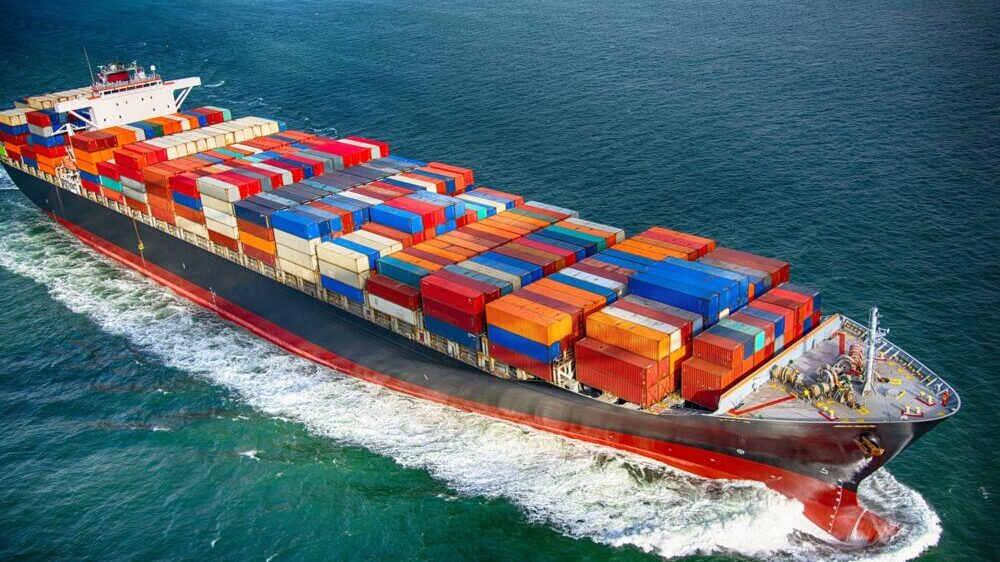
A nation’s economic stability is calibrated by the precision of its trade balance. The Pakistan trade deficit surged to a 46-month high of $4 billion in April 2026, marking a significant structural challenge for the country’s external position. Consequently, this widening gap reflects a scenario where imports are accelerating far beyond the growth capacity of national exports. The Pakistan Bureau of Statistics confirmed these figures on Monday, signaling a 44% increase from the previous quarter.
Analyzing the Fiscal Trajectory of FY26
During the first ten months of the current fiscal year (FY26), the cumulative deficit rose by 20% to reach a staggering $32 billion. Total imports between July and April climbed to $57.2 billion, while exports faced a contraction of 6%, settling at $25.2 billion. This disparity forces the state to rely heavily on external financing to sustain its foreign exchange reserves. Furthermore, the April data shows that while exports grew by 14% year-on-year, the 7.5% climb in imports—reaching $6.55 billion—completely overshadowed these gains.

The Role of Services and Sectoral Shifts
In contrast to the goods sector, the services trade provided a marginal buffer for the economy. The services trade deficit narrowed by 6.7% to $2.15 billion during the July-March period. Specifically, March saw a remarkable 81% reduction in the monthly services deficit, which dropped to $22.9 million. However, these improvements remain secondary to the primary Pakistan trade deficit occurring in the manufacturing and commodities sectors. Strategic precision in boosting high-value services remains a catalyst for potential stabilization.
The Translation: What This Data Actually Means
While the terminology of “trade gaps” may seem abstract, the logic is straightforward: Pakistan is consuming more value from the global market than it is producing for it. This structural imbalance creates a “debt treadmill” where the country must borrow foreign currency just to pay for essential imports like fuel and machinery. The “Next Gen” clarity here is that we are witnessing a system efficiency failure where our industrial output is not scaling at the same velocity as our consumption needs.
The Socio-Economic Impact on Pakistani Citizens
For the average Pakistani household, a widening Pakistan trade deficit translates to direct pressure on the Rupee. As the demand for dollars increases to pay for imports, the local currency weakens, which subsequently drives up the cost of imported inflation. Consequently, citizens will likely see higher prices for electricity, fuel, and imported raw materials. For professionals and students, this economic strain limits the state’s ability to invest in digital infrastructure and educational subsidies.
The Forward Path: Innovator’s Perspective
This development represents a Stabilization Move that has encountered severe friction. It is not yet a momentum shift toward progress. To correct this baseline, Pakistan must pivot from a consumption-led economy to an export-oriented technological hub. We require a calibrated strategy that incentivizes local manufacturing and reduces our reliance on external financing. Without a structural shift in our export velocity, we remain vulnerable to global market volatility.
- Focus Area: High-tech manufacturing to replace low-value exports.
- Strategic Goal: Reducing the import-to-export ratio to 1.5:1 by FY28.
- Catalyst: Digitization of the services sector to boost offshore revenue.








