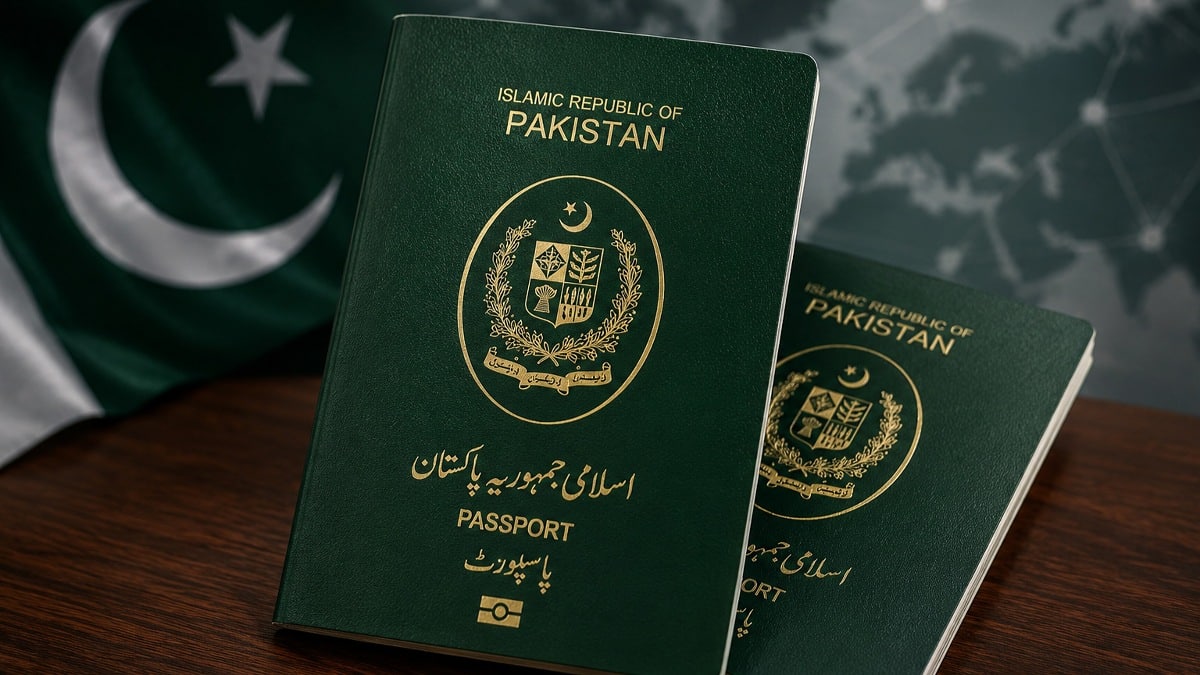
The trajectory of a nation’s digital identity depends entirely on the precision of its deployment protocols. Recently, the Embassy of Pakistan in Abu Dhabi announced a strategic postponement regarding the launch of Pakistan e-passport services for citizens residing in the United Arab Emirates. Originally scheduled for July 20, 2026, the embassy has now recalibrated the timeline, delaying the service until further notice to ensure system integrity.
Technical Calibrations Affecting Pakistan E-Passport Services
The embassy issued an official notice on July 19, citing unavoidable technical and administrative reasons for the sudden shift. Consequently, the mission will not process applications under the e-passport category during this interim period. This decision acts as a necessary baseline check to ensure that the eventual rollout meets global biometric standards without compromising user data.
Furthermore, the embassy has not yet provided a revised launch date. Officials are currently focused on resolving the structural bottlenecks that prevented the initial July activation. While the delay may seem like a setback, it ensures that the final digital infrastructure is both secure and efficient for the thousands of overseas Pakistanis who rely on these vital documents.
Continuity of Machine-Readable Passport (MRP) Systems
In contrast to the pause in digital upgrades, existing services remain fully functional. The embassy clarified that this delay does not impact the current Machine-Readable Passport (MRP) framework. Pakistani citizens in the UAE can continue to apply for new MRPs or renew their existing documents using the standard procedures already in place.
These legacy systems will remain available without interruption at both the Embassy in Abu Dhabi and the Consulate General in Dubai. Consequently, residents with expiring documents should proceed with their renewals through the established MRP channels to avoid travel complications. The embassy expressed gratitude to the community for their cooperation during this transition phase.
The Situation Room Analysis
The Translation: Technical Clarity
In “Next Gen” terms, an e-passport is more than a document; it is a catalyst for seamless international mobility. Unlike the current MRP, the e-passport contains an embedded electronic chip that stores biometric data. The “technical reasons” cited likely involve the Pakistan e-passport services integration with international aviation databases and local biometric hardware synchronization. Delaying the launch prevents a systemic failure that could result in rejected applications or border control errors.
The Socio-Economic Impact
For the average Pakistani professional or household in the UAE, this delay represents a stabilization move rather than a crisis. While the wait for advanced biometric features continues, the uninterrupted availability of MRPs ensures that employment visas and residency permits are not jeopardized. However, the delay might slightly hinder the “Ease of Travel” for frequent flyers who were anticipating the faster automated gates enabled by e-passport technology.
The Forward Path: Strategic Opinion
We categorize this development as a Stabilization Move. While a “Momentum Shift” toward digital transformation is the ultimate goal, launching a flawed biometric system would be counterproductive to National Advancement. The embassy’s decision to prioritize administrative precision over an arbitrary deadline reflects a disciplined approach to governance. We expect a revised launch once the baseline infrastructure is calibrated for high-volume processing.