
The structural integrity of Pakistan’s textile sector depends on a calibrated seed portfolio. Consequently, Pakistan has strategically approved 14 high-quality Pakistan cotton varieties between 2021 and 2025 to fortify the national textile value chain. These newly developed seeds feature improved fibre quality, higher ginning outturn (GOT), and advanced heat tolerance to combat climate volatility.
Advancing the Textile Frontier with Pakistan Cotton Varieties
Precision engineering in agriculture is the primary catalyst for industrial stability. Specifically, two major research institutions led this development: the Central Cotton Research Institute (CCRI) in Multan and CCRI Sakrand in Sindh. CCRI Multan contributed 11 advanced varieties, while CCRI Sakrand added three specialized seeds to the national registry.
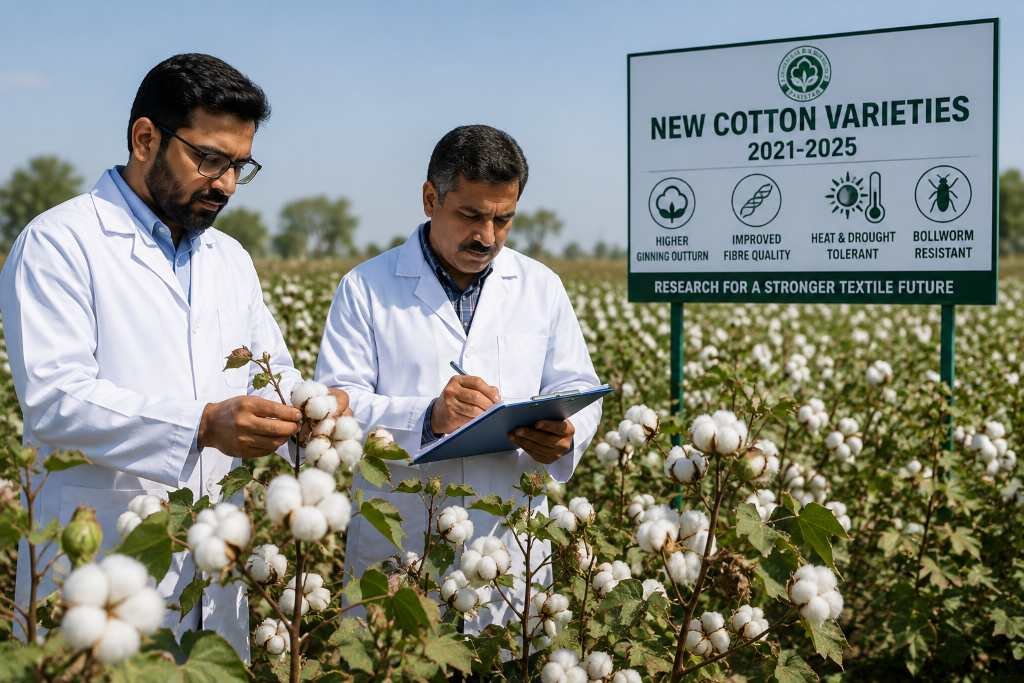
Furthermore, these Pakistan cotton varieties were selected for their resistance to bollworms and drought. Varieties such as Bt CIM-663 and Bt CIM-775 represent a significant shift toward biotech-driven agriculture. In contrast to older seeds, these new iterations maintain a Micronaire value between 3.5 and 4.9, which is the ideal range for high-performance spinning mills.
Technical Precision and Yield Metrics
Spinners and textile manufacturers prioritize fibre strength and ginning outturn (GOT) above all other metrics. The approved varieties recorded an impressive GOT ranging from 38.2% to 42.3%. For example, CIM-775 achieved the highest GOT at 42.3%, marking it as an excellent asset for the ginning industry.
- Fibre Strength: Varieties like CIM-343 recorded a strength of 33.5, classified as excellent.
- Staple Length: Cyto-226 reached a peak length of 29.6mm, essential for fine yarn production.
- Climate Resilience: Bt CIM-663 and Bt CIM-678 exhibit high heat tolerance for harsh climates.

The Situation Room Analysis
The Translation (Clear Context)
Cotton quality isn’t just about how much grows; it’s about the “processability” of the fibre. By optimizing the Micronaire (fineness) and GOT (lint percentage), Pakistan is reducing waste in the ginning and spinning stages. These Pakistan cotton varieties effectively bridge the gap between raw agricultural output and the high-precision requirements of modern textile machinery.
The Socio-Economic Impact
This development directly stabilizes the income of Pakistani households. Higher GOT means farmers receive more value for their harvest, while drought-resistant seeds reduce the risk of total crop failure. For the urban professional, this ensures a steady supply of raw materials for the textile industry, which remains the largest employer in the country’s manufacturing sector.
The Forward Path (Opinion)
We categorize this development as a Momentum Shift. Moving from 2021 to 2025 with a focus on climate-resilient and pest-resistant biotechnology shows a move toward proactive agricultural policy. However, the true success will depend on the effective distribution of these seeds to small-scale farmers across Punjab and Sindh to ensure systemic adoption.








