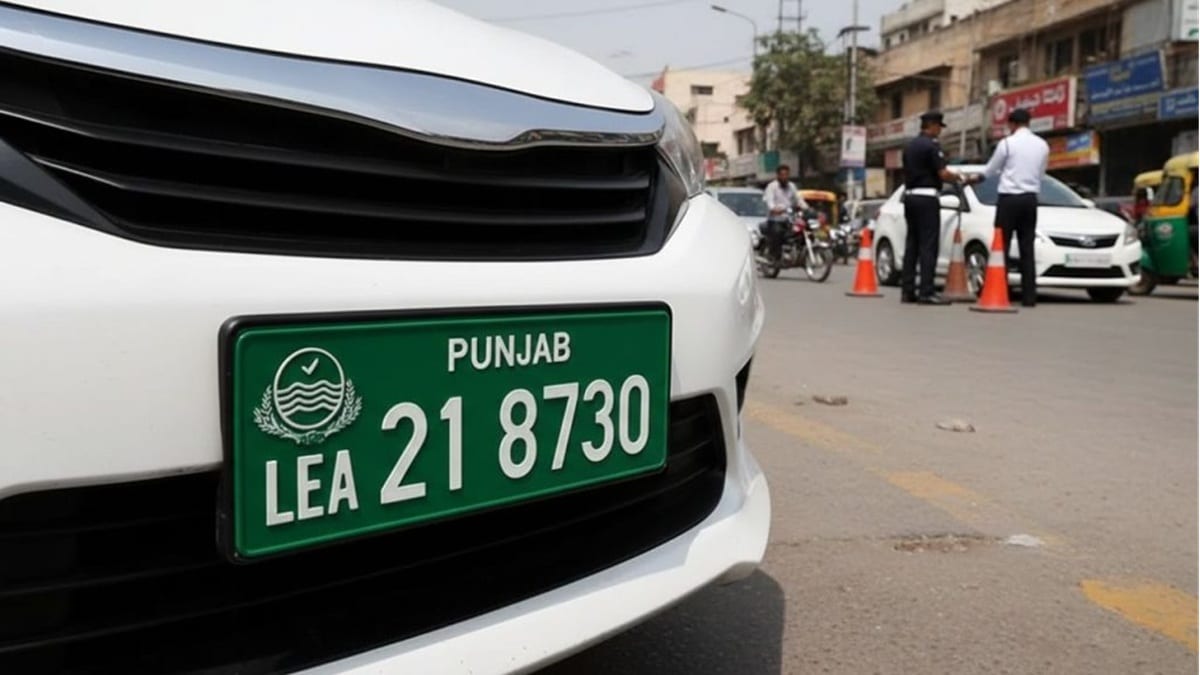
The integrity of Pakistan’s urban mobility systems depends on the precision of vehicle identification and the rigorous enforcement of structural oversight. Recently, Lahore police intercepted a private vehicle operating as a commercial taxi while displaying a fake government plate in the Gulberg sector. Consequently, authorities identified the suspect as Roheel, who calibrated this deception to evade regulatory detection and bypass standard law enforcement protocols.
The Logistics of Identification Fraud
The suspect reportedly fitted his private car with an illegal green official number plate to mask the vehicle’s actual identity. This strategic deception allowed the vehicle to operate under the guise of state authority while functioning within an online taxi network. During the operation, DSP Traffic Muhammad Umar confirmed that the Gulberg Police Station registered a formal case against the individual for these fraudulent activities.

Furthermore, the City Traffic Police Officer of Lahore emphasized that authorities are now implementing calibrated measures to prevent such identity fraud. Specifically, the government is mandating the installation of panic buttons in all online taxi services and rickshaws. This technological integration aims to provide a baseline for public safety and ensures that citizens can trigger immediate alerts during security breaches.
The Situation Room: Security Calibration
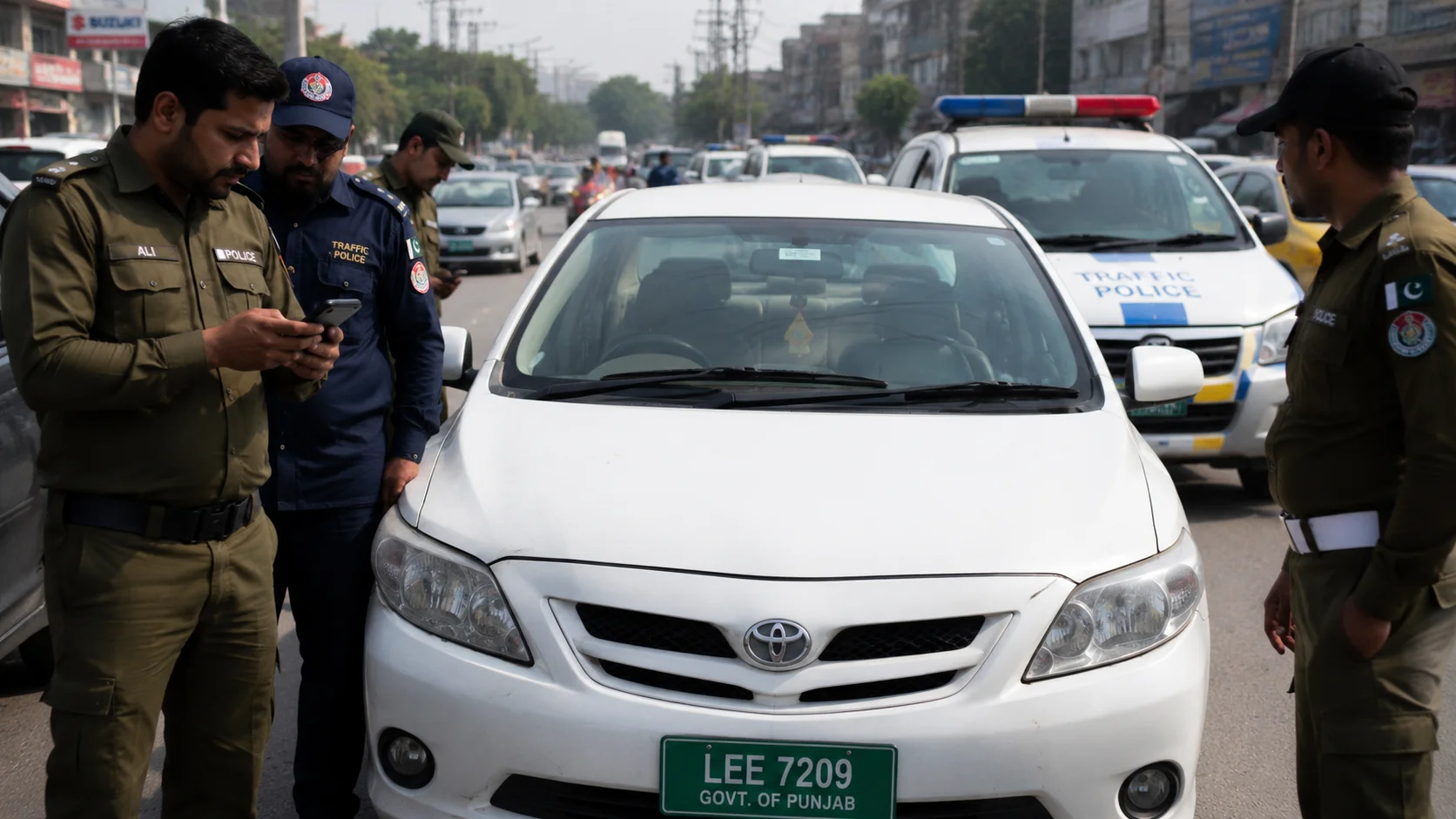
The Translation: System Integrity Explained
In Pakistan, a green number plate signifies a state-owned vehicle, which often receives expedited passage through security checkpoints. When a private citizen uses a fake government plate, they are not just breaking traffic laws; they are hacking the “trust protocol” of the state. This arrest signals that the police are moving toward a zero-tolerance baseline for any manipulation of official credentials.
The Socio-Economic Impact: Protecting the Public
This development directly affects the safety of students, professionals, and families who rely on digital ride-hailing apps daily. By using a fraudulent identity, a driver removes the structural accountability required for public transport. However, the introduction of panic buttons across Lahore’s taxi fleet provides a catalyst for improved commuter confidence. This change ensures that every trip is backed by a digital safety net, reducing the risk for urban households.
The Forward Path: A Momentum Shift
This incident represents a Momentum Shift in how Lahore manages its digital frontier. The transition from manual plate checks to integrated safety technology (like panic buttons) shows a move toward system efficiency. While the arrest addresses the immediate threat, the long-term solution lies in the precision of the new identification protocols being established by the City Traffic Police.