
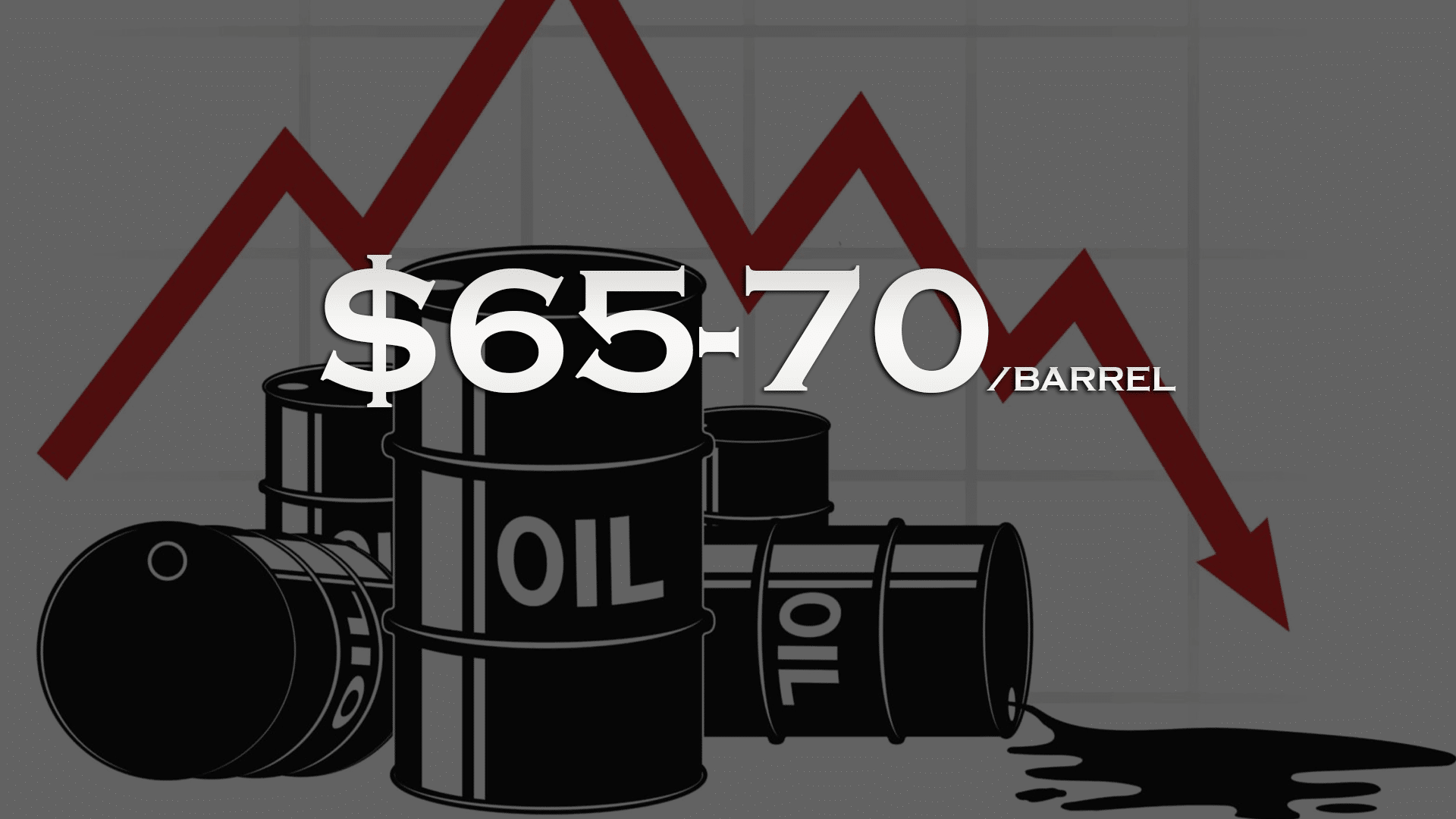
Global energy markets are witnessing a structural recalibration as global oil prices slipped toward the $65 threshold on Thursday. This movement follows a decisive reduction in geopolitical friction within the Gulf region, where supply disruptions began to fade following the Iran-US ceasefire. Consequently, both Brent and WTI benchmarks touched their lowest levels since late February, reflecting a calibrated return to market stability.
At the time of reporting, Brent crude dropped $1, or 1.33 percent, settling at $72.7 per barrel. Similarly, US West Texas Intermediate (WTI) crude fell $0.64 to $69.7 per barrel. Specifically, crude oil extracted from UAE-operated reserves plummeted nearly 5 percent within 24 hours, hitting a $66 per barrel baseline. Furthermore, this decline follows a sharp Wednesday sell-off where both benchmarks lost nearly $3 as supply anxieties evaporated.
The Translation: Decoding the Gulf’s New Baseline
In technical terms, the market is moving from “scarcity pricing” to “equilibrium pricing.” The Strait of Hormuz, a strategic maritime artery, has nearly returned to its pre-war operational capacity. Terminal data indicates that 18-20 million barrels now pass through the waterway daily. While full normalization requires several weeks, the Pakistan and Qatar-led mediation efforts have already finalized the first tier of technical-level talks. This diplomatic architecture serves as the primary catalyst for the current price correction.

The Socio-Economic Impact: Relief for the National Account
This structural shift in global oil prices directly influences the daily life of every Pakistani citizen. As a net energy importer, Pakistan stands to benefit from a reduced import bill, which strengthens the national currency. For households and professionals, sustained lower crude prices typically translate into reduced transportation costs and a stabilization of consumer goods prices. In rural areas, lower fuel costs enhance agricultural efficiency by reducing the operational expense of tubewells and machinery.
The Forward Path: A Stabilization Move
Our analysis categorizes this development as a Stabilization Move. While the price drop is significant, it represents a return to a sustainable baseline rather than a permanent downward trend. The 60-day negotiation process launched by the ceasefire provides a critical window for permanent peace. If the Pakistan/Qatar mediation maintains its current momentum, we expect a calibrated energy market that supports long-term industrial growth rather than volatile speculation.








