
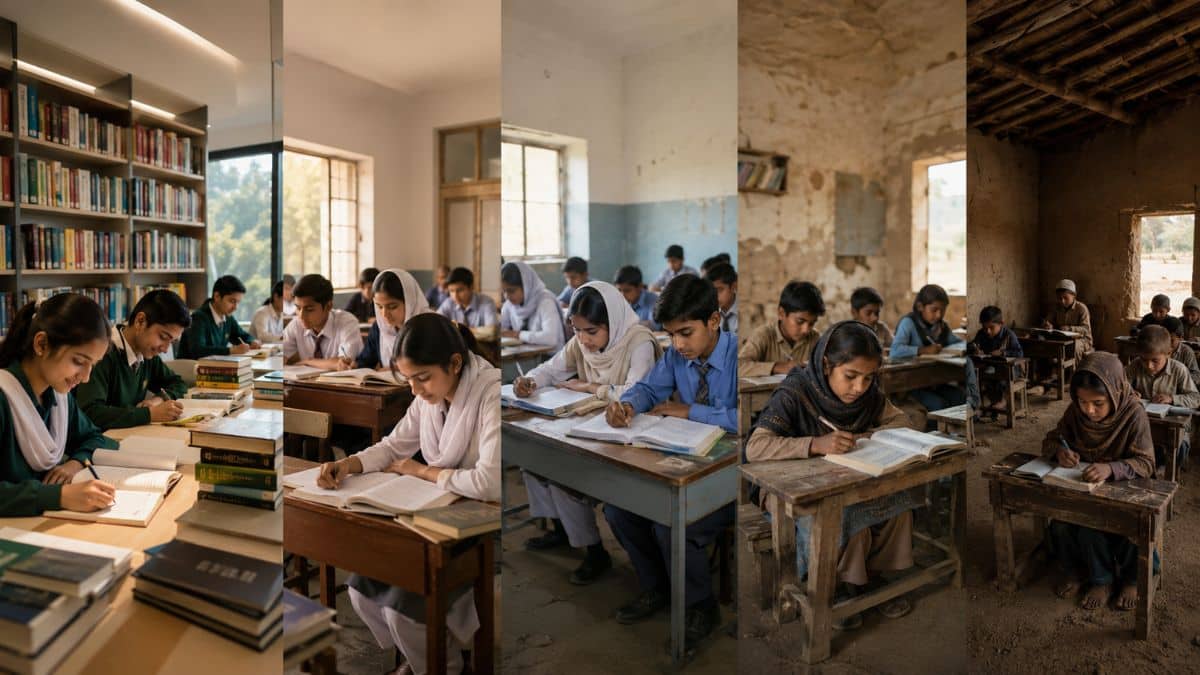
National advancement requires a precise calibration of human capital. The Pakistan Economic Survey 2025-26, released on June 11, 2026, provides a vital audit of Pakistan literacy rates, revealing structural variances that will define our economic trajectory for the next decade. Based on the 2025 Population and Housing Census, the data confirms that education outcomes remain unevenly distributed across the federation.
Analyzing the Regional Divergence in Pakistan Literacy Rates
The survey highlights a significant performance gap between provinces. Specifically, Punjab recorded the highest literacy rate at 68%. In contrast, both Sindh and Khyber Pakhtunkhwa (KPK) reached a baseline of 58.0%. Balochistan, however, recorded the lowest literacy rate at 49.0%, signifying a 19% disparity between the highest and lowest performing regions. Consequently, these figures underscore the urgent necessity for calibrated, region-specific education policies.
- Punjab: 68% (National Leader)
- Sindh: 58% (Mid-tier Stability)
- KPK: 58% (Mid-tier Stability)
- Balochistan: 49% (Critical Intervention Zone)
The Situation Room: Analysis of the Data
The Translation (Clear Context): This data serves as a report card for provincial administration efficiency. While Punjab has successfully leveraged urban infrastructure to boost learning, Balochistan’s 49% rate is a byproduct of systemic hurdles. These include vast distances between schools, a deficit of qualified instructors in remote areas, and a lack of baseline infrastructure. Effectively, the “distance to school” metric remains the primary inhibitor of literacy in the southwest.

The Socio-Economic Impact: These Pakistan literacy rates directly influence the quality of the national workforce. A household in Balochistan faces a significantly higher probability of intergenerational poverty compared to one in Punjab due to this educational deficit. Furthermore, the 2026-27 Budget must address these learning gaps to prevent a permanent economic “underclass” from forming in regions with weaker infrastructure.
The “Forward Path” (Opinion): This development represents a Stabilization Move rather than a momentum shift. While the figures provide clarity, they also confirm that we are managing a crisis of inequality rather than solving it. For Pakistan to achieve true structural progress, the upcoming budget must pivot from generic funding to “Precision Education” targeting Balochistan’s specific logistical barriers. Without localized catalysts, the provincial divide will only widen.








