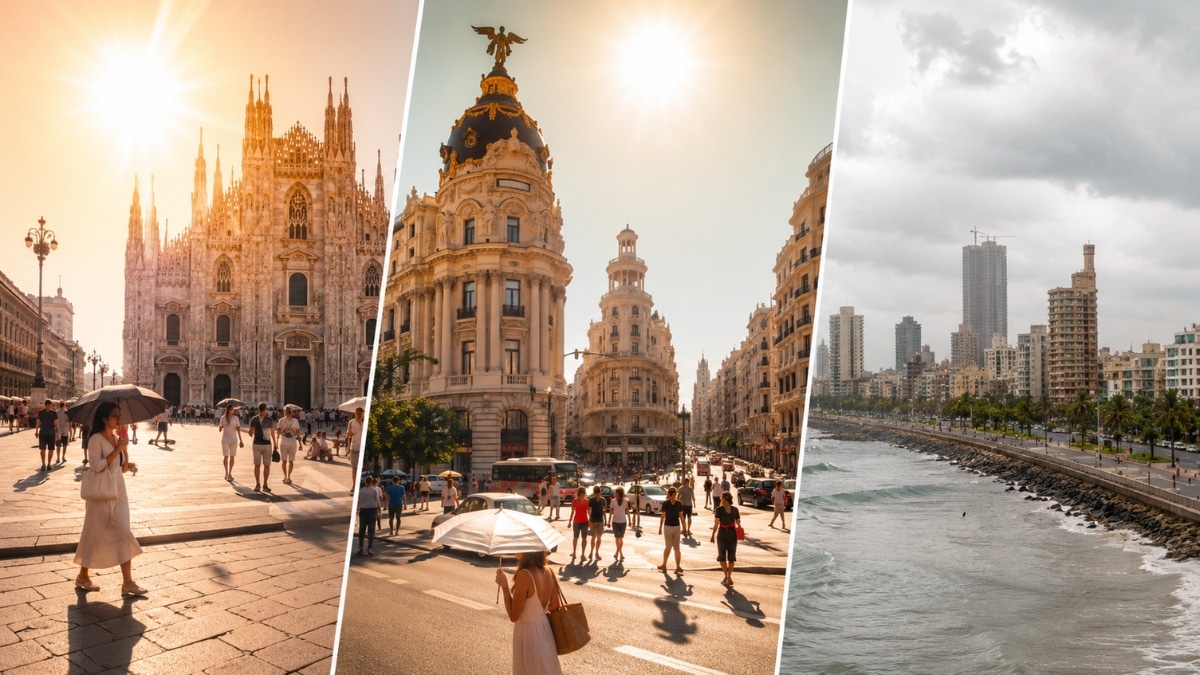
The current European heatwave has triggered a calibrated shift in global weather metrics, with Milan and Madrid recording temperatures higher than Karachi. While Karachi maintained a steady 30°C under cloud cover, Milan and Madrid surged to 34°C, signaling a structural anomaly in northern hemisphere climate stability. This precision comparison highlights the volatility of early summer thermal spikes across the European continent and necessitates a strategic review of urban heat management.
Understanding the Structural Drivers of the European Heatwave
Meteorologists recently recorded Milan at a baseline of 34°C, with calibrated projections targeting a maximum peak of 36°C and a 25°C minimum. Simultaneously, Madrid maintained a daily thermal range between 19°C and 34°C. In contrast, Karachi—typically the benchmark for high-intensity summer heat—recorded a lower actual temperature despite its usual 34°C forecast. Consequently, these figures indicate that traditional regional climate expectations are undergoing a significant transition.

However, raw temperature data alone does not dictate the physical reality of thermal discomfort. Factors such as humidity levels, wind velocity, and direct solar radiation significantly alter the “Real Feel” of these conditions. While Karachi benefits from periodic cloud cover, the European urban centers face high-intensity sunlight that amplifies the perceived heat for residents and infrastructure alike.
The Translation: Breaking Down the Metrics
In technical terms, we are witnessing a “thermal inversion” of expectations. While we often associate South Asia with extreme heat, the structural geography of Europe currently traps high-pressure systems, creating a “heat dome” effect. This means that while 34°C in Karachi is a standard seasonal baseline, 34°C in Milan represents a catastrophic deviation from the historical mean, straining systems that were not designed for such precision extremes.
The Socio-Economic Impact: What This Means for Pakistan
This global temperature shift demands a strategic rethink of Pakistan’s national infrastructure. As the European heatwave demonstrates the vulnerability of even developed nations, Pakistani urban planners must prioritize climate-resilient architecture. For the average citizen, this development suggests that global cooling patterns are becoming increasingly erratic. We must accelerate the adoption of precision cooling technologies and sustainable energy grids to protect students, professionals, and households from future thermal shocks.
The Forward Path: Architecting a Response
This development represents a Momentum Shift in global climate dynamics. The fact that European capitals are outpacing traditional South Asian heat hubs indicates a permanent alteration in atmospheric systems. We must catalyze our green transition and upgrade our baseline meteorological monitoring to mitigate future structural shocks. Status quo maintenance is no longer a viable strategy; we must build for the environment of tomorrow, today.