

Strategic investment in healthcare infrastructure serves as the baseline for long-term national stability. Currently, the midwifery crisis Pakistan faces threatens the fundamental health of our future generations, as the United Nations Population Fund (UNFPA) reports a staggering deficit of 82,000 skilled professionals. To catalyze systemic improvement, we must recalibrate our health systems to integrate midwives as essential frontline architects of maternal survival. Dr. Luay Shabaneh, UNFPA Representative, recently emphasized that expanding these services nationwide is no longer optional but a critical requirement for national survival.
Structural Deficits in Maternal Care
Data-driven assessments reveal a precarious landscape for maternal health within the region. Consequently, Pakistan accounts for approximately 4% of global maternal deaths, a metric that highlights the urgency of structural reform. The current density of only 2.2 midwives per 10,000 people—roughly half the global average—creates a dangerous bottleneck in emergency response. Furthermore, nearly 100 women die per 100,000 live births due to preventable causes that a calibrated workforce could easily mitigate.

Systemic Reforms Required to Solve the Midwifery Crisis Pakistan
To bridge the existing gaps, the UNFPA has proposed a series of high-precision interventions aimed at the Government of Pakistan. These strategic moves include:
- Scaling the B.S. Midwifery Program: Upgrading educational standards to meet global precision benchmarks.
- Workforce Optimization: Improving training standards and ensuring strategic deployment in rural sectors.
- Legal and Financial Calibration: Establishing fair pay structures, legal protection, and clear career pathways.
- Systemic Integration: Fully embedding midwives into the primary healthcare hierarchy.
The Economic Logic of Midwifery Investment
Beyond the immediate health outcomes, investing in midwives represents a strategic economic priority. Properly trained midwives reduce the baseline costs of emergency obstetric care and ease the structural pressure on tertiary hospitals. By preventing complications during pregnancy, these professionals improve long-term productivity for households. However, many practitioners still lack adequate equipment and safe working conditions, which hampers their potential as economic catalysts.
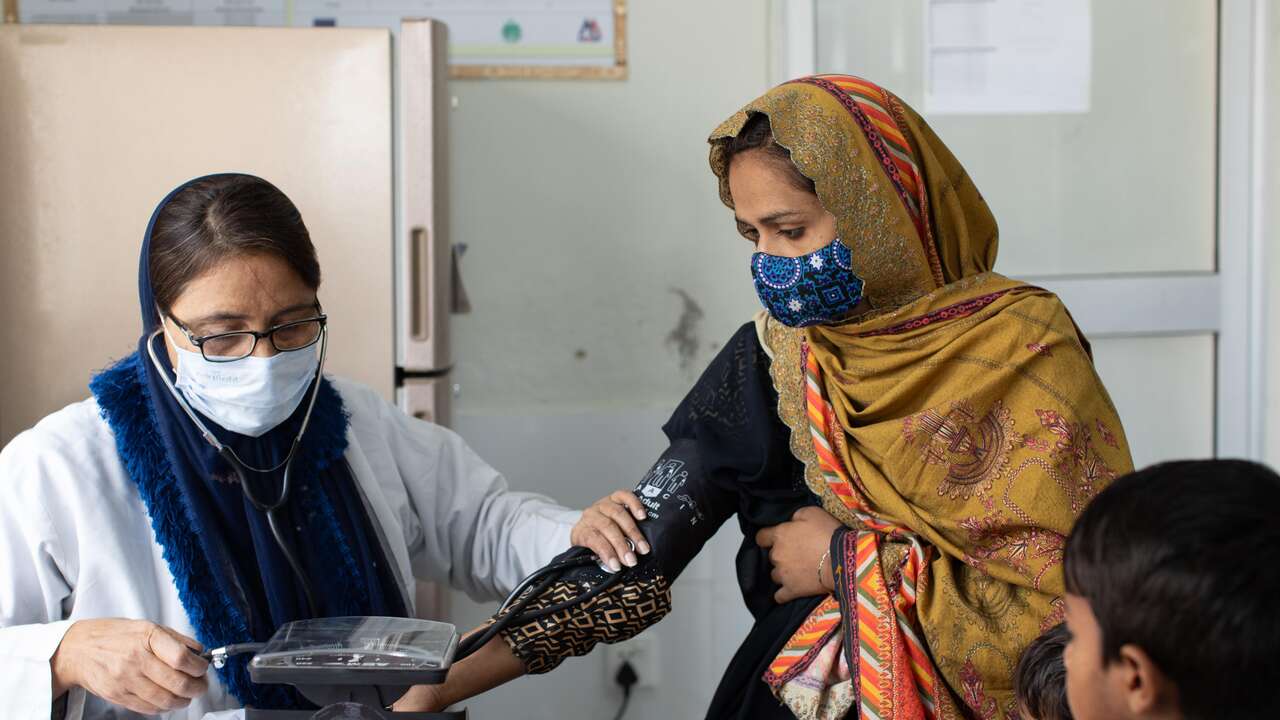
Recent initiatives, such as the advanced clinical skills program in Tharparkar, demonstrate how targeted training can improve neonatal outcomes in underserved areas. Such localized efforts provide a blueprint for a nationwide surge in maternal healthcare efficiency.
The Situation Room Analysis
The Translation (Clear Context)
The “Midwifery Crisis” is not merely a shortage of staff; it is a failure of system architecture. In technical terms, a “skilled birth attendant” is the difference between a routine procedure and a life-threatening emergency. By focusing on midwives, we are shifting from a reactive, hospital-centric model to a proactive, community-based model of precision medicine.
The Socio-Economic Impact
For the average Pakistani citizen, this shortage translates to higher out-of-pocket costs and increased mortality risks in rural areas. When a household loses a mother, the socio-economic trajectory of that family often collapses. Conversely, a robust midwifery system ensures that even the most remote citizens have access to a baseline of safety, stabilizing the domestic economy from the ground up.
The “Forward Path” (Opinion)
This development represents a Momentum Shift. The acknowledgment of the 82,000-worker deficit by international bodies like the UNFPA forces a move away from mere maintenance toward structural growth. If the government executes the B.S. Midwifery scaling correctly, Pakistan will transition from a state of crisis to a state of calibrated health resilience.








