
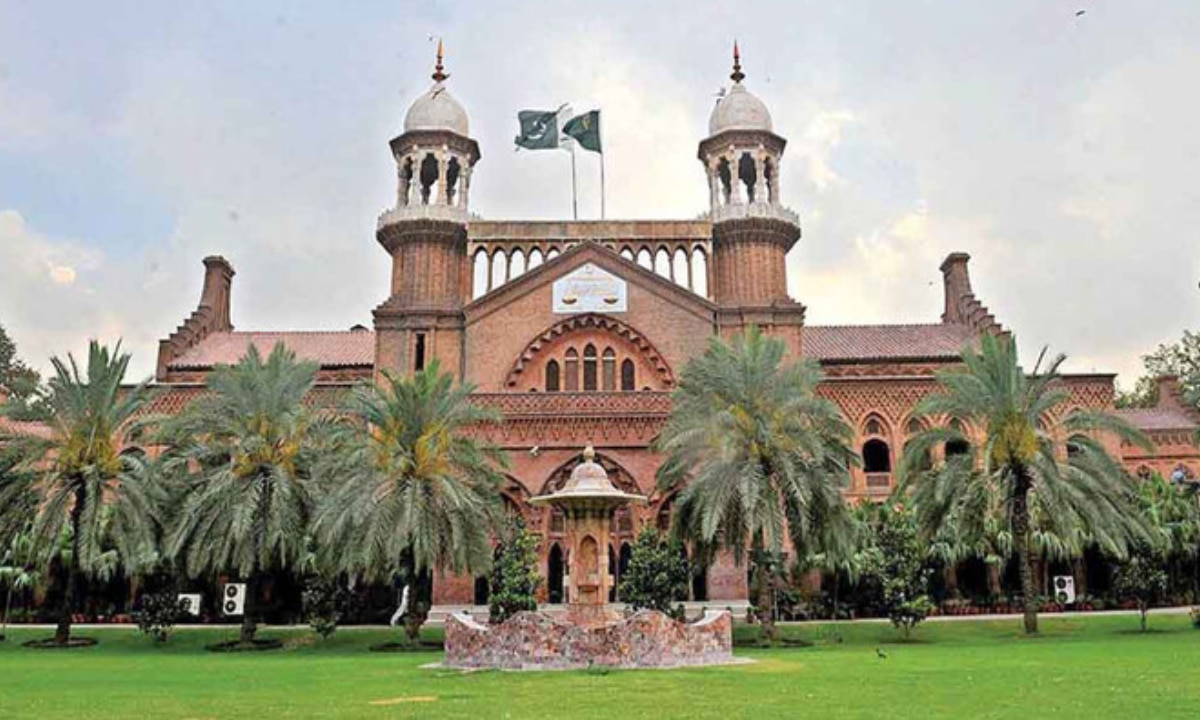
Systemic efficiency within our legal framework serves as a vital catalyst for national progress. Recently, the Lahore High Court (LHC) recalibrated the standards for judicial discretion by ruling that courts cannot permit a plaintiff to withdraw a case and file a fresh civil suit without providing explicit legal justifications. This decision ensures that every judicial move remains rooted in transparency and structural logic.
Structural Precision in Judicial Orders
Justice Raheel Kamran issued a detailed judgment emphasizing that permission for a fresh civil suit is an exception to the rule, not a default privilege. He clarified that such orders must be “speaking orders”—decisions that clearly identify a formal legal defect or sufficient grounds under the Code of Civil Procedure (CPC). Consequently, a non-speaking order that lacks recorded reasoning is no longer legally sustainable in the eyes of the high court.
The ruling surfaced after a constitutional petition challenged decisions from lower courts in Wazirabad. These courts had previously allowed a plaintiff, Muhammad Arshad, to withdraw his suit with the liberty to file a new one during the evidence stage. However, the LHC found that the lower courts failed to identify any specific legal defect required under Order XXIII Rule 1(2) of the CPC, rendering their initial decisions unlawful.
Maintaining the Integrity of the Cause of Action
Justice Kamran explained that the law generally bars filing multiple suits on the same cause of action to prevent systemic abuse. Therefore, granting permission for a fresh civil suit requires an independent examination by the court. Judges must verify the existence of a genuine formal defect rather than simply accepting a plaintiff’s claim at face value. This rigorous baseline protects the defendant from unnecessary litigation and ensures a calibrated approach to justice.
The Situation Room: Analysis
The Translation
In legal terms, a “non-speaking order” is a decision that tells you “what” the court decided but fails to explain the “why.” By mandating reasoned orders, the LHC is stripping away the ambiguity of judicial shortcuts. This requires judges to cite specific violations of the Code of Civil Procedure (CPC) before allowing a plaintiff to restart a case, ensuring the process is not used to fix strategic errors made during the first trial.
The Socio-Economic Impact
This ruling directly benefits Pakistani citizens by reducing the “litigation fatigue” that plagues many households. For professionals and business owners, it prevents opponents from dragging out legal battles through repetitive filings. By forcing precision in the first instance, the court system saves time and financial resources, ultimately lowering the barrier to efficient dispute resolution for the average citizen.
The Forward Path
This development represents a Momentum Shift. It moves the Pakistani judiciary away from mechanical processing and toward a model of high-resolution accountability. By enforcing these standards, the LHC is building a more predictable legal environment, which is a fundamental requirement for a stable and prosperous society.








