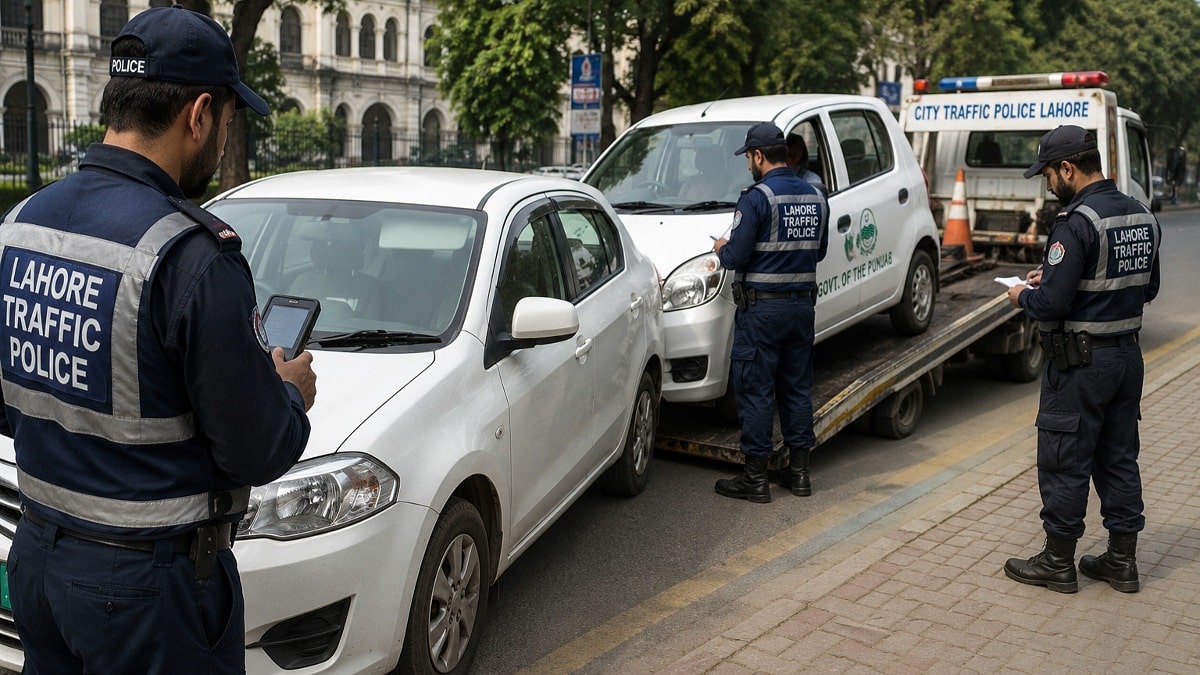
The Lahore Traffic Police have calibrated a rigorous enforcement strategy targeting e-challan defaulters to restore fiscal and legal discipline on our roads. Recent operations resulted in the seizure of three high-value vehicles, including a government-owned asset, with cumulative unpaid fines exceeding PKR 300,000. This precision-led campaign underscores a critical shift toward digital accountability in Pakistan’s urban centers, ensuring that systemic violations no longer go unchecked.
Traffic Inspectors Zaheer and Azam spearheaded individual operations on Mall Road, identifying vehicles with outstanding balances of PKR 134,000 and PKR 101,000, respectively. Furthermore, Patrolling Officer Alam Butt neutralized another high-debt violator carrying PKR 134,000 in arrears. Consequently, the immediate settlement of these fines by the owners demonstrates the effectiveness of impoundment as a catalyst for compliance among long-term violators.
Automated Enforcement: Targeting E-Challan Defaulters
To scale these efforts, the Lahore Traffic Police and the Safe Cities Authority have deployed 16 specialized task forces. These teams leverage integrated data streams to isolate repeat offenders across the city’s main arteries. Chief Traffic Officer (CTO) Syed Abdul Rahim Shirazi emphasized that citizens must verify a vehicle’s digital history before any transaction. This proactive measure prevents the transfer of liabilities and maintains the integrity of the secondary vehicle market.
The Translation (Clear Context)
The integration of Safe City surveillance with mobile traffic units represents a transition from manual oversight to automated systemic integrity. By utilizing real-time data, the police are no longer relying on random checks; they are executing surgical interventions against specific e-challan defaulters who undermine the digital governance framework. The logic is simple: digital records must have physical consequences to maintain the authority of the law.
The Socio-Economic Impact
For the average Pakistani citizen, this crackdown signals a more equitable enforcement of the law. When government vehicles and high-end private cars are held to the same standards, it fosters a culture of civic responsibility. Furthermore, recovering these dues strengthens the municipal fiscal baseline, potentially funding better road infrastructure and safer transit for households in both urban and rural sectors. Enhanced compliance leads to more predictable traffic flow and reduced accident rates.
The Forward Path (Opinion)
This development represents a significant Momentum Shift. By moving beyond traditional roadblocks and embracing data-driven enforcement, Lahore is setting a precedent for systemic efficiency. However, the long-term success of this initiative depends on the continuous calibration of the digital system and the elimination of discretionary waivers for influential violators. Moving forward, the goal should be a fully frictionless payment and enforcement loop.