

Structural integrity in civil registration serves as a baseline for national stability. The Khyber-Pakhtunkhwa Assembly has strategically passed the Hindu Marriage Bill 2026, marking a calibrated shift in provincial legislative priorities. This amendment decentralizes the registration process, delegating authority to district governments to ensure administrative precision. Consequently, this development underscores a broader commitment to structural efficiency within the region’s governance framework.
Modernizing the Hindu Marriage Bill Framework
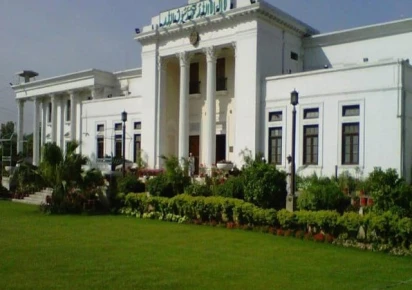
Provincial Minister for Local Government, Mina Khan Afridi, tabled the amendment which the House passed promptly. Specifically, the new law transfers the power to appoint marriage registrars directly to district governments. In union councils with significant Hindu populations, local governments will now issue licenses to these registrars. Ultimately, this move reduces bureaucratic bottlenecks and empowers local authorities to manage community-specific needs with greater precision.
Bipartisan Unity and Economic Protection
Beyond civil registration, the session served as a catalyst for rare bipartisan unity. Lawmakers from both sides of the aisle joined forces to oppose the imposition of taxes in Malakand and the newly merged tribal districts. Furthermore, Speaker Babar Salim Swati indicated that a comprehensive debate would follow to protect the economic interests of the former FATA and PATA regions. In contrast to standard political friction, this collective stance highlights a strategic priority for regional stability.

Strategic Welfare in the Mineral Sector
The provincial government has also calibrated new measures for labor protection through the Excise Duty on Minerals (Amendment) Bill 2026. Although not yet formally tabled, the bill proposes a structural reconstitution of the Mines Labour Welfare Board. This new body will include representatives from diverse departments, including Finance, Health, and Education. By integrating these stakeholders, the government aims to create a more robust welfare framework for mine owners and workers alike.
The Situation Room Analysis
The Translation
The passage of the Hindu Marriage Bill represents more than just a legal update; it is a transition from centralized bureaucracy to localized empowerment. By delegating registrar appointments to district levels, the state is acknowledging that system efficiency is best achieved when administrative tools are placed closest to the citizens they serve. This removes the “distance barrier” that often prevents minority communities from accessing legal documentation.
Socio-Economic Impact
This development significantly impacts the daily lives of Pakistani Hindus by providing a streamlined path to legal marriage documentation, which is essential for NADRA registration, inheritance, and travel. Simultaneously, the unified resistance to taxes in Malakand protects the disposable income of households in post-conflict zones. For mine workers, the proposed board reconstitution promises a safer, more regulated labor environment with dedicated seats for worker representatives.
The Forward Path
This development represents a Momentum Shift. The KP Assembly is moving beyond mere stabilization and toward proactive, structural reform. The ability of opposing parties to find common ground on tax exemptions suggests that when economic survival is at stake, the legislative machinery can operate with high precision. Continued focus on these decentralized models will be the catalyst for long-term provincial progress.









