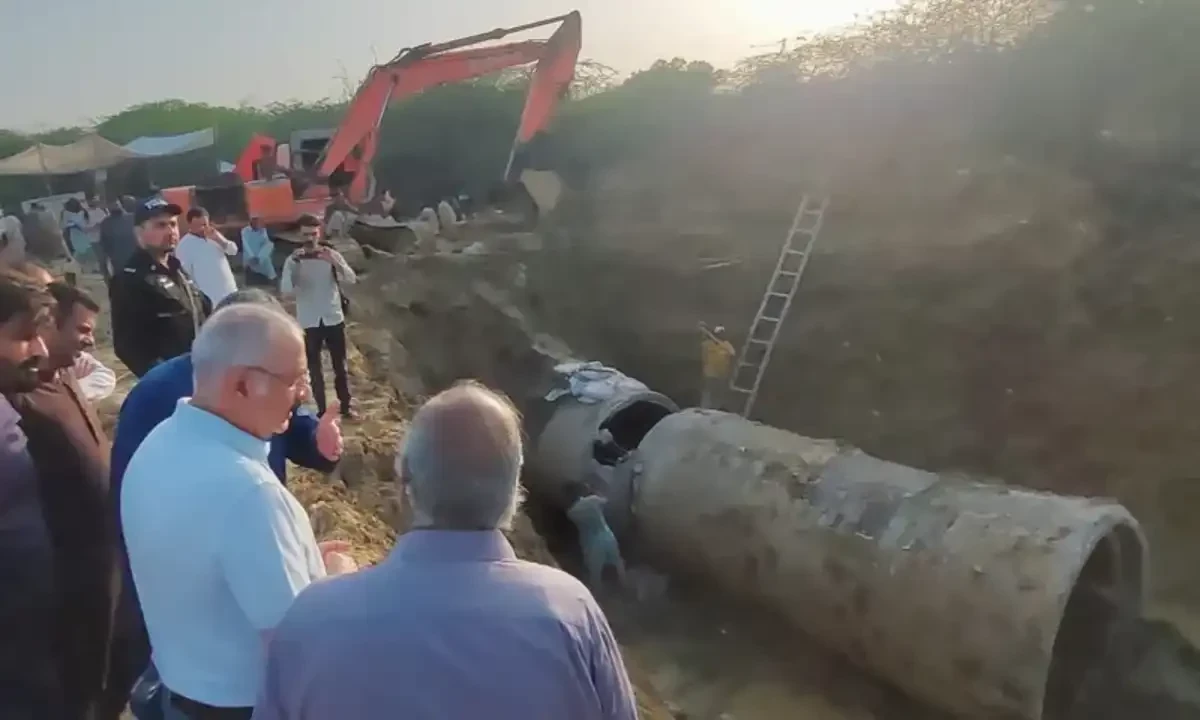
Urban stability relies on the precise synchronization of energy and resource distribution networks. Today, a significant Karachi water supply disruption originated from a mechanical failure at the Dhabeji pumping station. This event highlights the structural fragility of our utility nexus, where a single cable fault can trigger a systemic shortfall of 75 million gallons per day (MGD).
The Translation: Deconstructing the Infrastructure Fault
The Karachi Water and Sewerage Corporation (KWSC) reported that the disruption began at 8:45 am within the third phase of the Dhabeji facility. Consequently, a calibrated power failure occurred due to a cable problem, forcing three critical pumps to cease operations. While K-Electric technical teams have identified the baseline issue, the mechanical lag in restarting large-scale hydraulic systems remains a challenge.

Identifying the High-Impact Zones
The shortfall directly affects the metabolic rate of the city’s residential and commercial sectors. Specifically, the following areas must prepare for a temporary deficit in water availability:
- North Nazimabad and Nazimabad
- Gulberg Town and New Karachi
- Landhi and Korangi
- Scheme 33 and surrounding districts

The Socio-Economic Impact: Daily Life and Productivity
For the average Pakistani citizen, a Karachi water supply disruption is not merely a technical glitch; it is a catalyst for increased household expenditure and reduced hygiene standards. Families in the affected zones often pivot to expensive private tanker services, which disrupts monthly financial planning. Furthermore, the lack of predictable water flow hinders small-scale industrial productivity in areas like Korangi and Landhi, illustrating how utility instability slows economic momentum.

The Forward Path: A Stabilization Move
From a STEM-driven perspective, this development represents a Stabilization Move rather than a momentum shift. While KWSC and K-Electric are working to restore the baseline, the event proves that our infrastructure lacks the necessary redundancy to prevent cascade failures. To achieve progress, Karachi requires a strategic overhaul of its pumping station power grids, moving away from single-point-of-failure architectures toward decentralized, resilient energy inputs.