
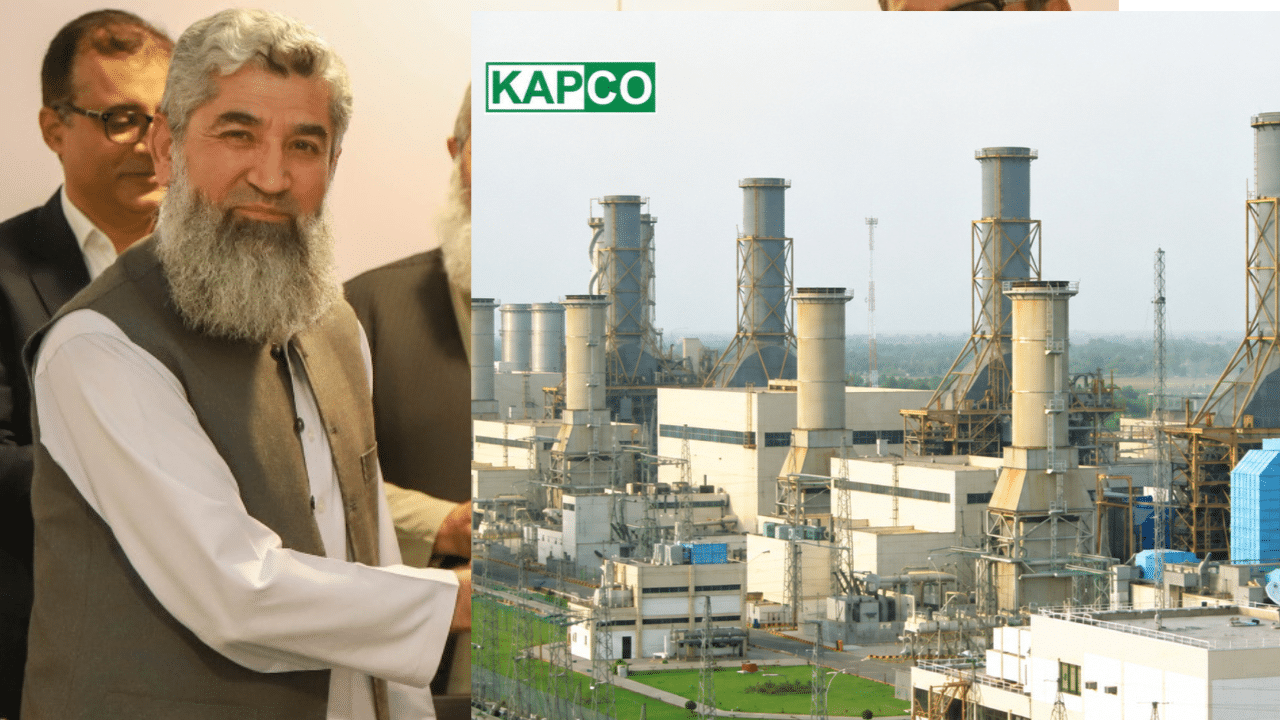
The KAPCO CEO appointment of Waqar Ahmed Khan marks a strategic recalibration for one of Pakistan’s largest energy producers. This leadership transition, finalized for a three-year term starting July 1, 2026, aims to stabilize and modernize the 1,600 MW multi-fuel facility in Kot Addu. Consequently, the organization positions itself to meet the evolving demands of the national grid with engineering precision and executive foresight.
A Career Calibrated for Power Generation
Waqar Ahmed Khan brings over 30 years of disciplined expertise to the role, spanning the entire lifecycle of power generation. He initiated his career at WAPDA, focusing on control systems, SCADA software, and protection engineering. Furthermore, his tenure as CEO at Star Hydro Power and Rousch (Pakistan) Power Limited solidified his reputation as a catalyst for operational efficiency in the independent power producer (IPP) sector.
Mr. Khan possesses a rigorous academic baseline, holding a BSc in Electrical Engineering from UET Peshawar and an MSc in Control and IT from Manchester. He also earned an MBA from LUMS, blending technical mastery with strategic business management. This structural combination of skills is essential for navigating the complex regulatory and commercial landscape of the Pakistani energy sector.
The Translation: Contextualizing the Leadership Shift
In the energy sector, a leadership change at an IPP like KAPCO is rarely a mere administrative update; instead, it is a strategic alignment. By selecting a CEO with deep roots in instrumentation and SCADA systems, KAPCO emphasizes the importance of technological reliability. This move suggests a shift toward precision-based maintenance and technical optimization to ensure the 1,600 MW plant remains a high-performance asset for the national energy mix.
The Socio-Economic Impact: What This Means for Citizens
The stability of KAPCO directly influences the daily lives of millions of Pakistanis through energy security and grid reliability. When a massive producer operates with maximum efficiency, it reduces the likelihood of localized power shortages that disrupt urban households and rural industries. For the Pakistani professional, this appointment highlights that specialized technical education remains the primary driver for high-impact leadership in national infrastructure.
The Forward Path: An Expert Analysis
This development represents a Momentum Shift for KAPCO. The decision to appoint a leader with Mr. Khan’s technical-commercial duality indicates an intent to move beyond baseline operations toward structural innovation. Ultimately, his three-year term will likely focus on maximizing the output of the Kot Addu plant while navigating the fiscal complexities of the power sector, ensuring KAPCO remains a cornerstone of Pakistan’s industrial progress.








