

The nationwide jewellers strike represents a critical baseline for the ongoing friction between Pakistan’s traditional trade sectors and the state’s drive for fiscal precision. On Tuesday, traders across Karachi and other major hubs halted operations, citing systematic harassment and excessive FBR tax demands. This disruption highlights a calibrated resistance against what industry leaders describe as a shift from formal documentation to predatory extortion.
The Logistics of Economic Disruption
Traders gathered in Karachi to protest against the tax authority’s latest protocols. Specifically, industry leader Qasim Shikarpuri confirmed that high-level discussions in Islamabad failed to produce a resolution. Consequently, the industry has transitioned from negotiation to active protest. While the sector currently contributes approximately Rs. 22 billion in annual taxes, officials have reportedly sought a 600 percent increase in certain regions. In Peshawar, authorities allegedly demanded Rs. 250 million from trade members, sparking immediate backlash.
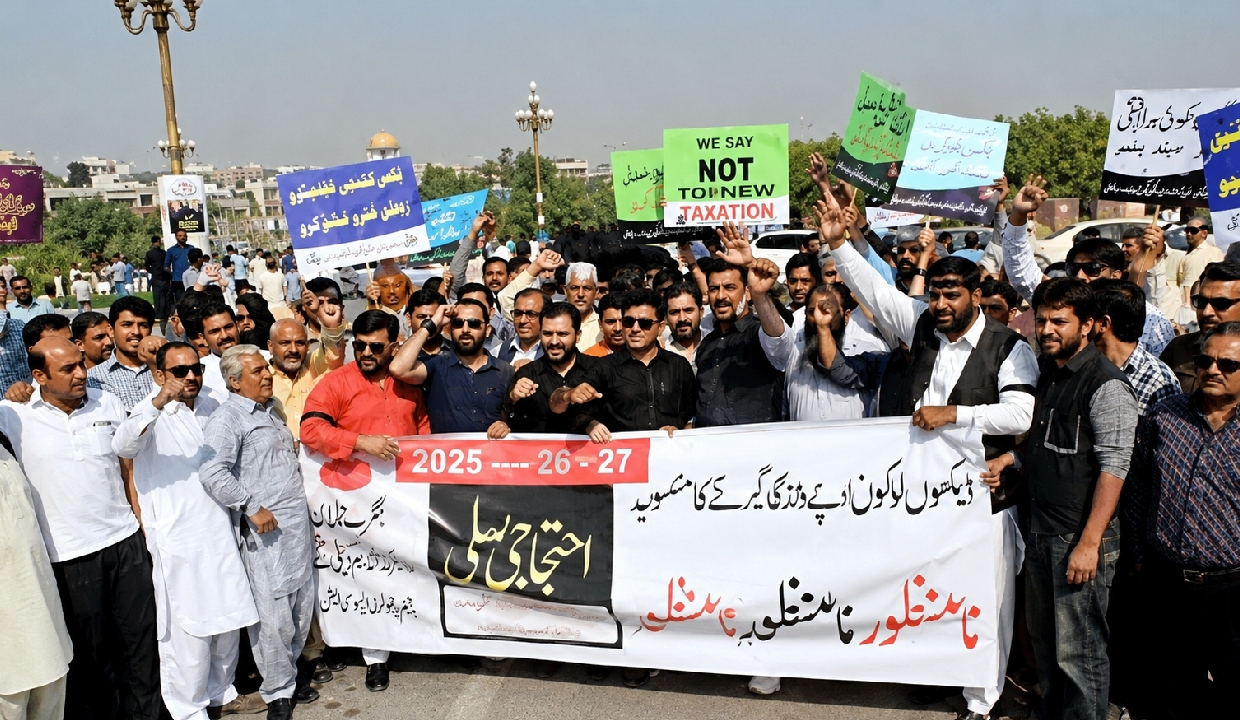
The Mechanics Behind the Nationwide Jewellers Strike
The industry has proposed a strategic compromise to double its tax contribution to Rs. 44 billion. However, traders remain adamant that they will not facilitate bribes. “We pay taxes and will continue to pay taxes, but we will not pay bribes,” Shikarpuri told the assembly. This stance underscores a structural demand for transparency within the Federal Board of Revenue. If the government fails to address these grievances within 48 hours, the trade body warns of an intensified, indefinite shutdown across all provinces.
The Translation
In technical terms, this conflict reflects the “documentation gap” in Pakistan’s economy. The FBR aims to increase the tax-to-GDP ratio through aggressive enforcement. In contrast, the jewellery sector argues that the sudden 600% demand lacks a logical fiscal baseline. The standoff is not merely about the amount of tax, but the methodology of its collection and the alleged lack of institutional integrity during audits.
The Socio-Economic Impact
For the average Pakistani citizen, this strike creates immediate liquidity constraints and market volatility. Gold is a primary hedge against inflation for many households. Consequently, the market closure restricts the ability of families to liquidate assets for weddings or emergencies. Furthermore, global gold prices surged to $3,406 per ounce, driven by easing U.S. interest rate hike expectations and international peace agreements. This local supply freeze coupled with rising global costs creates a high-pressure environment for domestic consumers.
The Forward Path: A Stabilization Move
This development currently represents a Stabilization Move rather than a momentum shift. While the strike signals a breakdown in communication, it serves as a necessary catalyst for defining the rules of engagement between the state and the informal sector. For Pakistan to achieve a modern fiscal system, the FBR must calibrate its demands based on data-driven benchmarks rather than arbitrary targets. Until a transparent framework emerges, market uncertainty will persist as the primary obstacle to growth.








