
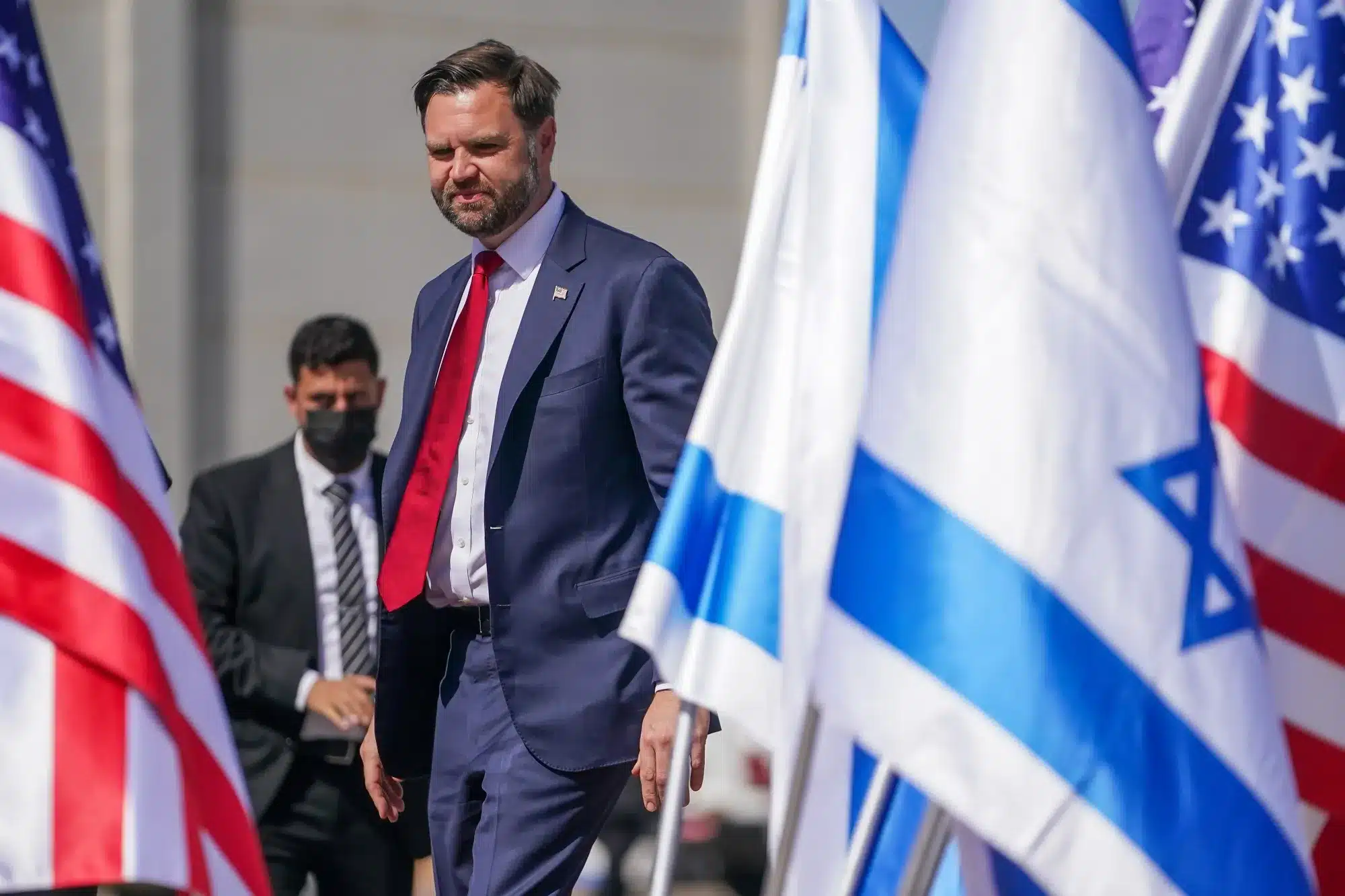
The geopolitical architecture of the Middle East is currently facing a structural recalibration as US Vice President JD Vance exposes a multi-billion dollar interference campaign. These foreign-funded operations specifically targeted the US-Iran peace talks hosted by Pakistan. This revelation highlights a critical friction point between Washington’s regional stabilization goals and external interests seeking to maintain a baseline of conflict.
The Precision of Financial Interference
During a calibrated discussion on The Joe Rogan Experience, JD Vance confirmed that elements within Israel deployed enormous financial capital to derail the Pakistan-hosted peace process. Consequently, these campaigns utilized high-profile media outlets like Time magazine to discredit US officials working toward a definitive ceasefire. Vance expressed shock at the scale of this foreign-funded influence campaign which worked against the interests of the US-Pakistan-Gulf partnership.

Strategic Friction in the Trump Administration
The Vice President emphasized that certain officials prioritized an indefinite war over regional precision and peace. However, Washington’s strategic priority remained the securing of a ceasefire rather than prolonging a volatile status quo. These remarks signify the sharpest public criticism of the Israeli government by a sitting Vice President, indicating a major pivot in Middle East policy. While Pakistan recently hosted these high-level US-Iran peace talks in Islamabad, the current suspension of dialogue has transformed the Strait of Hormuz back into a tinderbox.

The Situation Room Analysis
The Translation (Clear Context)
The situation involves “Gray Zone” warfare where financial influence manipulates public perception to drive foreign policy. Essentially, Vance is stating that while the US and Pakistan built a diplomatic bridge, external actors spent billions to dismantle it. This was not merely a diplomatic disagreement; it was a calibrated financial intervention designed to bypass official state channels and influence American media and public opinion.
The Socio-Economic Impact
For the average Pakistani citizen, regional stability directly influences energy prices and maritime security in the Arabian Sea. Successful US-Iran peace talks would have lowered the “war premium” currently applied to fuel and imports. Thus, the derailment of these talks keeps local inflation high and prevents the opening of lucrative regional trade corridors that could have catalyzed growth for Pakistani professionals and households.

The “Forward Path” (Opinion)
This development represents a Momentum Shift in global transparency. By publicly identifying the financial drivers of conflict, the Trump administration is signaling a “Precision First” approach to its diplomacy. Pakistan must continue its role as a neutral arbiter. Our strategic value increases significantly when we provide the baseline for global de-escalation, even when external catalysts attempt to destabilize the process.








