
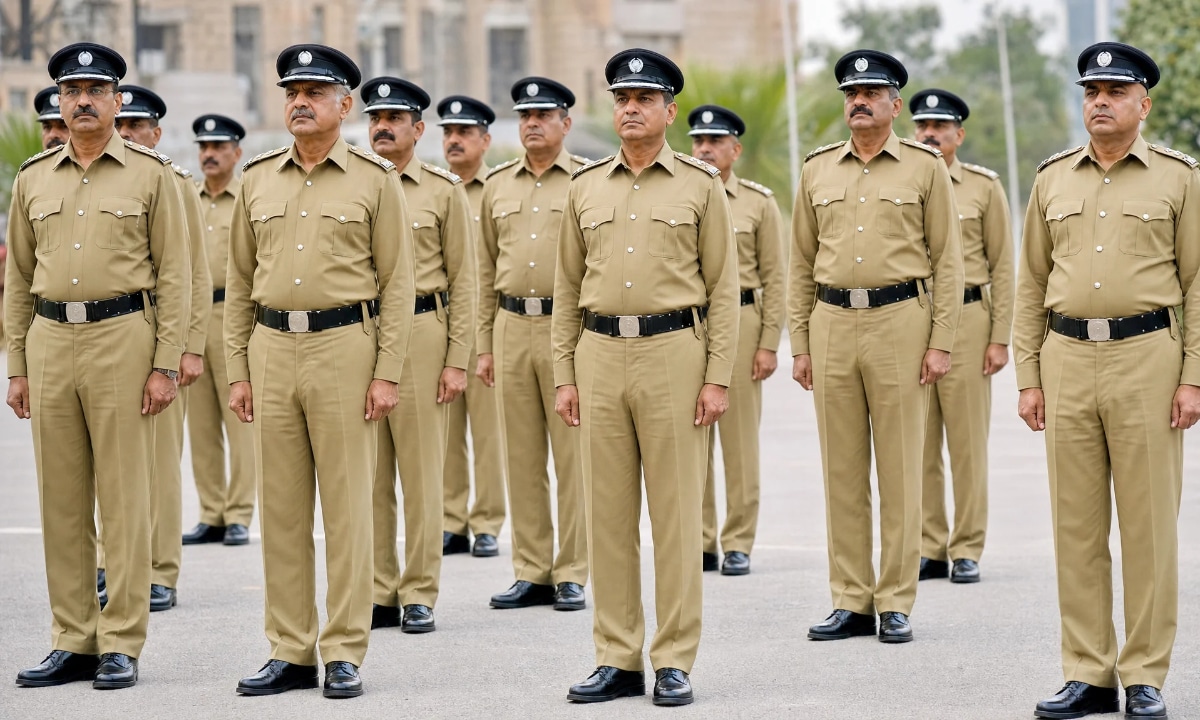
Interior Minister Mohsin Naqvi has announced that police foreign training will now serve as a permanent structural pillar of the national professional development programme. This strategic calibration aims to integrate advanced international surveillance systems and tactical methodologies into Pakistan’s domestic law enforcement framework. Consequently, the ministry is moving beyond ad-hoc workshops toward a systematic institutionalization of global policing standards.
Structural Integration of Police Foreign Training
The announcement followed a high-level briefing from assistant superintendents of police who recently completed specialized modules in China and Türkiye. These officers presented data-driven insights into modern law enforcement practices, focusing specifically on advanced surveillance technology and tactical equipment. Minister Naqvi emphasized that this international exposure is a necessary catalyst for improving baseline policing standards across the country.

Furthermore, the Interior Ministry’s aviation wing will receive a fleet of advanced drones to bolster surveillance support. These tools will significantly improve the police’s precision in monitoring and preventing criminal activity. To support these technological upgrades, specialized investigation rooms will be established at the National Police Academy, ensuring that theoretical knowledge translates into operational efficiency.
The Integrated Investigation Model
A pivotal component of this reform is the launch of a pilot project in Islamabad. This China-style law enforcement investigation centre will consolidate detention, investigation, and summary trials under a single administrative roof. This structural shift is designed to ensure the swift disposal of minor criminal cases, thereby reducing the burden on the traditional judicial pipeline.

- Curriculum Reform: Interrogation techniques from developed nations will become a dedicated subject.
- Operational Utility: New uniforms are being designed to better suit active operational needs.
- Technology Deployment: Integration of modern surveillance tools and precision drones.
The Situation Room Analysis
The Translation
In “Next Gen” terms, this move represents the defragmentation of Pakistan’s security apparatus. By making police foreign training permanent, the state is creating a continuous feedback loop between global innovation and local execution. It moves law enforcement from a reactive “catch-and-hold” model to a proactive, tech-driven “monitor-and-prevent” system.
The Socio-Economic Impact
For the average Pakistani citizen, these reforms translate to increased safety and system efficiency. Faster case disposal via the Islamabad pilot project means less time and money spent by families in legal limbo. Moreover, the deployment of drone surveillance in urban centers offers a higher precision baseline for crime prevention, potentially lowering insurance risks and fostering a more stable environment for local businesses.
The Forward Path
This development represents a significant Momentum Shift. Moving from occasional training trips to a permanent mandate for police foreign training signals a long-term commitment to structural professionalism. While the technology is a welcome addition, the true success will depend on how effectively these “China-style” models are adapted to Pakistan’s unique legal and social landscape.








