
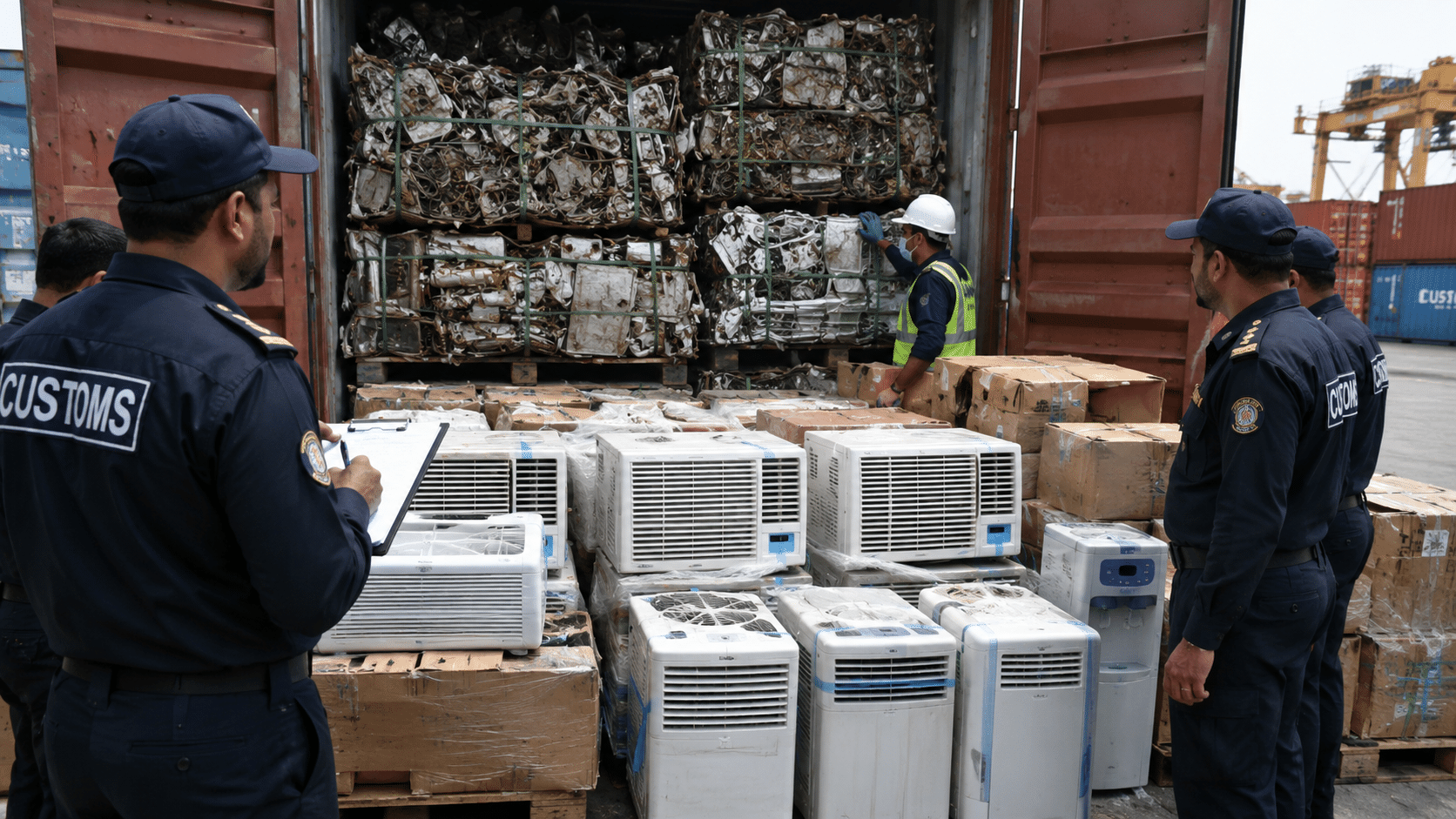
The integrity of Pakistan’s trade corridors depends on the calibrated enforcement of import regulations. Recently, a massive case of customs duty evasion was uncovered in Karachi, involving nearly 897 air conditioning units hidden within scrap shipments. Pakistan Customs (Enforcement) registered an FIR against M/s Shareef Enterprises and their clearing agent, M/s Express Freight Links, following the discovery at the Al-Hamd International Container Terminal.
Strategic Enforcement Against Customs Duty Evasion
Customs officials intercepted four consignments originating from the United States. Although the importer declared the cargo as various forms of iron, steel, and aluminum scrap under the Export Facilitation Scheme (EFS), physical inspections revealed a different reality. Consequently, authorities discovered a high-density cache of 897 new portable and window air conditioners, primarily of the Midea brand. Furthermore, the search yielded 113 dehumidifiers and three water dispensers concealed behind strategically placed pallets of compressor scrap.
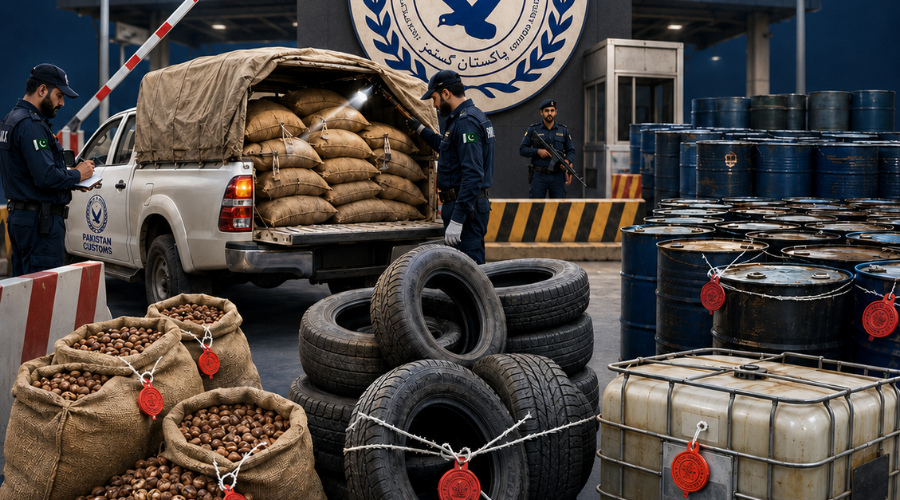
The financial discrepancy is significant. While the importer declared a value of Rs. 21.93 million, the actual assessed value of the recovered goods stands at Rs. 63.39 million. This deliberate misdeclaration resulted in a calculated revenue shortfall of approximately Rs. 47.95 million. In response, authorities have invoked the Customs Act of 1969, the Sales Tax Act of 1990, and the Income Tax Ordinance of 2001 to address this systemic breach.
The Translation: Decoding the EFS Abuse
The Export Facilitation Scheme (EFS) is a precision tool designed to allow manufacturers to import raw materials duty-free to boost Pakistan’s exports. In this instance, the “Scrap” declaration acted as a Trojan horse. By mislabeling high-value commercial electronics as industrial waste, the perpetrators attempted to bypass the structural levies that protect the domestic market. Essentially, they exploited a system meant for economic growth to facilitate private profit through illegal tax bypasses.
The Socio-Economic Impact: Protecting the Pakistani Household
This development directly impacts the average Pakistani citizen in two critical ways. First, the evasion of Rs. 47.95 million in taxes represents a direct loss to the national exchequer, funds that are vital for public infrastructure and social services. Second, when commercial goods enter the market without paying duties, they create an uneven playing field. This puts law-abiding local retailers and manufacturers at a severe disadvantage, potentially destabilizing the domestic supply chain for home appliances.
The Forward Path: A Stabilization Move
This operation represents a Stabilization Move. While the seizure of goods is a tactical victory, the subsequent transfer of Additional Collector Yawar Nawaz and Deputy Collector Aqsa Aslam indicates a deeper structural cleanup. To ensure long-term progress, Pakistan must continue calibrating its oversight mechanisms within the FBR. Strengthening internal accountability is the only catalyst that will transform these isolated enforcement wins into a baseline for transparent national trade.








