Pakistan’s economic architecture is undergoing a calibrated shift toward systemic capital accessibility. The federal government has accelerated the implementation of the Prime Minister’s Access to Finance Plan 2026-28, prioritizing the delivery of affordable bank loans to SMEs, agriculture, and the IT sector. Consequently, this initiative aims to dismantle traditional barriers to credit through strategic oversight and precision execution.
Precision Governance for the Access to Finance Plan
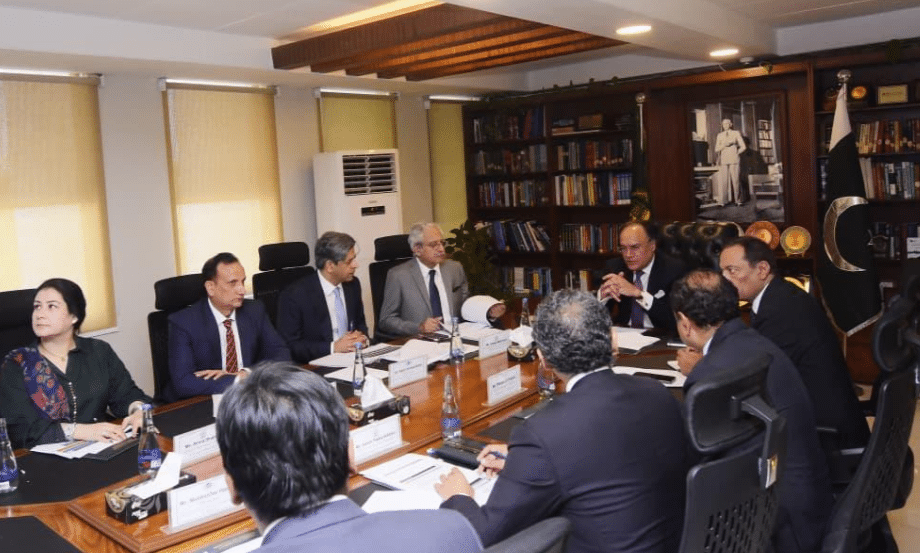
Federal Minister for Finance and Revenue Muhammad Aurangzeb recently chaired the inaugural meeting of the newly established Access to Finance Steering Committee. This body serves as a catalyst for reform, coordinating efforts across the State Bank of Pakistan (SBP) and the SECP. The committee reviewed a structural governance framework designed to expand financial inclusion for exporters and the renewable energy sector.
:max_bytes(150000):strip_icc()/Why-banks-dont-need-your-money-make-loans_final-43f1ef121f974894b850b7627edbd938.png)
Scaling Affordable Bank Loans via Digital Integration
To ensure total accountability, the government proposed a three-tier governance model. This includes monthly updates to the Prime Minister and weekly sub-committee sessions to monitor technical progress. Strategic focus remains on the “Open Banking Framework” and the development of an SME Digital Portal. These tools will calibrate credit scoring, allowing financial institutions to approve disbursements with greater velocity and accuracy.
Furthermore, the committee reviewed flagship initiatives such as the “Apna Ghar” scheme for housing and “Zarkhez-e” for agriculture. The “PAVE” project also aims to provide financing for electric vehicles, specifically targeting e-bikes and rickshaws to modernize urban transport. These efforts collectively aim to lower the baseline cost of borrowing for the productive sectors of the economy.

Situation Room Analysis
The Translation
The government is replacing traditional, paper-heavy lending processes with a digital-first infrastructure. By utilizing advanced credit scoring and an Open Banking Framework, the state is reducing the risk profile of small borrowers. This structural efficiency allows banks to offer affordable bank loans without the heavy collateral requirements that previously stifled growth.
The Socio-Economic Impact
For the average Pakistani citizen, this development represents a path toward financial independence. Students, IT professionals, and small business owners can now access capital that was previously reserved for large corporations. Specifically, the expansion of affordable bank loans for housing and electric vehicles will directly reduce the cost of living for urban households.
The Forward Path
We classify this development as a Momentum Shift. By moving beyond simple policy statements to a three-tier governance structure with “Resolution Target Dates,” the government is signaling a move toward data-driven execution. This is a critical step in transitioning Pakistan from a consumption-based economy to a production-led powerhouse.