
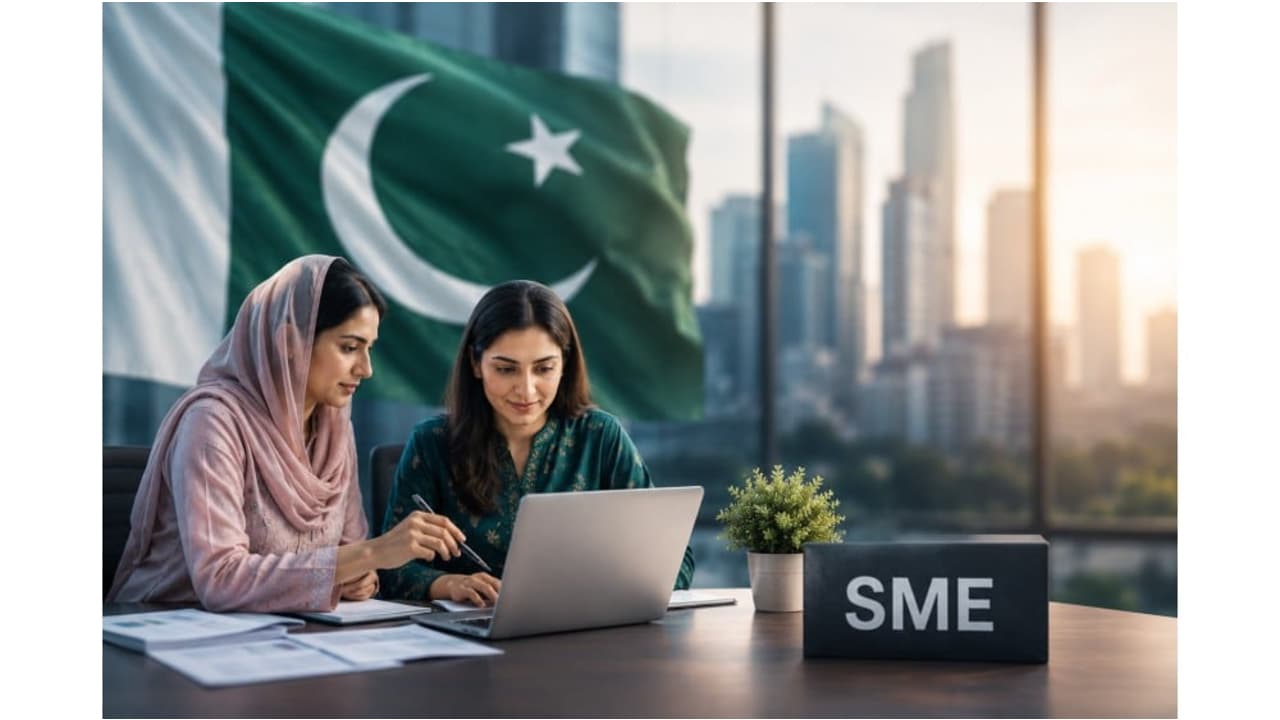
The federal government is currently implementing a series of business-friendly reforms designed to simplify the regulatory baseline and support small-to-medium enterprises (SMEs). This strategic modernization focuses on institutional restructuring and digitalization to expand Pakistan’s manufacturing capacity. By removing structural friction, the state aims to integrate local entrepreneurs into the global value chain more effectively.
Eliminating Structural Friction for Small Enterprises
Commerce Minister Jam Kamal Khan confirmed these strategic pivots during a recent session with the Islamabad Chamber of Small Traders and Small Industries (ICSTSI). The government is actively removing unnecessary regulatory hurdles that historically slowed commercial operations. Consequently, the modernization of business processes will allow entrepreneurs to complete registration requirements with significantly higher precision and speed.
A critical catalyst in this transition is the State Bank of Pakistan’s revised SME definition. This recalibration expands the eligibility criteria for financing, providing a vital lifeline to businesses that were previously excluded from formal credit markets. Furthermore, the government aims to broaden the tax base through voluntary documentation rather than increasing the pressure on existing taxpayers.
The Translation (Clear Context)
The logic behind these business-friendly reforms is simple: reducing “compliance fatigue.” Currently, many Pakistani businesses operate in the informal economy because the cost of legal registration—in time and complexity—is too high. By simplifying audits and digitalizing the registration process, the government is making it easier for a business to be “formal” than to remain hidden. This shift moves Pakistan toward a data-driven economy where every small trader becomes a visible contributor to national growth.

The Socio-Economic Impact
How does this recalibration affect the average Pakistani citizen? Specifically, the development of dedicated industrial zones and public-private partnerships, such as the proposed 100-acre industrial project, creates localized economic hubs. For students and professionals, this means a predictable job market and increased demand for technical skills. For households, a more efficient manufacturing sector lowers production costs, eventually stabilizing the price of consumer goods and improving overall product quality.

The Forward Path (Opinion)
This development represents a Momentum Shift for the Pakistani economy. While past initiatives often prioritized large-scale industries, the current focus on SME-specific infrastructure and livestock byproduct optimization shows a more nuanced understanding of our economic engine. However, the success of these business-friendly reforms depends entirely on the elimination of the “human element” in registration—true digitalization must be the baseline. If executed with precision, this could be the catalyst that finally pushes Pakistan’s export capacity into a higher tier.








