

The federal government is calibrating a decisive shift in Pakistan’s energy architecture by initiating comprehensive gas sector reforms. This strategic move aims to unbundle the country’s two state-owned giants, SNGPL and SSGCL, into five specialized entities. By separating transmission from distribution, the state intends to catalyze efficiency and invite private sector precision into the national energy value chain.
Architectural Shift: Unbundling the Energy Monopolies
The proposed framework divides Sui Northern Gas Pipelines Limited (SNGPL) and Sui Southern Gas Company Limited (SSGCL) into a single national gas transmission company and four provincial distribution units. This structural overhaul mirrors the successful unbundling of WAPDA over fifteen years ago. Consequently, the Petroleum Division must finalize a calibrated roadmap for prime ministerial approval by the end of August.
Petroleum Minister Ali Pervaiz Malik and World Bank Country Director Bolormaa Amgaabazar reviewed the proposal recently. Furthermore, the restructuring plan aims to accelerate private sector participation. A dedicated transaction adviser will oversee this complex unbundling process, ensuring the transition meets international baseline standards for energy governance.
Functional Precision in Gas Sector Reforms
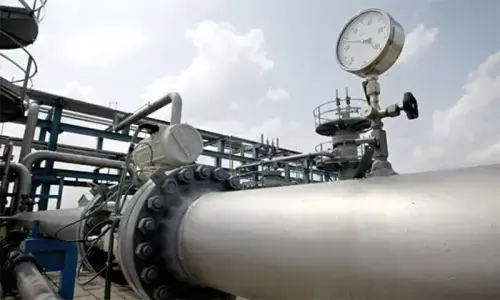
The newly formed National Gas Transmission Company will serve as a common carrier for the entire country. Crucially, this entity will not engage in the buying or selling of gas. Instead, it will transport locally produced gas and liquefied natural gas (LNG) while charging standardized wheeling fees to suppliers. This model provides a neutral platform for both public and private energy players.
Provincial distribution companies will manage localized networks based on demographic density and operational workload. This decentralized approach allows for higher precision in demand management. Additionally, a new pricing mechanism will likely balance gas sale prices across various regions to maintain socio-economic equity.
The Situation Room: Analysis
The Translation
In technical terms, the government is moving from a “Vertical Integration” model to a “Functional Unbundling” model. Currently, SNGPL and SSGCL handle everything from the main pipeline to your kitchen stove. Under the new gas sector reforms, one company maintains the “highway” (transmission), while four separate companies manage the “local roads” (distribution). This removes the conflict of interest where a pipeline owner might block a competitor’s gas.
The Socio-Economic Impact
For the average Pakistani citizen, this restructure targets the chronic inefficiency and “unaccounted for gas” (UFG) losses that drive up monthly bills.
- Students and Professionals: Can expect a more stable energy grid as private investment enters the market.
- Households: Provincial management means local issues are addressed by local offices rather than a distant central bureaucracy.
- Industry: Improved wheeling fees could lead to more competitive energy pricing for manufacturers.
The Forward Path
This development represents a Momentum Shift. While past resistance from shareholders and regulatory bodies like OGRA halted progress in 2020, the current fiscal climate demands structural efficiency. Success depends on the financial sustainability of the new provincial units. If calibrated correctly, this is the catalyst needed to modernize Pakistan’s energy distribution backbone.








