
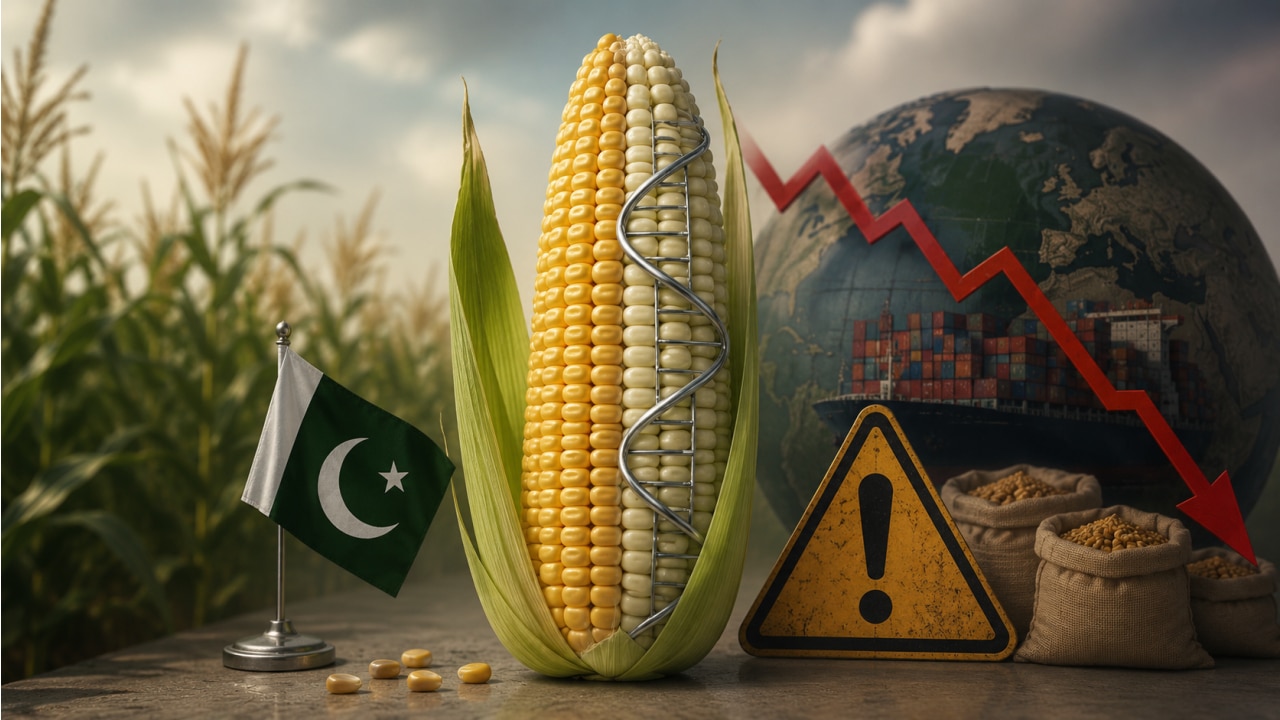
Architecting a resilient agricultural framework requires a precise, data-driven balance between technological adoption and ecological sovereignty. Currently, the federal government is evaluating the reintroduction of GMO maize cultivation in Pakistan. While the Ministry of Climate Change considers renewing commercial licenses, a coalition of scientists, environmental regulators, and security agencies has voiced structural concerns regarding the move.
The Structural Risks of GMO Maize Cultivation
The National Biosafety Committee recently postponed its 38th meeting, which aimed to review applications from GMO seed companies. This delay follows strategic warnings from the Technical Advisory Committee. Experts argue that GMO maize cultivation could trigger irreversible gene flow, contaminating conventional crops and compromising the genetic integrity of local varieties. Consequently, this shift might lead to an increased dependence on imported seed technology, undermining national agricultural autonomy.
Strategic Opposition and Export Calibration
Strategic planners and security agencies, including the ISI, have expressed reservations about the dependence on imported seeds. They argue that global supply chain disruptions could threaten domestic production. Furthermore, major exporters like Rafhan Maize Products warn that the commercialization of genetically modified crops could jeopardize shipments to the European Union. Since European buyers maintain a strict preference for GMO-free products, this policy shift represents a significant risk to the current export baseline.
- Contamination Risk: Maize is highly cross-pollinated, making gene flow difficult to contain.
- Export Vulnerability: EU markets maintain zero-tolerance or high-restriction policies on GMOs.
- Economic Dependence: Reliance on foreign seed technology limits local fiscal control.
The Translation: Contextualizing Bio-Tech Logic
In “Next Gen” terms, the move toward GMO maize cultivation is more than a farming upgrade; it is a fundamental change in the biological operating system of our land. While GMOs are often marketed as high-efficiency catalysts, the “cross-pollination” issue means that once these seeds are planted, they effectively “patch” the code of neighboring natural crops. This makes it impossible to revert to traditional, organic, or non-GMO status, essentially locking the country into a specific technological ecosystem managed by foreign entities.
The Socio-Economic Impact: Life in the Fields
For the average Pakistani household and professional, this development directly impacts food security and market prices. If GMO maize cultivation proceeds, small-scale farmers may face higher recurring costs due to the need for specific, patented seeds every season. Moreover, if our exports to Europe are restricted, the resulting surplus could crash domestic prices temporarily, followed by long-term instability. Urban consumers might see a shift in the availability of “clean” labeled products as the domestic supply chain becomes integrated with GM technology.
The Forward Path: A Stabilization Move?
This development represents a Stabilization Move that requires urgent recalibration. While the pursuit of higher yields is a strategic necessity, the data shows that Pakistan already achieves competitive yields (over 100 maunds per acre) with conventional methods. Adopting GMO technology without a robust, localized biosafety infrastructure is a risk to our economic frontier. Pakistan must prioritize indigenous seed research to ensure progress remains calibrated with national sovereignty and environmental health.








