
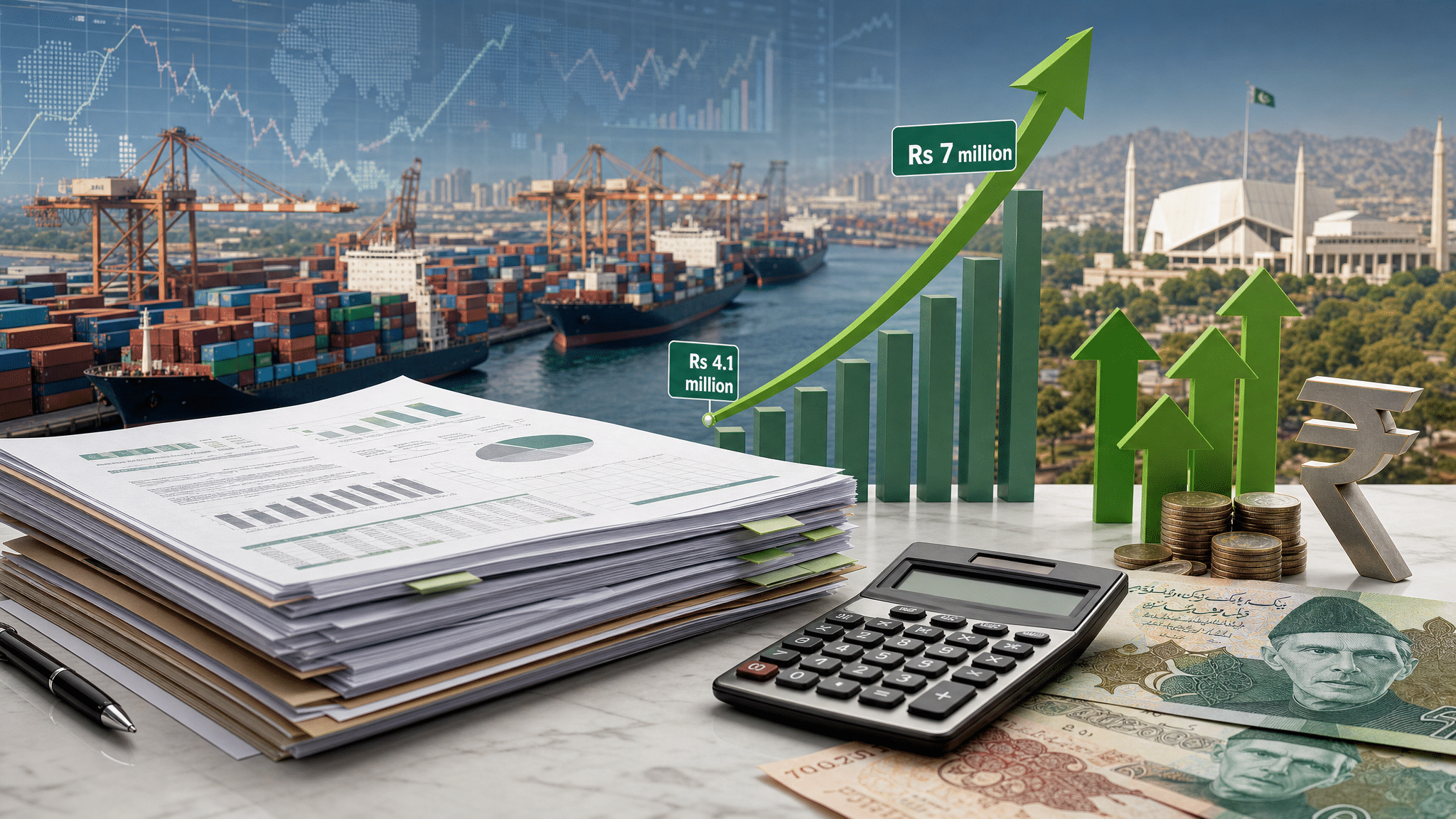
Economic equilibrium requires a calibrated approach to fiscal policy that balances revenue collection with real purchasing power. The government’s proposed income tax relief for the highest-earning salaried segment represents a strategic move to address the tax bracket creep triggered by persistent inflation. Under the 2026-27 federal budget framework, authorities plan to raise the highest income tax threshold from Rs. 4.1 million to Rs. 7 million annually. Furthermore, the proposal includes the removal of the 10% surcharge on top-tier earners. Consequently, this adjustment effectively lowers the marginal tax rate for Pakistan’s upper-middle-income professionals.
The Translation: Decoding Income Tax Relief
In technical terms, the state is addressing a phenomenon known as “bracket creep.” Inflation-driven salary adjustments recently pushed many professionals into higher tax brackets without actually increasing their real wealth. By raising the threshold to Rs. 7 million, the government recalibrates the system to reflect modern economic realities. Additionally, removing the 10% surcharge acts as a catalyst for liquidity among high-output professionals. This move acknowledges that the salaried class has historically carried a disproportionate tax burden compared to other sectors.

The Socio-Economic Impact: Impact on the Pakistani Citizen
While the proposal provides a baseline for relief, the impact is focused on specific segments of the population. The structural changes will likely result in the following outcomes:
- High-Income Professionals: Executives and senior managers will see a measurable increase in disposable income, potentially boosting domestic investment.
- Lower-Middle Income Earners: Individuals earning between Rs. 600,000 and Rs. 1.2 million will see no change, as their slabs remain static.
- Documented Sector Integrity: By offering relief, the government aims to retain talent within the formal economy, though the lack of relief for lower brackets remains a point of contention.

The Forward Path: A Stabilization Move
From an architectural standpoint, this development represents a Stabilization Move rather than a total momentum shift. It successfully addresses the immediate grievances of the most heavily taxed documented segment. However, for a true systemic evolution, the state must eventually bridge the gap between the documented salaried class and the largely untaxed agriculture and retail sectors. This proposal is a precision-calibrated first step toward a more equitable fiscal landscape, but broader structural reforms are necessary to achieve long-term economic efficiency.









