
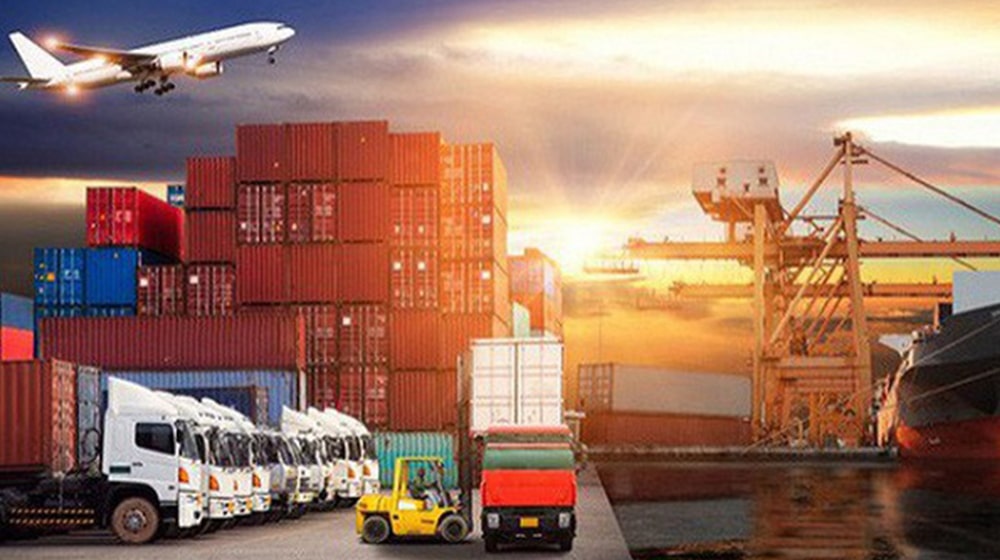
The structural framework of Pakistan’s trade economy received a precision upgrade in the Federal Budget 2026-27. Finance Minister Muhammad Aurangzeb announced the complete abolition of the Export Development Surcharge to catalyze international competitiveness. This strategic intervention seeks to remove financial friction and enhance the baseline liquidity of the country’s exporting industries.
Enhancing Competitiveness: The Export Development Surcharge Removal
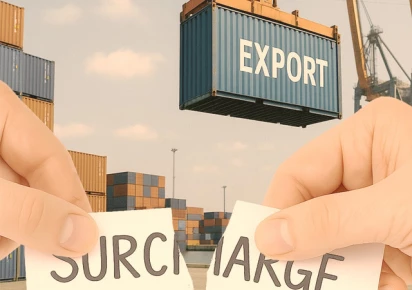
The government formally eliminated the 0.25 percent levy previously applied to all export income. Consequently, this measure reduces the immediate financial burden on businesses operating within the global trade arena. Finance Minister Aurangzeb emphasized that this decision is a calibrated effort to support exporters and stabilize cash flows. By removing this surcharge, the administration aims to foster a more aggressive, export-led growth model that can sustain long-term economic momentum.
Financial Precision: Extending the Export Finance Scheme
In addition to the tax relief, the government introduced a structural adjustment to the Export Finance Scheme. Officials extended the available financing period from nine months to eighteen months. Furthermore, this doubling of the tenure allows exporters to manage working capital requirements with greater precision and flexibility. This move effectively eases cash-flow pressures, ensuring that businesses have the necessary runway to execute large-scale international contracts.

The Situation Room
The Translation: Clear Context
The 0.25 percent Export Development Surcharge acted as a “tax on revenue,” which squeezed profit margins regardless of a company’s actual profitability. By abolishing this, the government is shifting from a model of extraction to a model of incentivization. The extension of the Export Finance Scheme further acts as a liquidity bridge, acknowledging that global trade cycles are lengthening and require more patient capital.
The Socio-Economic Impact
For the average Pakistani citizen, this policy change strengthens the industrial backbone of the nation. For professionals in the textile, tech, and manufacturing sectors, it translates to increased job security and potential expansion of production lines. Improved export performance directly correlates with a more stable Rupee, which eventually mitigates the inflationary pressure on household commodities across both urban and rural Pakistan.

The “Forward Path”: Expert Opinion
This development represents a significant Momentum Shift. Rather than applying a temporary patch, the government is addressing structural bottlenecks that have historically hindered our global competitiveness. If paired with consistent energy pricing, this could be the catalyst required to transform Pakistan into a regional export powerhouse. The focus on cash-flow efficiency marks a transition toward a more sophisticated, pro-growth economic architecture.








