
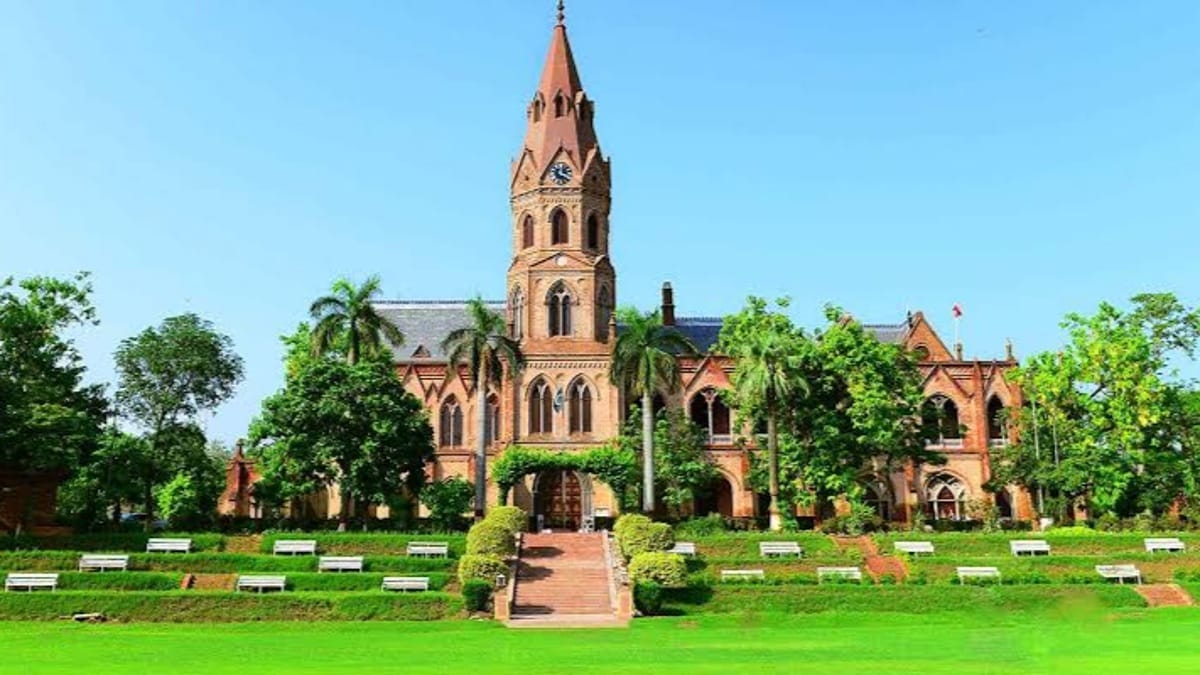
Navigating the GCU Lahore Admissions Framework
The academic landscape of Pakistan undergoes a significant calibration as GCU Lahore Admissions for the Fall 2026 session officially open. This enrollment cycle represents a strategic expansion of one of the nation’s most storied institutions, offering 120 distinct academic pathways. Consequently, students seeking precision-driven education can now apply for undergraduate, postgraduate, and doctoral programs before the July 3, 2026 deadline.
The university currently facilitates 63 undergraduate (BS) programs, 41 postgraduate (MS/MPhil) tracks, and 16 PhD specializations. Furthermore, the administration is accepting applications for both the historic Main Campus and the expanding Kala Shah Kaku (KSK) Campus. Notably, the introduction of a two-year Associate Degree Program (ADP) in Computer Science at KSK signals a move toward system efficiency in digital education.
Structural Breakdown of the Fall 2026 Intake
Prospective applicants must utilize the university’s online portal to submit their documentation. Alongside standard merit seats, GCU provides self-finance options to broaden access for eligible candidates. Moreover, the institution has finalized schedules for sports and co-curricular activity trials, ensuring a holistic evaluation of the incoming cohort. This precision-based approach maintains the high standards established since the university’s founding in 1864.
The Translation: Precision in GCU Lahore Admissions
Traditional academia often creates a lag between degree completion and market entry. However, GCU’s inclusion of the Associate Degree Program (ADP) in Computer Science acts as a structural catalyst. This two-year track converts theoretical knowledge into calibrated digital skills, ensuring graduates meet the immediate requirements of the global tech economy. Essentially, the university is streamlining the path from the classroom to the professional workforce.
The Socio-Economic Impact: Cultivating Human Capital
The strategic activation of the Kala Shah Kaku (KSK) campus decentralizes elite education and serves as a baseline for regional development. By offering high-tier programs outside the central urban hub, GCU provides students from various backgrounds with a platform for upward mobility. Specifically, the integration of market-oriented technical skills directly impacts household income stability for graduates entering the digital sector.
The Forward Path: A Momentum Shift in Digital Literacy
This development represents a Momentum Shift. While GCU remains a guardian of historical prestige, its pivot toward market-oriented digital programs shows a precise alignment with the demands of the fourth industrial revolution. The institution is no longer just maintaining a legacy; it is actively retooling the next generation for national advancement. Ultimately, this intake will define the quality of Pakistan’s intellectual and technical output for years to come.








