

The latest Fitbit app update represents a strategic shift in wearable data processing, transitioning from passive monitoring to a calibrated personal guidance system. By integrating advanced algorithmic fitness planning and architectural redesigns of core health metrics, Fitbit aims to elevate the baseline for digital wellness ecosystems. This rollout establishes a more intuitive framework for users to optimize their physiological output through real-time feedback loops.
Advanced System Calibration: The New Fitbit App Update
Fitbit Premium users now have access to precision-engineered weekly fitness plans. These structural improvements set dynamic goals based on specific user targets, recommending workouts with scientific accuracy. Consequently, the system adjusts suggestions based on user feedback during the Public Preview phase. Furthermore, a new feature allowing users to edit targets and plan layouts is scheduled for deployment next week, enhancing the flexibility of the user interface.

Optimizing Performance via AI-Driven Coaching
The coaching interface has undergone a significant modernization. Recommended workouts now provide step-by-step guidance, ensuring that every session is executed with technical precision. Most notably, the “Ask Coach” tool has evolved beyond preset prompts. Users can now interact with the system using natural language processing to review their progress. This transition from static commands to conversational intelligence represents a major catalyst for sustained user engagement.
- Dynamic Guidance: Real-time instructions for every workout phase.
- Natural Interaction: Conversational AI for progress reviews and suggestions.
- Adaptive Feedback: System calibration based on individual performance metrics.
Structural Redesign: Today Tab and Sleep Scoring
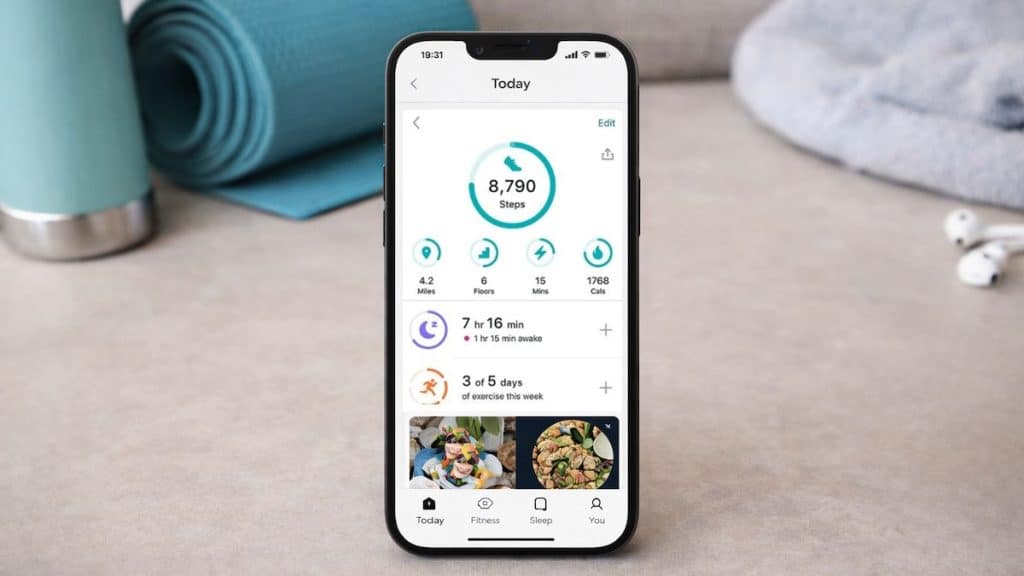
The “Today” tab now features a time-calibrated information flow. Users receive a morning check-in, post-workout summaries, and a comprehensive end-of-day recap automatically. Simultaneously, the Fitbit app update introduces a redesigned Sleep Score. This module provides a transparent breakdown of sleep stages and calculation logic. As a result, users can better identify the variables affecting their recovery and cognitive readiness.
The Situation Room: Strategic Analysis
The Translation
In technical terms, Fitbit is moving away from being a “data bucket” and toward becoming a “decision engine.” Instead of simply showing you that you walked 10,000 steps, the app now uses your history to tell you exactly which workout will yield the highest physiological ROI today. The “Ask Coach” update is a move toward Large Language Model (LLM) integration, making health data conversational rather than purely statistical.
The Socio-Economic Impact
For the Pakistani professional and student, this shift democratizes high-level fitness coaching. In a country where access to certified personal trainers can be a luxury, a precision-calibrated app serves as a catalyst for public health. By providing clearer sleep data, it addresses the productivity baseline of the workforce, helping citizens manage stress and recovery in high-pressure urban environments.

The Forward Path
This development is a definitive Momentum Shift. By shifting the focus to adaptive, feedback-heavy coaching, Fitbit is creating a more resilient health infrastructure for its users. While the gradual rollout might delay access for some regions, the structural logic behind these updates suggests a future where wearable technology is an essential partner in human performance optimization.








