
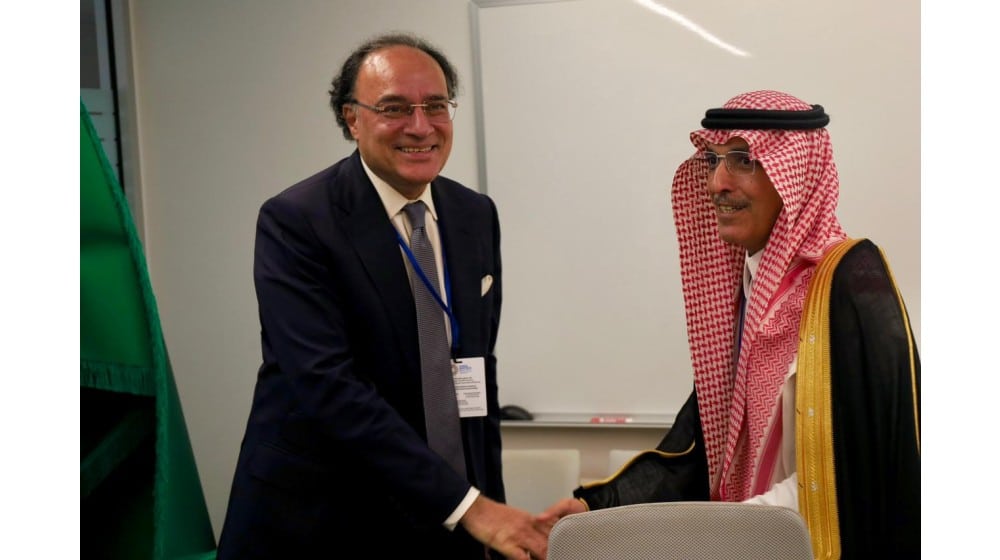
Maintaining structural liquidity remains the baseline for Pakistan’s current fiscal trajectory. Finance Minister Muhammad Aurangzeb confirmed on Thursday that the Saudi debt rollover of $3 billion is officially secured. This strategic extension ensures that Pakistan’s foreign exchange reserves remain stable following the maturity of the deposit earlier this week. Consequently, this calibration aligns with the broader $7 billion IMF program, which requires consistent bilateral support to maintain economic momentum.
Calibrating the Saudi Debt Rollover for Fiscal Precision
The Finance Minister addressed the media following a Senate Standing Committee on Finance session, dismissing concerns regarding the deposit’s maturity. He clarified that the transition was seamless, stating the situation is “all good.” Saudi Arabia originally extended this $3 billion facility in April to provide a liquidity buffer, allowing Pakistan to manage maturing obligations to the United Arab Emirates. Furthermore, this rollover is part of a larger, disciplined commitment by Saudi Arabia, China, and the UAE to maintain $12.5 billion in deposits with the State Bank of Pakistan until September 2027.
The Translation: Breaking Down the Rollover Logic
In technical terms, a Saudi debt rollover does not mean the debt is forgiven; rather, the maturity date is extended. Think of it as a strategic “time-buffer” that prevents a sudden outflow of dollars from our national reserves. Because these funds remain in the State Bank, they act as a psychological and mathematical floor for the PKR exchange rate. Without these rollovers, the sudden decrease in reserves would trigger speculative pressure on the currency, leading to rapid inflation.
The Socio-Economic Impact: What This Means for You
This development directly influences the daily lives of Pakistani citizens by stabilizing the cost of imports. For the average household and professional, this move results in:
- Currency Stability: Minimizing the risk of a sudden rupee devaluation against the dollar.
- Controlled Energy Costs: Stable reserves help the government manage oil and gas import payments without passing immediate shocks to the consumer.
- Investor Confidence: For tech startups and students, a stable macro-environment attracts the foreign venture capital necessary for job creation.
The Forward Path: Architect’s Opinion
This development represents a Stabilization Move. While it does not represent new growth or “fresh” capital, it is a precision-calibrated maneuver that prevents a regression into a liquidity crisis. For Pakistan to shift from stabilization to momentum, the state must now leverage this breathing room to implement structural reforms in the energy sector and expand the digital tax base. Sustaining the Saudi debt rollover is a necessary catalyst, but the ultimate goal must be a self-sustaining economy that no longer requires perpetual extensions.








