
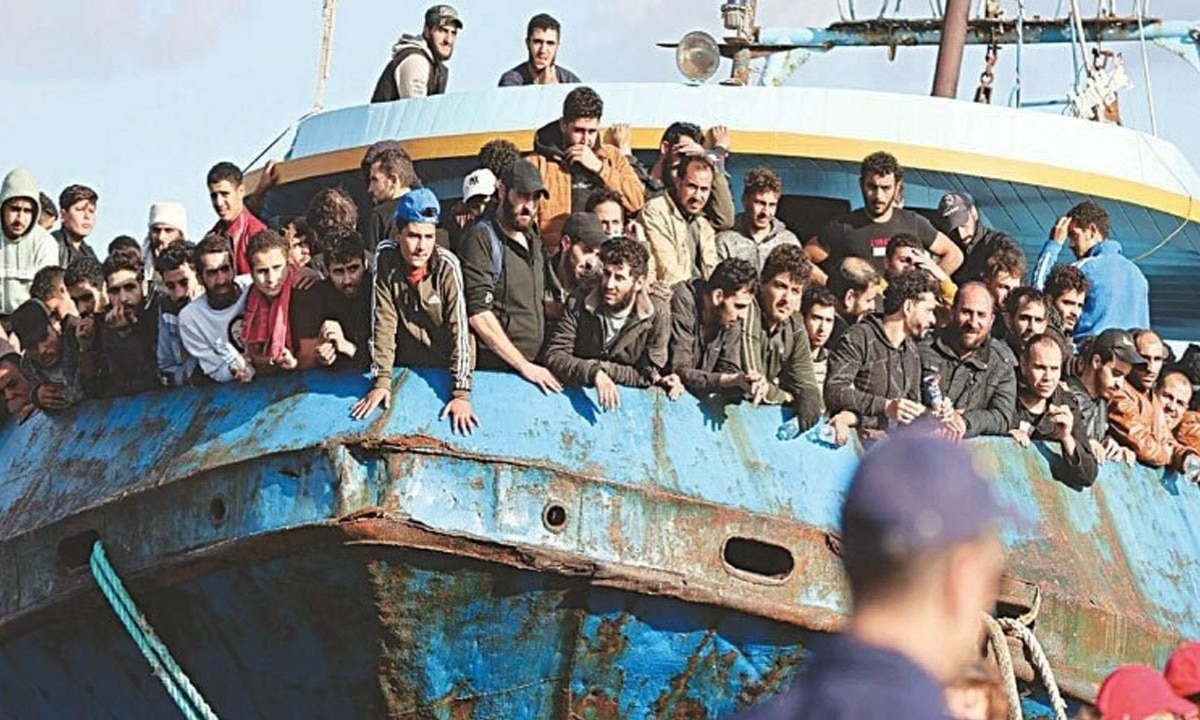
National stability requires a calibrated baseline of institutional integrity and operational precision. The Federal Investigation Agency (FIA) recently disciplined more than 100 human smuggling officials following the 2023 Greece boat tragedy. This strategic pivot marks a significant shift from passive observation to structural accountability within Pakistan’s border management systems. Consequently, the agency is now prioritizing rigorous screening to prevent further humanitarian disasters at sea.
Systemic Purge of Human Smuggling Officials
Following the catastrophic June 2023 incident where 209 individuals drowned off the Greek coast, the FIA launched a comprehensive internal audit. Director General Dr. Usman Anwar informed the Standing Committee on Interior that the agency initiated 132 formal enquiries. These investigations resulted in 68 major and 36 minor penalties against human smuggling officials who failed to execute standard profiling procedures. Furthermore, these individuals were found to have actively facilitated illegal migration pathways, undermining national security protocols.

Strategic Migration Management and Data Precision
The FIA has transitioned toward a data-driven border strategy to mitigate risk and enhance system efficiency. Specifically, the agency offloaded 22,136 passengers in 2026 based on high-precision risk assessments. In contrast to previous years, deportations involving forged documentation plummeted from 281 cases in 2024 to a mere 13 in early 2026. This decline serves as a catalyst for improved international trust in Pakistani travel documents.
Analyzing Global Migration Flux
Current data identifies emerging trends and vulnerabilities in international movement. The DG highlighted several critical areas of concern:
- Visa Misuse: Approximately 10,000 individuals have misused UK student visas to seek asylum.
- Non-Return Rates: Over 3,312 passengers traveling to Cambodia and 7,721 to Azerbaijan failed to return, often falling into bonded labor scams.
- Illegal Routes: Persistent movements through Belarus, Cyprus, Senegal, and Mauritania remain under high-intensity surveillance.
Structural Policy Reforms and Tech Upgrades
To ensure long-term stabilization, the Prime Minister’s Office issued eight specific directives aimed at dismantling smuggling networks. The FIA is currently upgrading its digital infrastructure with Advanced Passenger Information (API) and Passenger Name Record (PNR) analysis. Additionally, the implementation of e-gates and the eIMMI mobile application will provide a seamless, transparent data collection environment. Moreover, a National Command and Control Centre is planned to integrate all entry-point databases into a single, synchronized hub.
The Situation Room Analysis
The Translation
In “Next Gen” terms, the “failure to follow profiling procedures” means that the system’s human gatekeepers were intentionally bypassable. By disciplining these human smuggling officials, the FIA is removing the “internal bugs” that allowed human traffickers to operate. This is not just a legal cleanup; it is a system reboot designed to make the cost of corruption higher than the reward.
The Socio-Economic Impact
This development directly impacts the safety and financial security of Pakistani households. By curbing illegal migration, the state reduces the number of families falling victim to predatory “agents” who charge millions for life-threatening journeys. Furthermore, the reduction in document forgery protects the global reputation of the Pakistani passport, eventually making legitimate travel and work visas easier to obtain for professionals and students.
The Forward Path
This represents a Momentum Shift. Moving from manual, discretionary checks to automated API/PNR systems and e-gates reduces human error and corruption opportunities. While the disciplinary actions address past failures, the integration of a National Command and Control Centre suggests a forward-thinking move toward a high-tech, fortified border architecture.








