
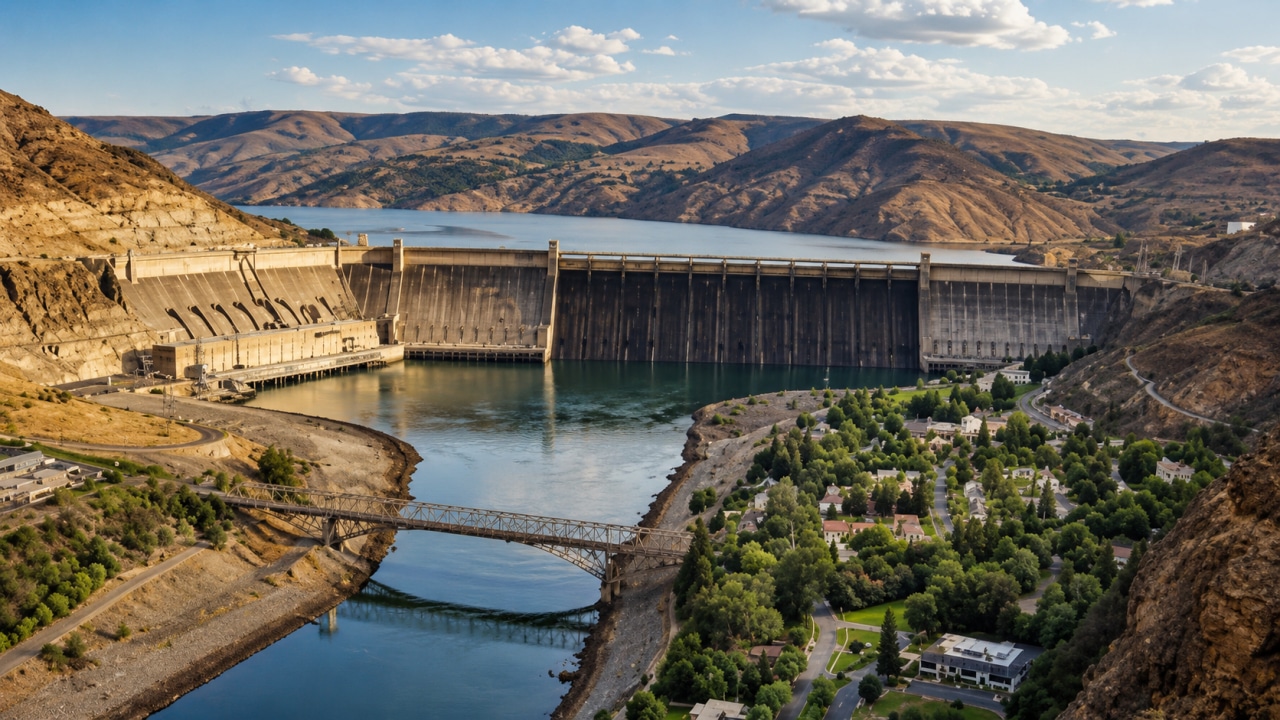
The Federal Constitutional Court (FCC) recently cleared critical legal bottlenecks hindering the Nai Gaj Dam project, marking a calibrated shift toward structural efficiency in Pakistan’s water management. By overturning previous Sindh High Court rulings, the FCC eliminated claims for unauthorized price escalation. Consequently, the court mandated that the contractor adhere strictly to the original contractual baseline and the 2021 memorandum of understanding.
Legal Precision and Contractual Discipline
A two-member bench, led by Chief Justice Aminuddin Khan and Justice Ali Baqar Najafi, issued a decisive 21-page judgment. The court ordered the contractor, NEIE SMADB LILLEY RMS Karachi, to resume work under the precision of the agreed terms. Furthermore, the FCC barred any fresh judicial intervention until the dam’s completion, ensuring that the project remains insulated from further litigation cycles.
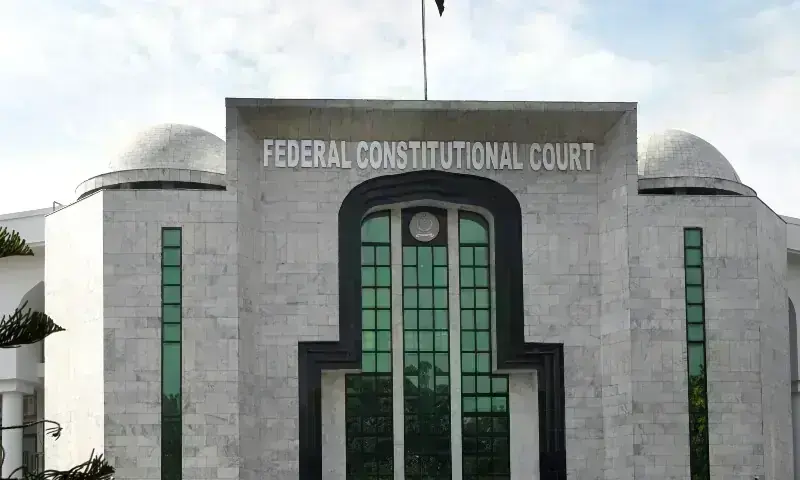
WAPDA now holds the authority to decide on work resumption requests within a 15-day window. While the court allows for reasonable time extensions, it explicitly forbids any additional financial compensation or price escalation. If the contractor fails to comply, WAPDA reserves the right to re-award the Nai Gaj Dam project work through a fresh tender on a risk-and-cost basis.
The Situation Room: Strategic Analysis
The Translation (Clear Context)
The FCC has effectively “locked” the project budget to prevent predatory pricing. In technical terms, the court rejected the contractor’s attempt to use delays as a catalyst for price hikes. By upholding the original arbitral award and the 2021 MOU, the court is enforcing fiscal discipline in public infrastructure procurement.
The Socio-Economic Impact
This development directly impacts the rain-fed regions of Kachho and Kohistan in Sindh’s Dadu district. Once operational, the dam will bring approximately 28,800 acres of land under cultivation. For the local citizen, this means enhanced food security, the generation of 4.2 megawatts of clean hydropower, and the vital restoration of freshwater flows to Manchar Lake.
The Forward Path (Opinion)
This ruling represents a significant Momentum Shift. By prioritizing “nationally significant public infrastructure” over contractual disputes, the FCC is setting a baseline for system efficiency. This judicial shield against intervention is exactly the kind of structural reform needed to ensure large-scale STEM projects in Pakistan reach the finish line without being drained by litigation.








