Regional stability serves as the primary catalyst for the upcoming seasonal celebrations. Consequently, authorities have released the official Eid prayer timings to ensure systematic communal gatherings across the seven emirates. This structural alignment of religious observance follows strategic diplomatic efforts to stabilize the Strait of Hormuz, providing a calm baseline for UAE residents.
Calibrated Eid Prayer Timings by Emirate
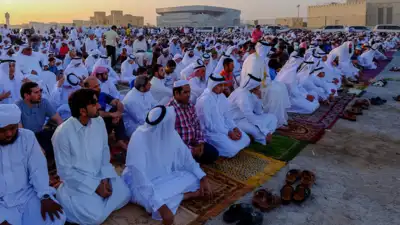
Precision in timing remains essential for the synchronization of thousands of worshippers. Most congregations will initiate their sessions approximately 15 to 20 minutes post-sunrise. Therefore, residents should calibrate their arrival for 5:30 am to avoid structural delays at mosque entrances.
Abu Dhabi and Al Ain
- Abu Dhabi City: 5:51 am
- Al Ain: 5:45 am
- Zayed City: 5:56 am
Dubai and Sharjah
Dubai worshippers will begin their prayers at 5:47 am. Meanwhile, the Sharjah Department of Islamic Affairs confirmed specific timings for its diverse regions:
- Sharjah City and Al Hamriyah: 5:45 am
- Eastern Region (Khor Fakkan, Kalba): 5:42 am
- Central Region (Al Dhaid, Mleiha): 5:44 am
Northern Emirates
- Ajman: 5:45 am
- Umm Al Quwain: 5:44 am
- Ras Al Khaimah: 5:43 am
- Fujairah: 5:43 am
Behavioral Protocols and Udhiya Guidelines
Adhering to traditional Sunnah practices enhances the efficiency of the communal experience. Specifically, worshippers should perform ritual bathing (Ghusl) and wear their best attire before heading to the prayer grounds. To optimize traffic flow, scholars recommend taking one route to the mosque and returning by another. Furthermore, the ritual sacrifice, or Udhiya, remains a cornerstone of this observance, commemorating the faith of Prophet Ibrahim.

The UAE government mandates the use of approved slaughterhouses for all ritual sacrifices. This directive ensures public health safety and maintains urban hygiene standards. Consequently, authorities strictly prohibit slaughtering animals in residential streets or public spaces.
The Situation Room Analysis
The Translation
The announcement of these Eid prayer timings is not merely a religious update; it is a logistical synchronization of the nation’s social fabric. By providing specific timestamps down to the minute for different regions, the UAE government utilizes precision scheduling to manage high-density human movement, ensuring that the transition from prayer to celebration is seamless and safe.
The Socio-Economic Impact
This organized approach directly impacts the efficiency of the UAE’s retail and hospitality sectors. A synchronized prayer schedule allows families to plan their post-prayer Udhiya and social visits with high predictability. Furthermore, the enforcement of authorized slaughterhouse usage protects the livestock economy and prevents public health externalities that could arise from unregulated waste management.
The Forward Path
This development represents a Stabilization Move. The successful coordination of massive public gatherings amidst ongoing regional diplomatic recalibrations demonstrates high institutional resilience. By focusing on precision and public order, the UAE reaffirms its status as a stable hub for religious and cultural diversity in the Middle East.