
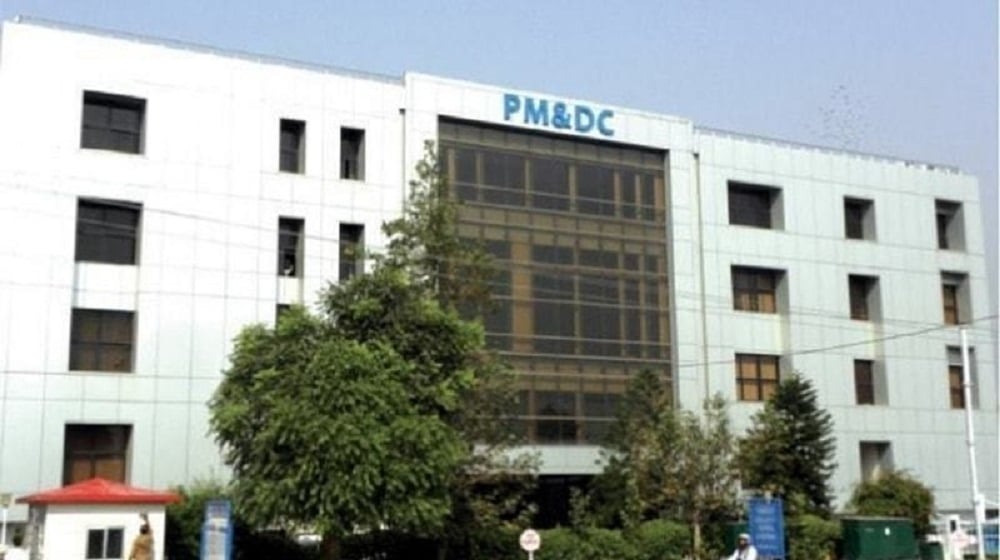
The Pakistan Medical and Dental Council (PMDC) has recently implemented a controversial policy, lowering the MDCAT passing marks for medical and dental admissions. This strategic adjustment, reducing MBBS criteria to 52% and BDS to 47%, has drawn significant opposition from the Pakistan Medical Association (PMA). Critically, this decision appears engineered to address a symptom rather than the systemic issue: the prohibitive cost of medical education in private institutions. Consequently, concerns escalate regarding potential compromises to professional standards and fairness for past high-achieving applicants.
The Translation: Deconstructing the MDCAT Policy Shift
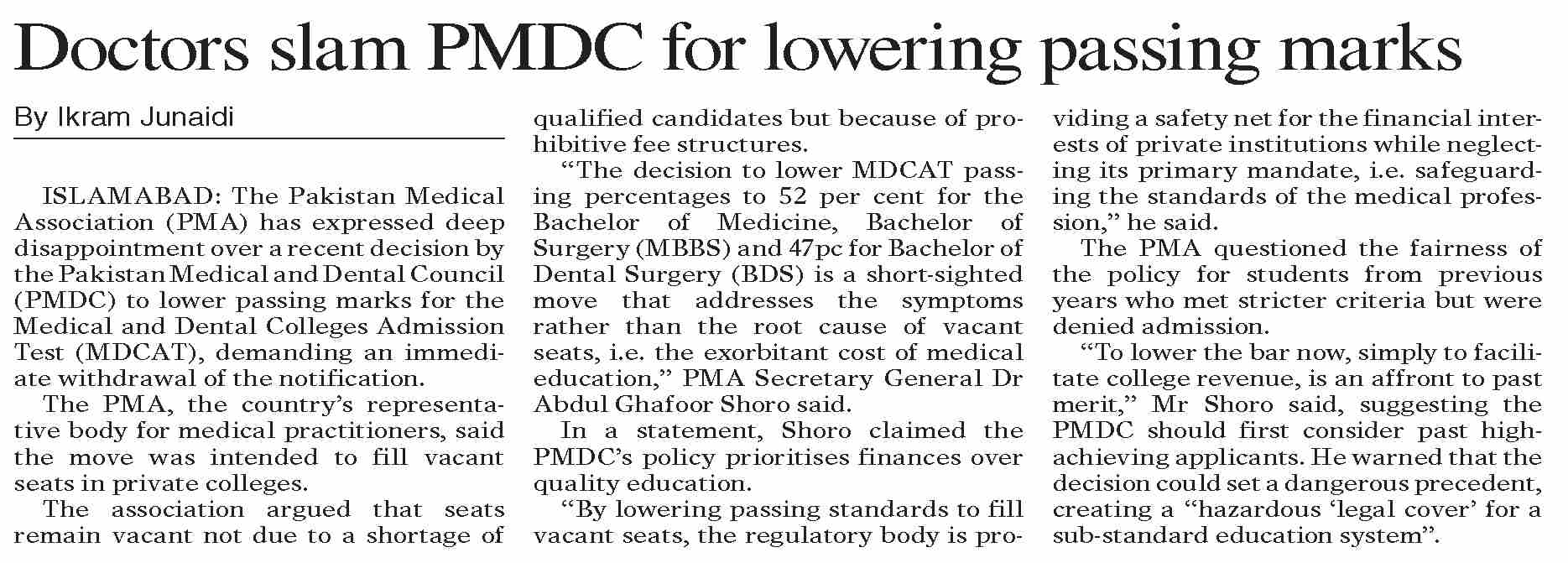
The Pakistan Medical and Dental Council’s recent notification recalibrates the minimum qualifying percentages for the Medical and Dental Colleges Admission Test (MDCAT). Specifically, the threshold for Bachelor of Medicine, Bachelor of Surgery (MBBS) programs now stands at 52 percent, while Bachelor of Dental Surgery (BDS) programs require 47 percent. Fundamentally, this adjustment directly impacts the eligibility criteria for aspiring medical and dental professionals across the nation. The PMA asserts that this move aims to fill existing vacancies within private medical colleges, which struggle with enrollment due to their elevated tuition structures.

Socio-Economic Impact: Calibrating Futures in Healthcare
This policy shift carries profound implications for Pakistani citizens, particularly students and their families. For urban and rural households, access to medical education frequently represents a significant financial burden. While lowering admission criteria might appear to broaden access, it fundamentally sidesteps the core affordability crisis. Consequently, this could perpetuate a system where financial capacity, rather than academic merit alone, remains a dominant factor. Furthermore, concerns arise regarding the quality of future medical practitioners. A potential decline in educational standards could erode public trust in the healthcare system, impacting the well-being of every Pakistani citizen.
The Forward Path: Momentum Shift or Stabilization Move?
From an architectural perspective, this development represents a Stabilization Move, not a genuine Momentum Shift. While it attempts to stabilize enrollment figures for private institutions, it fails to implement a structural solution for equitable medical education access. A true Momentum Shift would involve strategic interventions addressing tuition fees, expanding public sector capacity, or implementing robust scholarship programs. This current approach, in contrast, risks institutionalizing a two-tiered system where educational quality becomes variable. Future policy must prioritize long-term systemic health over short-term fiscal convenience.
Strategic Imperatives for Medical Education in Pakistan
Ultimately, the discourse surrounding MDCAT passing marks underscores a critical need for a comprehensive national strategy in medical education. Maintaining rigorous academic baselines while simultaneously ensuring accessibility requires a multi-faceted approach. This necessitates transparent dialogue among the PMDC, educational institutions, medical associations, and most importantly, prospective students. Only through calibrated reforms can Pakistan cultivate a robust, high-quality healthcare workforce capable of serving its populace effectively.








