

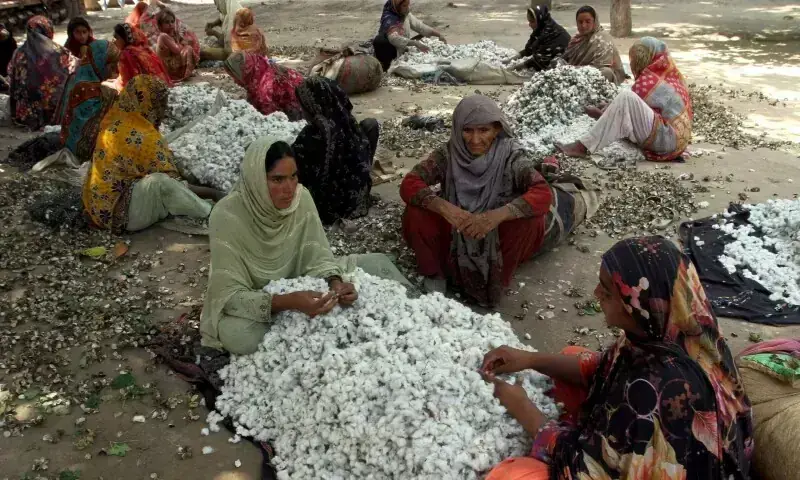
Pakistan’s agricultural sector is witnessing a historical shift as cotton prices surge following the unprecedented early start of the ginning season in the second week of May. This calibrated move by ginning factories in Punjab and Sindh deviates from the traditional June baseline. Market dynamics are reacting swiftly to the early arrival of phutti, signaling a strategic realignment in the textile supply chain. Consequently, textile mills are securing raw materials earlier than anticipated to stabilize their production cycles.
Structural Shifts in Pakistan’s Cotton Ginning Season
Ginning operations have commenced in Khanewal, Burewala, Sanghar, and Tando Adam following successful partial cotton picking in Sindh’s coastal regions. Punjab-based ginners are actively purchasing cotton from regions where early sowing occurred in February on a larger scale than previous cycles. This architectural change in the harvest timeline has driven significant market activity.

Price Analysis and Market Benchmarks
According to Cotton Ginners Forum Chairman Ihsanul Haq, the unusually early launch has triggered a bullish trend. Market participants observed the following precision price points:
- Phutti Rates: Initial deals ranged from Rs. 10,000 to Rs. 10,500 per 40kg, eventually peaking at Rs. 11,600.
- Lint Transactions: Early deals settled at Rs. 21,700 per maund, with subsequent reports reaching as high as Rs. 23,500.
- Operational Scale: Five factories in Punjab and two in Sindh have already initiated procurement.
The Translation: Contextualizing the Market Surge
In technical terms, the early arrival of ‘phutti’ (seed cotton) and ‘lint’ (processed fiber) indicates that Pakistan is successfully shortening its agricultural “lean period.” Traditionally, the gap between seasons forces textile mills to rely on expensive imports. By shifting the ginning baseline to mid-May, the industry creates a domestic bridge that maintains system efficiency. The cotton prices surge reflects a high-demand environment where mills are willing to pay a premium for immediate local availability.
The Socio-Economic Impact
This development acts as a catalyst for economic stability for both rural and urban citizens. Farmers who engaged in early sowing are benefiting from immediate liquidity and higher-than-average rates for their yield. For the broader economy, a steady supply of domestic cotton protects the textile sector—Pakistan’s largest export engine—from global supply chain volatility. This structural resilience helps maintain employment levels within the manufacturing sector and reduces the outward flow of foreign exchange reserves.

The Forward Path: Strategic Assessment
We categorize this development as a Momentum Shift. Moving the ginning timeline forward represents a successful adaptation to climate-resilient sowing patterns and improved irrigation management. While the initial cotton prices surge may increase short-term production costs, the long-term benefit of a longer, more stable processing season is undeniable. Pakistan is effectively recalibrating its agricultural output to meet industrial demand with precision.








