The integration of biological systems into industrial design represents a structural pivot in sustainable manufacturing. Researchers at the Shenzhen Institutes of Advanced Technology have successfully engineered a living mycelium fabric. This breakthrough material functions as an Engineered Living Material (ELM), utilizing dormant Cordyceps militaris fungi to actively clean, renew, and repair its structural integrity when calibrated with specific nutrients.
Precision Engineering: How Living Mycelium Fabric Heals
Unlike traditional fungal textiles that lose biological activity during production, this innovative material maintains a dormant cellular state. Scientists achieved this by drying the fungus at a precise 45 degrees Celsius. Consequently, the mycelium enters a low-metabolic baseline rather than becoming completely inactive. This strategic preservation allows the material to reactivate upon demand.

To initiate a repair, technicians apply a nutrient solution derived from potato water. This catalyst stimulates the dormant mycelium to generate new fungal filaments. For larger structural breaches, researchers introduce fresh mycelium into the damaged zone. The new growth expands across the gap, fusing the sections together without the need for chemical adhesives or mechanical stitching.
Programmable Biological Platforms and Self-Cleaning Surfaces
The living mycelium fabric functions as a programmable platform for advanced biological features. By introducing engineered yeast, the material can produce distinct pigments such as red, orange, and dark purple. Furthermore, the addition of Aspergillus niger creates a protective melanin layer. This layer significantly increases UV absorption and antioxidant properties, enhancing the material’s durability against environmental stressors.
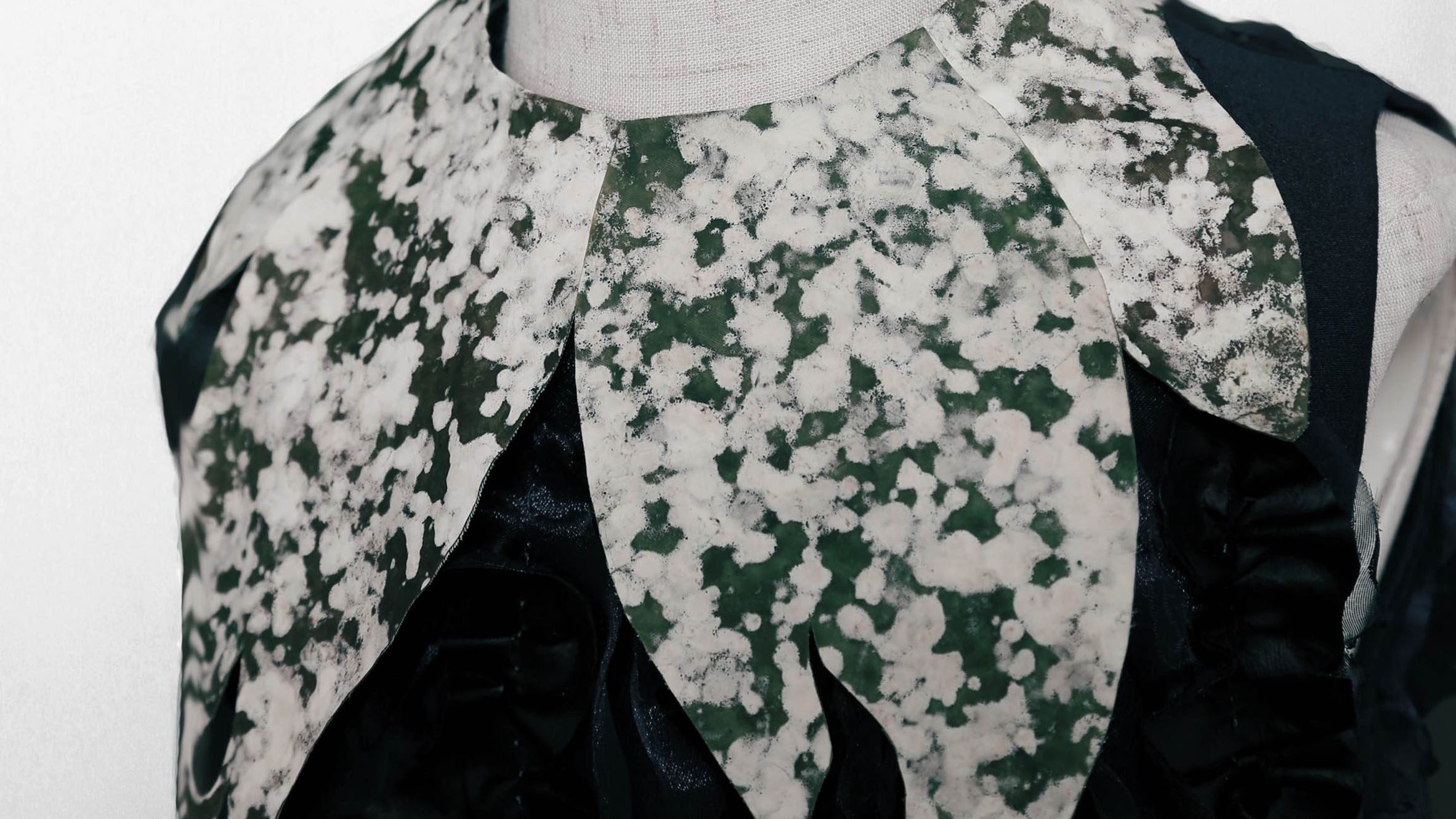
Beyond repair, the material exhibits sophisticated hydrophobic properties. The aerial mycelium creates a surface with a water contact angle of approximately 145 degrees. Therefore, dirty water droplets simply roll off the surface without leaving residue. This intrinsic self-cleaning mechanism reduces the need for chemical detergents and intensive maintenance cycles.

The Translation: Living Systems vs. Static Materials
In traditional manufacturing, a product begins a linear path toward decay the moment it is finished. However, this living mycelium fabric shifts the paradigm from “static consumption” to “biological maintenance.” By keeping the fungal cells in a dormant-but-viable state, we transition from manufacturing objects to cultivating systems. The “potato water” acts as a software update for the material, triggering a physical response that restores the baseline functionality of the textile.
The Socio-Economic Impact: Impact on Pakistani Households
For the average Pakistani citizen, this technology could fundamentally alter the cost-of-living equation. Imagine a school uniform or a heavy-duty work jacket that repairs its own tears and repels monsoon mud automatically. This longevity would drastically reduce the household expenditure on clothing replacements. Furthermore, as a biodegradable material, it offers a precision solution to the growing textile waste crisis in urban centers like Karachi and Lahore, providing a sustainable path that aligns with global ecological standards.
The Forward Path: A Momentum Shift in Biotechnology
This development represents a definitive Momentum Shift in the field of biotechnology. While the technology remains in the experimental phase, the ability to program living organisms to perform structural repairs is a catalyst for a new industrial era. We are moving toward a future where our infrastructure and apparel are not just built, but grown and sustained through biological intelligence. The next challenge lies in scaling manufacturing consistency to meet global market demands.