
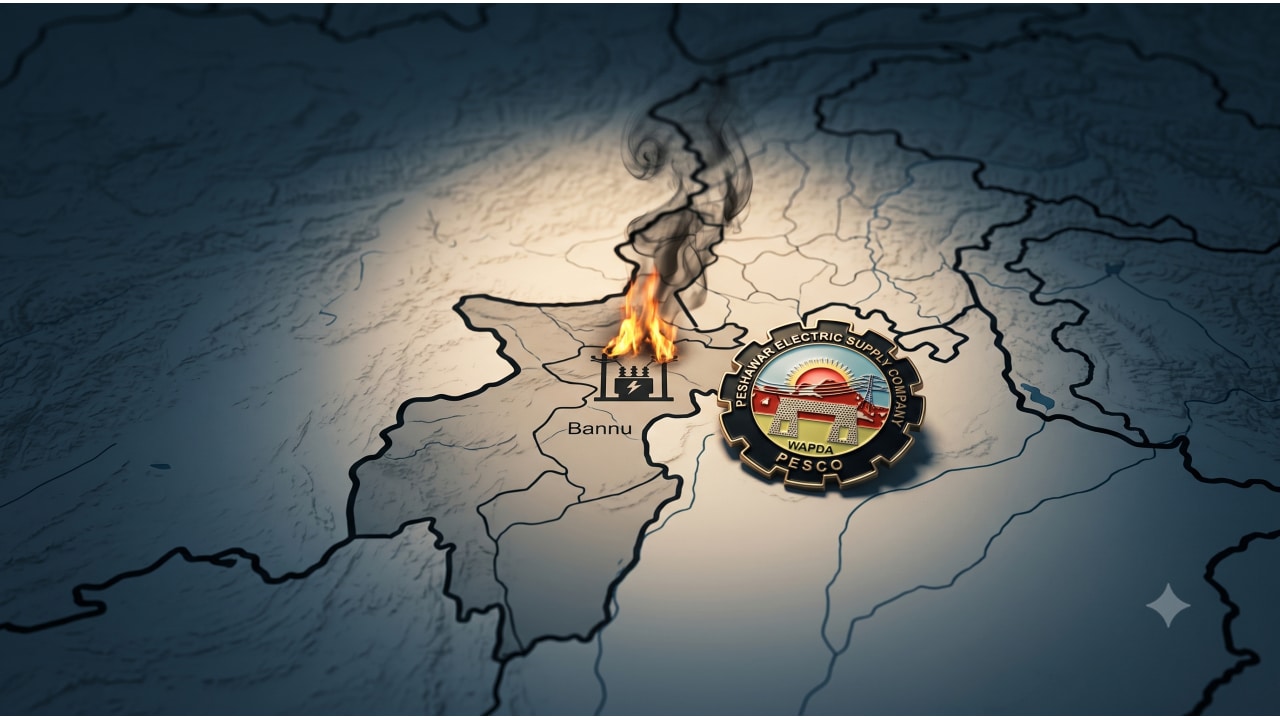
The Structural Risk of the Bannu Power Crisis
The integrity of Pakistan’s energy infrastructure remains the baseline for regional stability, yet recent events in Khyber Pakhtunkhwa reveal a calibrated threat to these systems. The Bannu power crisis has reached a critical flashpoint after armed groups repeatedly compromised the main electricity grid, endangering the structural health of high-voltage assets. The Peshawar Electric Supply Company (PESCO) reports that unauthorized activations of high-loss feeders have severely damaged a primary transformer, raising the immediate risk of a total regional blackout.
Systemic Failure through Forced Activation
Between June 24 and June 27, precision-based utility protocols were bypassed when armed associates of influential political figures entered the Bannu and Sarai Naurang grid stations. These groups forcibly restored electricity to feeders prone to high loss and theft. Consequently, the resulting electrical overload strained the high-voltage transformer beyond its calibrated threshold. PESCO officials state that the groups remained on-site overnight, effectively seizing control of the distribution logic to prevent staff from balancing the load.

Despite repeated applications to local law enforcement, no First Information Reports (FIRs) have been registered. This lack of legal recourse creates a strategic vacuum, allowing illegal consumption—particularly via high-drain air conditioning units—to continue unchecked while the physical infrastructure nears a point of irreversible failure.
The Situation Room Analysis
The Translation: Grid Overloading and Infrastructure Fatigue
To understand the Bannu power crisis in “Next Gen” clarity, one must view the grid as a balanced hydraulic system. “High-loss feeders” represent sectors where energy is consumed without payment, often through illegal connections. When armed groups force these feeders active, they override the safety valves of the grid. This creates an “Infrastructure Fatigue” where the transformer’s cooling systems fail, leading to permanent damage that cannot be fixed with simple maintenance.
The Socio-Economic Impact: A Regional Threat
This development directly threatens the daily lives of every citizen in the Bannu region. Beyond the immediate inconvenience of load-shedding, the destruction of a high-voltage transformer can cause weeks of total darkness. This disruption halts local industry, compromises healthcare facilities, and increases the financial burden on honest taxpayers who must fund the repair of sabotaged assets. It essentially penalizes the law-abiding professional for the actions of the unregulated.

The Forward Path: A Momentum Shift?
This situation represents a significant Momentum Shift toward systemic instability. For the energy sector to survive, the state must implement a “Stabilization Move” that prioritizes the physical security of grid stations as high-priority strategic assets. Without the enforcement of the rule of law, technical upgrades in Pakistan’s energy sector remain vulnerable to manual sabotage. Mitigating the Bannu power crisis requires more than engineering; it requires an uncompromising restoration of administrative authority.








