
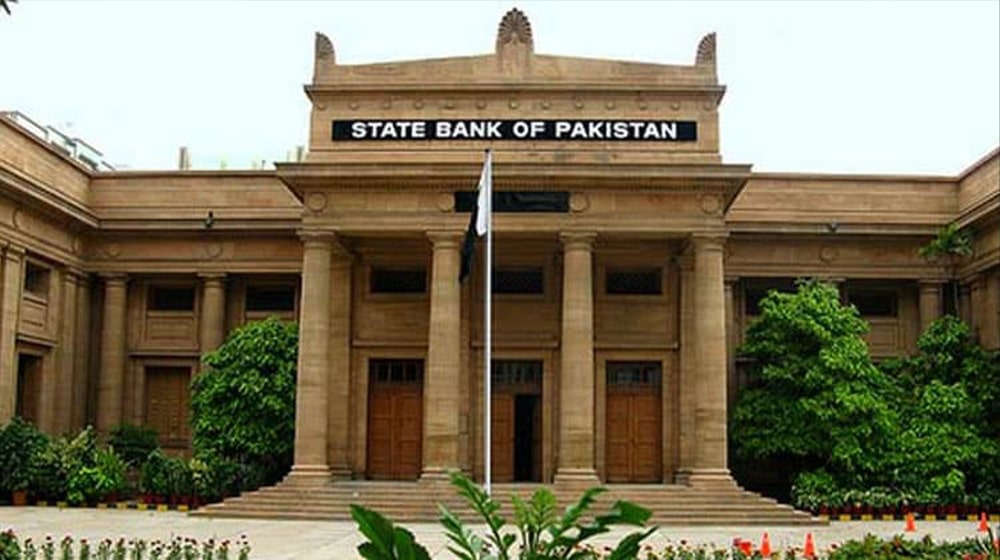
The precision of Pakistan’s financial infrastructure requires annual calibration to maintain systemic integrity. Consequently, the State Bank of Pakistan (SBP) has officially declared a Bank Holiday July 1, 2026. This strategic closure marks the commencement of the new fiscal year. While the doors remain closed to the public, the underlying banking architecture remains active for internal audits and balance sheet reconciliations.
According to the official circular, all commercial banks, Development Finance Institutions (DFIs), and Microfinance Banks (MFBs) must suspend public operations. However, this is not a general holiday for banking professionals. All employees will report to their stations as usual to finalize the previous year’s accounts. This disciplined approach ensures that the national ledger transitions smoothly into the next economic phase without data discrepancies.
Strategic Necessity: Why the Bank Holiday July 1 Matters
For the financial system to operate with calibrated accuracy, a pause in public dealing is essential. Banks utilize this 24-hour window to execute complex data processing tasks that would otherwise be disrupted by real-time customer transactions. This annual reset serves as a structural catalyst for financial transparency across all Pakistani monetary institutions.
The Situation Room: Decoding the Fiscal Transition
The Translation (Clear Context)
The July 1 closure is fundamentally a “Book Closing” exercise. Just as a scientist resets a precision scale before a new experiment, the SBP resets the national financial clock. Banks use this time to calculate interest, apply annual taxes, and verify every transaction from the previous 12 months. This period allows the system to establish a clean baseline for the 2026-2027 fiscal year.
The Socio-Economic Impact
Urban professionals and digital-first citizens will experience minimal disruption as ATM networks and mobile apps typically remain operational. In contrast, rural households and small-scale traders who rely on physical branch visits must plan their liquidity needs 48 hours in advance. This recurring pause highlights the critical need for a more robust digital payment ecosystem to mitigate the impact of physical branch closures on the informal economy.
The Forward Path (Opinion)
This development represents a Stabilization Move. While it maintains the status quo of traditional fiscal reporting, it underscores our structural dependency on manual end-of-year processing. For Pakistan to achieve true “Next Gen” efficiency, the financial sector must eventually move toward real-time auditing and automated reconciliations. Such an evolution could eventually eliminate the need for full-day public closures in our future digital frontier.








