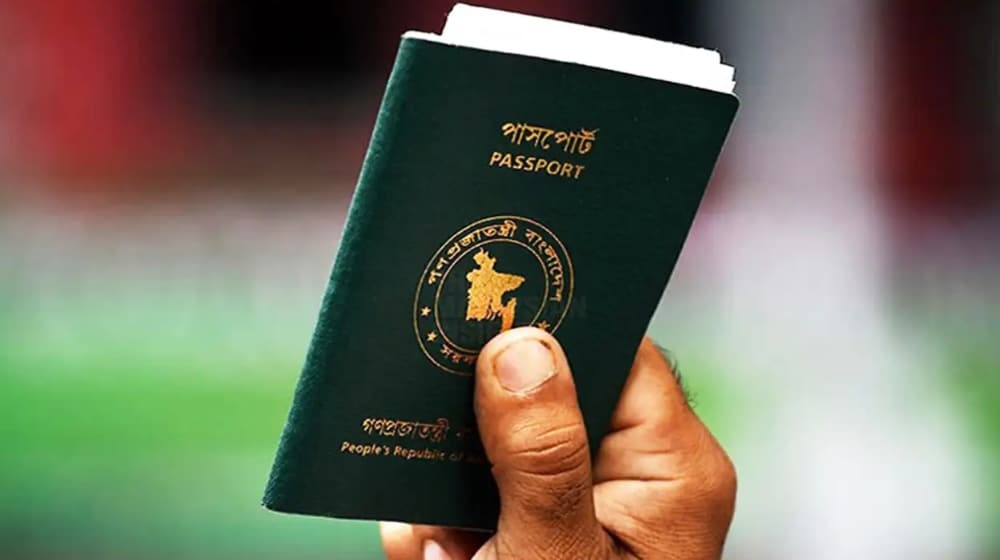
The interim government of Bangladesh has officially recalibrated its foreign policy baseline by restoring the Bangladesh passport clause that explicitly restricts travel to Israel. This strategic move reverses a 2021 administrative decision, effectively aligning the nation’s primary identification document with its historical diplomatic architecture. Consequently, Home Affairs Adviser Salahuddin Ahmed confirmed that authorities have already implemented this condition on diplomatic passports and will soon apply it to all ordinary documents.
Restoring the Bangladesh Passport Clause: A Structural Reversion
Bangladesh traditionally maintained a strict prohibition on travel to Israel since its independence in 1971. However, the previous Awami League administration removed the restrictive wording during the e-passport launch in 2021, a project requiring an investment of Tk 4,500 crore. Furthermore, officials from the Home Ministry and the Department of Immigration and Passports stated that the restoration reflects public sentiment and a firm moral position. The Bangladesh passport clause serves as a precision tool to communicate the nation’s long-standing support for Palestine on the global stage.
Recalibrating National Symbols and Watermarks
In addition to the policy shift, the government is executing a calibrated update of the passport’s internal visual assets. Specifically, authorities are introducing a new watermark featuring Abu Sayeed, a student who became a catalyst for the July public movement. At the same time, the government is removing several existing images, including the mausoleum of Sheikh Mujibur Rahman and the Mujibnagar Memorial. These changes indicate a structural pivot in how the state defines its historical narrative through official documentation.
The Situation Room Analysis
The Translation
While the previous government framed the removal of the clause as a move toward “global standard” mobility, the current administration views the restoration as a necessary alignment of policy and practice. The Bangladesh passport clause is not merely a travel restriction; it is a legal manifestation of a non-recognition policy. By reintroducing this text, the interim government is clarifying that technical modernization (e-passports) should not supersede established geopolitical principles.
The Socio-Economic Impact
For the average citizen, this development reinforces a sense of national identity and consistency in foreign relations. While it does not change the physical travel capability for most—as diplomatic ties never existed—it provides psychological assurance to a population that remains deeply invested in the Palestinian cause. Professionals and students traveling abroad will now carry a document that explicitly reflects the country’s ethical and political baseline.
The Forward Path
This development represents a Momentum Shift for Bangladesh. It signals that the interim leadership is willing to prioritize historical policy integrity over the administrative changes made by the previous regime. By anchoring the passport’s identity in both traditional foreign policy and new revolutionary symbols like Abu Sayeed, the government is establishing a new baseline for national representation.