
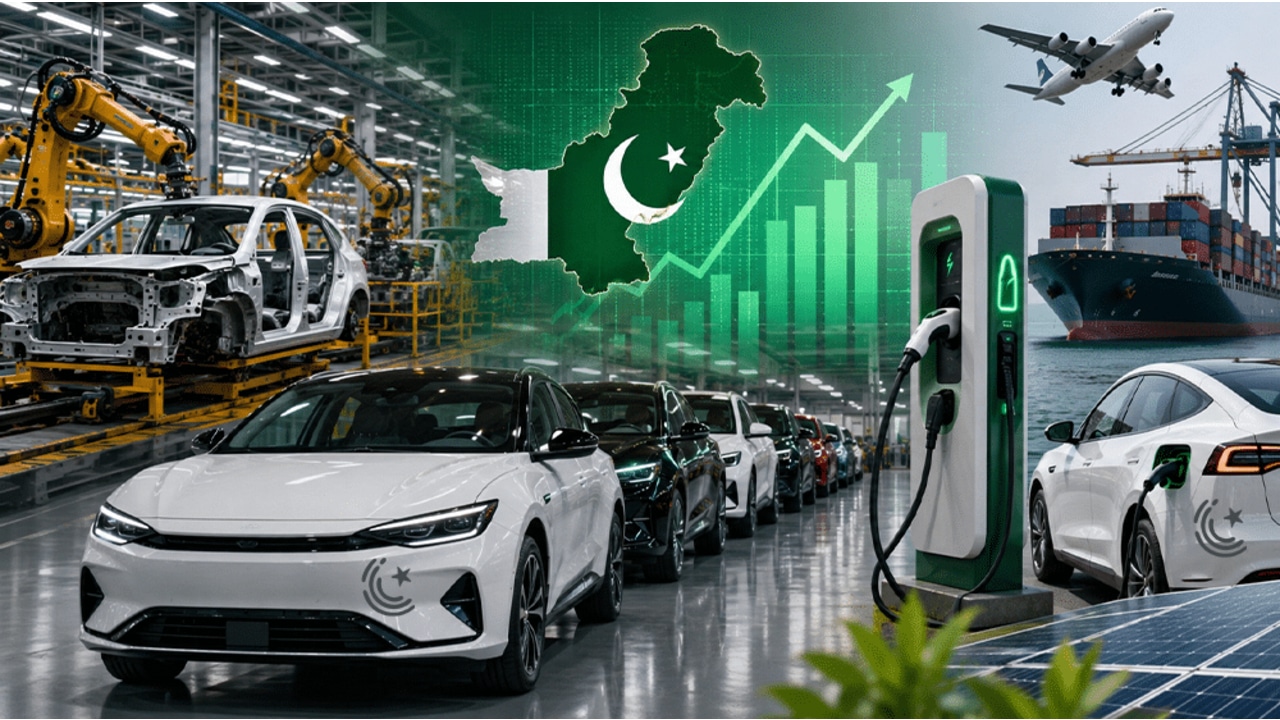
The Strategic Risks in the Pakistan Auto Policy
The Pakistan auto industry faces a critical structural challenge as major manufacturers urge Prime Minister Shehbaz Sharif to intervene against proposed tariff reductions. Stakeholders argue that the Pakistan Auto Policy requires urgent calibration to prevent a massive wave of deindustrialization across the national supply chain. Specifically, the Pakistan Automotive Manufacturers Association (PAMA) identifies the National Tariff Policy 2026-31 as a potential catalyst for industry collapse.
PAMA and the Pakistan Association of Automotive Parts and Accessories Manufacturers (PAAPAM) sent separate letters to the Prime Minister. These groups requested that the government exclude the automotive sector from proposed tariff reductions. Consequently, they warned that reducing tariffs on Completely Built Unit (CBU) vehicle imports to 15 percent would render locally manufactured models uncompetitive. This shift jeopardizes a $5 billion investment baseline and threatens the livelihoods of nearly 2.5 million citizens.
Impact on National Industrial Baseline
Currently, the automotive segment contributes more than Rs. 700 billion in annual tax revenue. However, vehicle assembly plants now operate at less than 50 percent of their installed production capacity. Industry leaders suggest that maintaining a minimum 40 percent tariff differential is necessary to support localization. Therefore, a failure to finalize a stable Pakistan Auto Policy creates persistent uncertainty for investors and stalls technological upgrades.
The Situation Room Analysis
The Translation
Government planners propose lowering import taxes to encourage market competition and lower prices. Conversely, local manufacturers argue that this creates an uneven playing field against international exporters. Without a finalized policy framework, the sudden shift toward imported vehicles makes local assembly plants economically unviable. Precision in tariff adjustment is required to balance consumer benefits with industrial survival.
The Socio-Economic Impact
This development directly influences the daily life of the average Pakistani through car affordability and job security. If assembly plants close, the resulting job losses would ripple through 1,324 small-scale part manufacturers. Consequently, household incomes in urban industrial hubs face a significant threat. A healthy automotive sector serves as a catalyst for middle-class employment and technical skill development across the country.
The Forward Path
This situation represents a Stabilization Move that requires immediate refinement to avoid becoming a regression. The government must align the Pakistan Auto Policy with deep localization goals to ensure long-term industrial maturity. Prioritizing technology transfer over cheap imports remains the only strategic path to safeguard the national industrial backbone. Strategic intervention now will determine if Pakistan remains a manufacturer or becomes a mere consumer market.








