
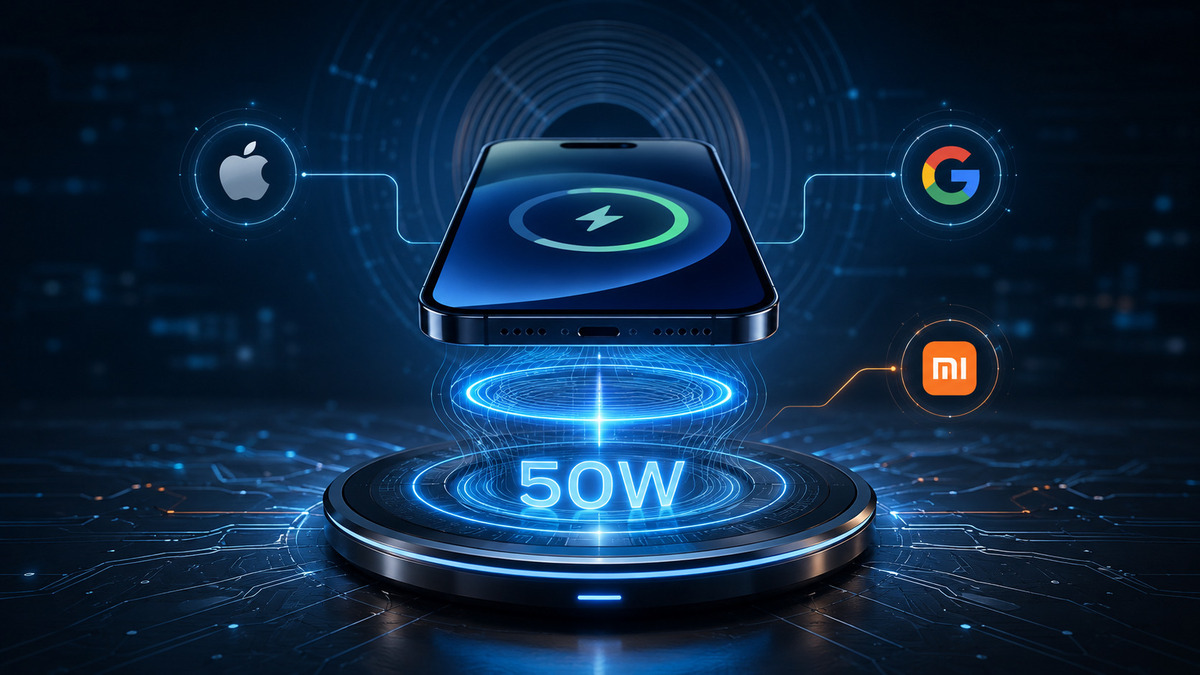
The global consumer electronics landscape is approaching a structural evolution as industry titans Apple and Xiaomi converge to redefine the 50W wireless charging standard. This strategic collaboration, solidified during a recent technical summit at Xiaomi’s Beijing headquarters, aims to double current charging velocities by 2028. Consequently, this advancement will synchronize the power capabilities of both iPhone and Android ecosystems under a unified, high-performance architecture.
The Translation: Calibrating the 50W Wireless Charging Ecosystem
Current wireless power transfer often faces thermal bottlenecks and limited throughput. The Wireless Power Consortium (WPC) is actively engineering a transition from the existing 15W and 25W limits toward a robust 50W wireless charging baseline. Furthermore, this initiative involves technical heavyweights including Google, Huawei, Oppo, and Vivo to ensure cross-platform interoperability. This move effectively converts specialized, brand-specific fast charging into a global public standard.
Strategic Advantages of Xiaomi’s Architecture
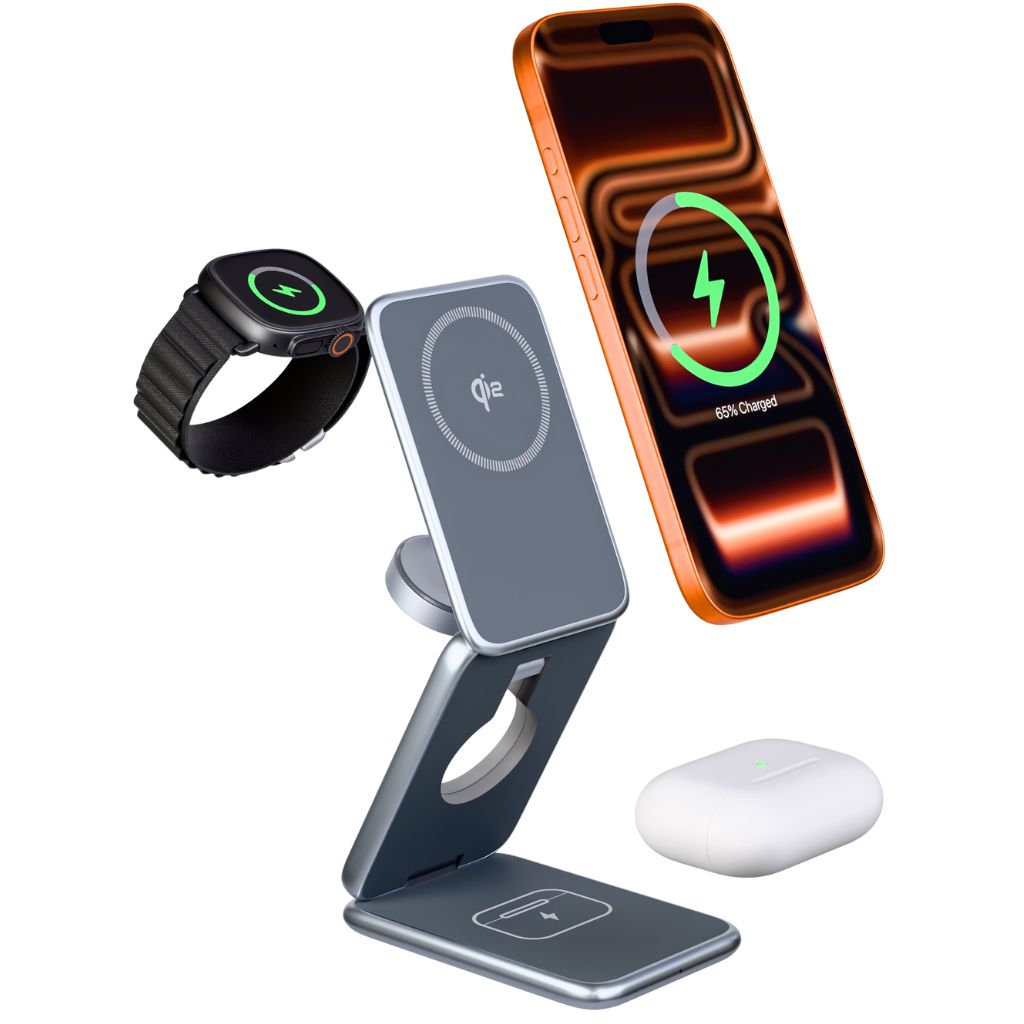
Xiaomi has proposed a sophisticated hardware design to address the inherent thermal management issues found in previous Qi iterations. For two years, engineers calibrated a low-inductance and low-voltage charging architecture specifically designed for modern form factors. This innovation provides several precision-engineered benefits:
- Reduced Power Loss: Minimizes energy dissipation within the induction coils.
- Enhanced Heat Dissipation: Optimizes thermal flow, which is critical for foldable smartphones.
- Modular Integration: Simplifies the installation of wireless components in thinner device chassis.

By early 2026, the Consortium formally integrated this architecture into the drafting process. This move ensures that future hardware follows a unified blueprint, preventing the market fragmentation that often hinders technological adoption.
Validation and Global Interoperability
During the “Plugfest” testing phase, over 20 companies, including Anker and NXP, validated prototype hardware for safety and reliability. These tests confirm that a 50W wireless charging ecosystem can function safely across diverse manufacturers. Moreover, this global compatibility allows Chinese hardware manufacturers to maintain seamless supply chains between domestic and international markets, reinforcing a stabilized global tech economy.

The Socio-Economic Impact
For the average Pakistani citizen, this shift represents a significant reduction in “electronic friction.” In a landscape where varied charging bricks and cables create economic waste, a universal 50W standard provides a catalyst for household efficiency. Students and professionals can rely on a single charging pad for multiple high-performance devices, reducing the long-term cost of hardware ownership. Additionally, the improved thermal management increases the lifespan of smartphone batteries, offering better value for consumers in varying climates.
The Forward Path: A Momentum Shift
The adoption of a 50W standard is a definitive Momentum Shift for the global industry. By moving away from restrictive proprietary systems, Apple and Xiaomi are prioritizing system efficiency over ecosystem lock-in. This structural alignment will accelerate the obsolescence of wired charging for most daily use cases, paving the way for a truly cordless digital future by 2028.








