
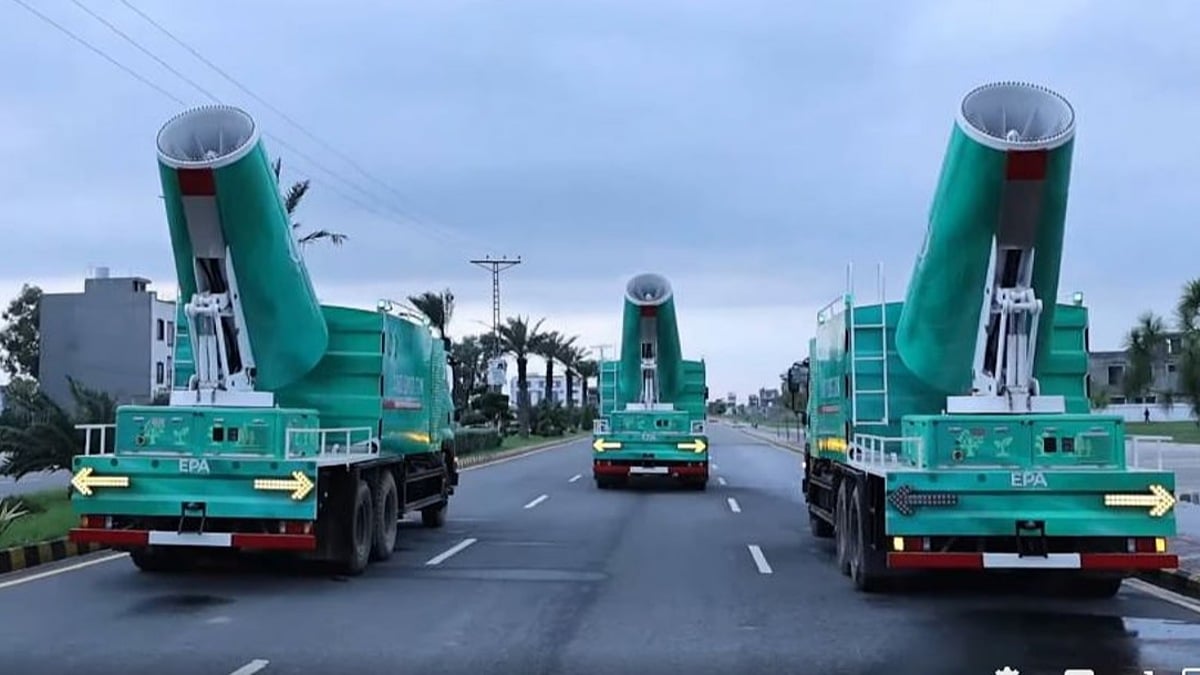
Faisalabad has strategically deployed two anti-smog guns to mitigate rising pollution levels ahead of the winter season. The Environmental Protection Agency (EPA) calibrated this move to suppress airborne particulate matter through precision water-misting technology. This structural intervention marks a critical baseline for air quality management in Punjab’s industrial hub, ensuring the city remains operational and healthy.
Engineering a Cleaner Atmosphere in Faisalabad
EPA Director General Imran Hamid Sheikh inaugurated the units at the DC Office Complex earlier this week. These anti-smog guns act as a vital catalyst for dust suppression by releasing a fine mist at localized pollution hotspots. Furthermore, the Punjab government is scaling this initiative after observing successful operational results in Lahore last year. Consequently, the deployment represents a shift toward technology-driven environmental governance.
Collaborative Research and Technological Integration
Beyond immediate hardware deployment, the EPA established a strategic partnership with The University of Faisalabad. Both entities signed a formal Memorandum of Understanding (MoU) to prioritize research on smog prevention. This collaboration ensures that future environmental policies rely on data-driven insights. Additionally, officials briefed participants on broader measures designed to reduce the regional carbon footprint and improve atmospheric clarity.
The Situation Room Analysis
The Translation
Essentially, anti-smog guns are high-pressure nebulizers that convert water into micro-droplets. These droplets bind with airborne particulate matter (PM2.5 and PM10), effectively forcing pollutants to the ground. This “artificial rain” simulates a natural atmospheric cleaning process, providing immediate relief in high-density urban corridors where smog accumulates most heavily.
The Socio-Economic Impact
For the average Pakistani citizen, this intervention reduces the respiratory load caused by industrial and vehicular dust. Households in Faisalabad may see a decrease in smog-related health expenditures. Furthermore, improved visibility on main roads decreases transport delays. This efficiency helps maintain economic momentum for professionals and students during the peak winter months when smog typically halts activity.
The Forward Path
We categorize this development as a Stabilization Move. While anti-smog guns effectively manage symptoms of pollution at hotspots, they do not eliminate the root causes of industrial emissions. However, the integration of academic research suggests a move toward precision-led environmental strategy. For a sustainable future, Pakistan must transition from reactive misting to proactive emission controls at the source.








