
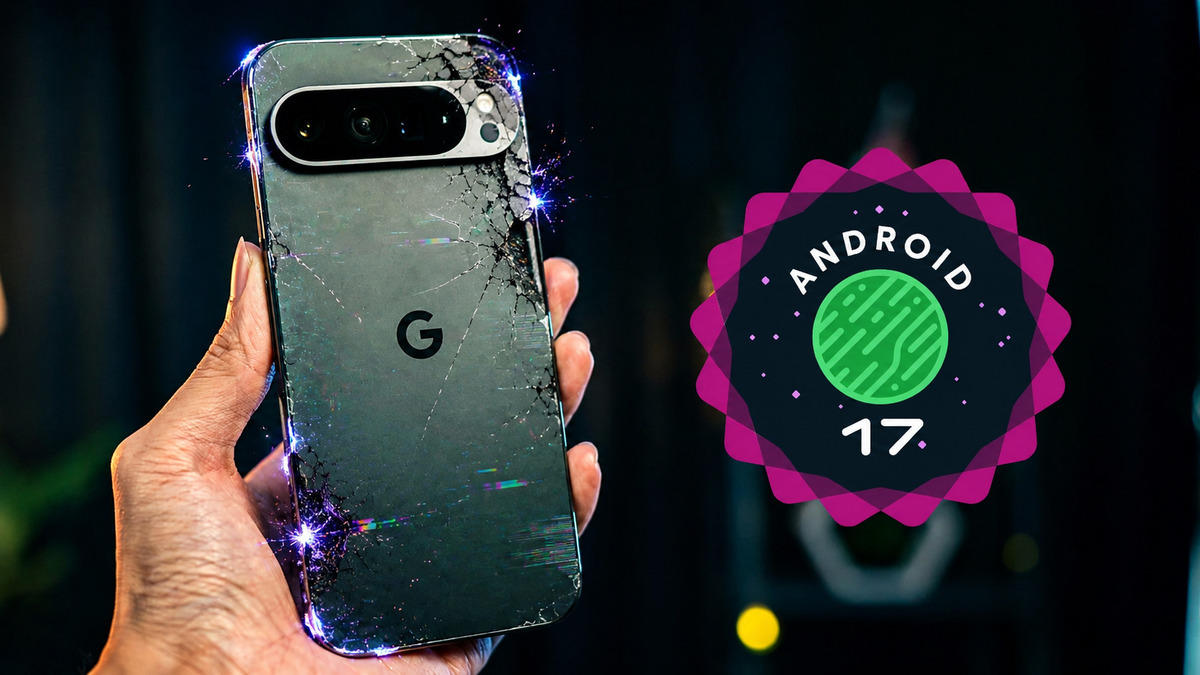
The deployment of Android 17 represents a significant architectural pivot for Google, yet recent telemetry indicates severe performance regressions across the ecosystem. Users across the Google Pixel spectrum—specifically those utilizing the latest Pixel 10 and Pixel 9 series—are reporting critical Android 17 issues involving touchscreen latency and connectivity failures. While version upgrades typically serve as a catalyst for efficiency, this release has introduced structural instabilities that disrupt the essential baseline of mobile productivity.
Analyzing Touchscreen Latency and Gesture Inversion
Google released the Android 17 update on June 16, promising calibrated performance and advanced AI features. However, a significant cohort of users quickly identified precision errors within the touch interface. Consequently, many report that screens temporarily cease responding to input. Furthermore, a phenomenon known as “gesture inversion” has surfaced, where the display scrolls in the opposite direction of the user’s swipe. This disruption affects the Pixel 10, 9, 8, and 7 series, though the Pixel 6 remains largely unaffected by these specific Android 17 issues.
Because these anomalies span multiple hardware generations, the evidence suggests a systemic software conflict rather than a hardware defect. Some users have attempted a tactical workaround by toggling the “Smooth Display” setting off and then on again. While this provides temporary relief for some, it does not represent a calibrated, long-term solution for the entire user base.
Connectivity Degradation: 5G and Wi-Fi Failures
Network reliability is a critical pillar of the modern digital infrastructure, yet Android 17 has compromised this baseline for many. Numerous reports highlight a total loss of 5G access, forcing devices to fall back to legacy LTE or disconnect entirely. Additionally, some users have experienced the sudden disappearance of eSIM profiles following a system reboot. These Android 17 issues effectively isolate the device from high-speed data networks.

Wi-Fi performance has similarly degraded under the new update. Devices frequently fail to reconnect to authenticated networks automatically. Even when a connection appears active, core Google services—including YouTube, Gmail, and the Play Store—often fail to load. Interestingly, these applications typically resume normal operation when the user switches to mobile data, suggesting a deep-seated protocol conflict within the Wi-Fi stack of Android 17.
Tactical Workarounds and Reporting Protocols
To restore system stability, community moderators recommend a calibrated reset of the device’s network configurations. Users can execute this by navigating to Settings > System > Reset options > Reset mobile network settings. This procedure flushes saved Wi-Fi and Bluetooth profiles without compromising personal data or applications. While this has restored 5G connectivity for several users, it remains a temporary fix until Google deploys a formal patch.
- Step 1: Access System Settings.
- Step 2: Select “Reset options.”
- Step 3: Execute “Reset mobile network settings.”
- Step 4: Re-authenticate Wi-Fi and Bluetooth devices.
The Situation Room: Analysis
The Translation (Clear Context)
The reported “gesture inversion” and “Wi-Fi authentication failures” are symptoms of a desynchronization between the operating system’s kernel and the hardware drivers. In simpler terms, Android 17 is sending instructions that the Pixel’s hardware components cannot currently interpret correctly. This architectural mismatch causes the software to “guess” input directions or fail to verify secure network handshakes.
The Socio-Economic Impact
For the Pakistani professional—particularly those in the gig economy and remote tech sectors—these Android 17 issues represent more than a mere inconvenience. In an economy increasingly dependent on mobile-first connectivity, a loss of 5G or Wi-Fi stability directly impacts the earning potential of freelancers and the academic consistency of students. Precision in mobile tools is no longer a luxury; it is a baseline requirement for national economic participation.
The Forward Path (Opinion)
This development represents a Stabilization Move failure. While Google aimed for progress, the lack of rigorous regression testing across the Pixel fleet has stalled momentum. For users currently on Android 16, we recommend a “Wait and See” approach. Do not upgrade until Google releases the July maintenance patch to resolve these structural bugs. System reliability must always take precedence over aesthetic or AI-driven updates.








