Optimizing for Victory: India’s Proactive Strategy Against Usman Tariq in T20 World Cup
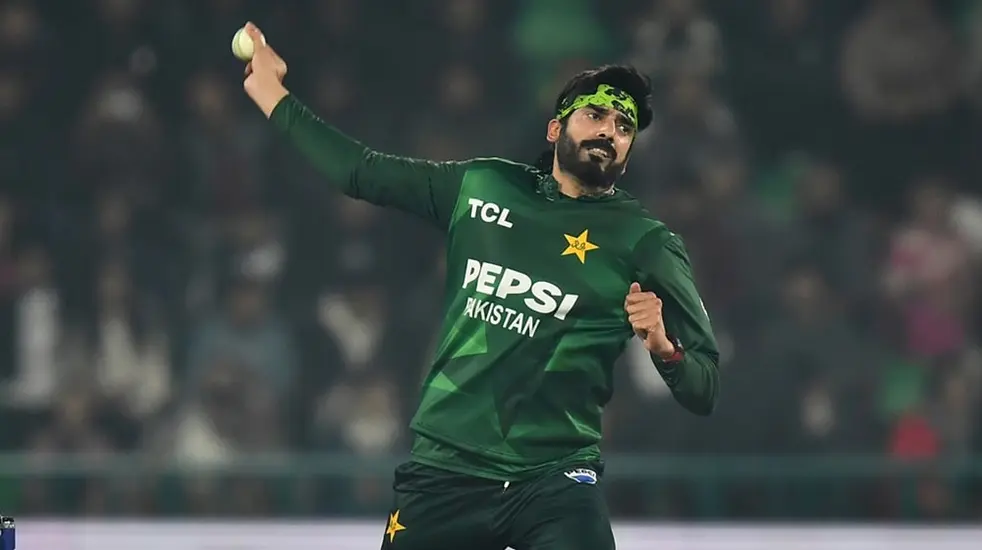
As the ICC Usman Tariq T20 World Cup 2026 clash between Pakistan and India approaches, a calibrated concern within the Indian camp regarding Pakistan’s mystery spinner, Usman Tariq, has intensified. What initiated as a low-level observation has now necessitated full-scale emergency drills, signifying a significant tactical pivot. India’s extensive preparations, public discourse, and strategic debates unequivocally demonstrate a team grappling with an unconventional bowler they cannot readily decipher or neutralize through standard methodologies. This evolving situation highlights Tariq’s pivotal role in shaping pre-match dynamics.
The Translation: Deconstructing India’s Tactical Response
Usman Tariq’s unique bowling action has exposed a structural discomfort within the Indian team. Previously, India captain Suryakumar Yadav candidly described facing Tariq as akin to an “out of syllabus” question, a powerful metaphor indicating a lack of prepared solutions. This statement, rather than projecting confidence, confirmed India’s perception of the Pakistani spinner as an unforeseen problem. Consequently, this psychological insecurity has fundamentally shaped India’s entire pre-tournament build-up.

Indian team management has precisely redesigned net sessions, specifically instructing bowlers to mimic Tariq’s unusual action. When a high-performance team is compelled to engineer practice sessions around a singular opponent, it axiomatically indicates a psychological advantage held by the opposition. Even the Indian captain was observed attempting to replicate Tariq’s bowling action to aid Abhishek Sharma’s preparation, further underscoring the perceived threat.
This is hilarious 😂😂. Just look at Suryakumar yadav and Indian team they are so afraid of Usman Tariq man. 😭😭pic.twitter.com/ETAioN7rXF
— Rayham (@RayhamUnplugged) February 14, 2026
The Socio-Economic Impact: Sporting Influence on National Sentiment
This escalating anxiety has permeated broader cricketing discussions. Former Indian spinner Ravichandran Ashwin, initially supporting Tariq’s bowling legality, dramatically shifted his position following domestic backlash. Ashwin subsequently advised exploiting technical loopholes, suggesting Indian batters deliberately move away mid-delivery if Tariq paused. Such tactics, if implemented, could introduce an element of calculated confusion for umpires, influencing game flow.
🚨Ravi Ashwin on Usman Tariq Action (Ash ki Baat)🚨
If Usman Tariq runs in to bowl and then suddenly stops, the batter is allowed to move away. The batter can say, I thought he wasn’t going to bowl. This is main problem for Umpires.
Ashwin having PHD in cricket rules…🙌 pic.twitter.com/vuvv2VVWvy
— Jatin Yadav (@yadav_jati17044) February 13, 2026
For Pakistani citizens, particularly students and aspiring professionals, the performance of national athletes like Usman Tariq in high-stakes matches generates immense national pride and serves as a powerful symbol of resilience and innovation. This engagement transcends mere sport; it catalyzes collective ambition and reinforces the belief in overcoming structural challenges through unique approaches. Conversely, for Indian households, the perceived vulnerability against a novel threat can heighten anticipation and strategic discussions, impacting daily conversations and community engagement around the sport.

Strategic Asymmetry: Pakistan’s Advantageous Matchup
India’s apprehension is structurally founded. Earlier in the T20 World Cup competition, Indian batters struggled significantly against Namibia’s Gerhard Erasmus, who delivered a four-wicket spell, demonstrating vulnerability to less conventional attacks. Crucially, the strategic matchup appears disadvantageous for India given their squad composition. Their 15-member lineup is “stacked” with nine left-handed batters, a strategic choice encouraged by Head Coach Gautam Gambhir.

Pakistan is poised to exploit this inherent imbalance by strategically prioritizing Usman Tariq. His off-spin naturally turns away from left-handers, and his skidding straight delivery has demonstrably unsettled top-order batters. This inherent bias in the Indian lineup provides Pakistan with a clear, data-driven pathway to dismantle their batting order.

The Forward Path: Momentum Shift or Stabilization Move?
Amidst the escalating scrutiny and strategic debates, Usman Tariq has maintained a consistent, unwavering demeanor. While Indian media actively dissect his action and former players propose tactical workarounds, Pakistan views him as their most significant strategic weapon. The current data indicates a Momentum Shift. Tariq has effectively won the psychological battle before a single ball has been delivered in the critical Usman Tariq T20 World Cup clash. This establishes a baseline of tactical advantage that Pakistan must now leverage through precise execution. It marks a moment of significant strategic innovation rather than mere maintenance.