

Economic stabilization requires the removal of lag-induced inefficiencies within our energy infrastructure. Consequently, the federal government has implemented daily fuel prices to enhance market precision and align domestic costs with global benchmarks. This structural transition replaces the legacy fortnightly system with a dynamic, data-driven framework that responds to international fluctuations in real-time. By decentralizing the approval process, the state aims to create a more resilient and transparent energy sector for all Pakistani citizens.
The Structural Logic of Daily Fuel Prices
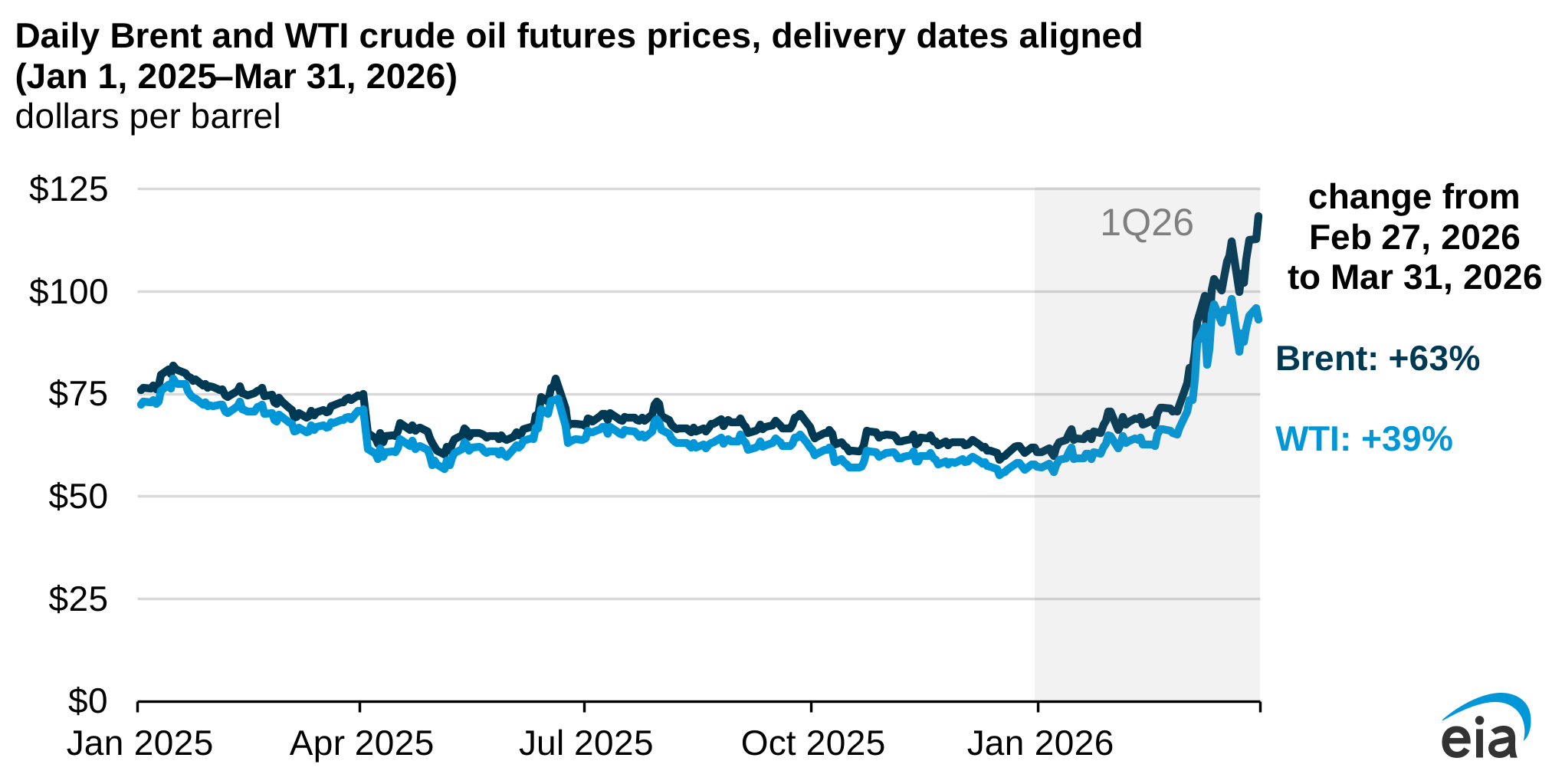
The Oil and Gas Regulatory Authority (OGRA) now manages the calibration of ex-depot prices for petrol and high-speed diesel on every working day. This mechanism links domestic rates to a seven-day rolling average of international benchmark prices. While prices remain static during weekends, the weekday updates ensure that the domestic market does not decouple from global energy trends. Furthermore, OGRA no longer requires preliminary government approval for these adjustments, representing a significant shift toward regulatory autonomy.
Import costs and applicable premiums serve as the baseline for these calculations. In instances where imports are absent, the system utilizes the annual average import premium to maintain consistency. Additionally, the Petroleum Development Levy (PDL) remains governed by the federal cabinet’s ceiling, ensuring that taxation levels do not exceed established strategic limits without high-level financial review.
The Translation: Decoding the New Policy
To understand this shift, one must view it as the “marketization” of energy. Previously, the government absorbed or delayed price changes for two-week blocks, often creating fiscal imbalances. Now, the daily fuel prices model acts as a direct conduit between the global oil barrel and the local pump. By removing the need for political sign-offs on every price move, the system reduces administrative friction and prevents the sudden, massive price hikes that often characterized the old bi-weekly announcements.
Socio-Economic Impact: What This Means for You
This policy change directly influences the daily lives of professionals, students, and logistics providers across Pakistan. For the average commuter, the era of “waiting for the 1st or 16th” to refuel is over. Instead, citizens must now adapt to incremental daily shifts. While this might introduce minor volatility, it ultimately prevents the market shocks that disrupt household budgeting. Furthermore, increased transparency—driven by OGRA’s daily publication of reference prices—empowers consumers to hold oil marketing companies (OMCs) accountable for fair pricing at the station.
- Precision Budgeting: Logistics companies can now calibrate their operational costs with higher accuracy.
- Market Transparency: Public access to daily international benchmarks reduces the information gap between the state and the citizen.
- Sector Stability: Restricting high-speed diesel imports to Pakistan State Oil (PSO) by 2027 aims to consolidate and secure national energy reserves.
The Forward Path: A Momentum Shift
The implementation of daily fuel prices represents a definitive Momentum Shift toward a liberalized economy. By synchronizing with international markets, Pakistan is moving away from reactive fiscal policies and toward a proactive, systemic approach. While the transition may require a period of adjustment for the public, the long-term benefit of a stabilized, market-linked energy sector is a vital catalyst for national progress. This move signifies a commitment to modernizing our economic architecture to meet global standards of efficiency.








