
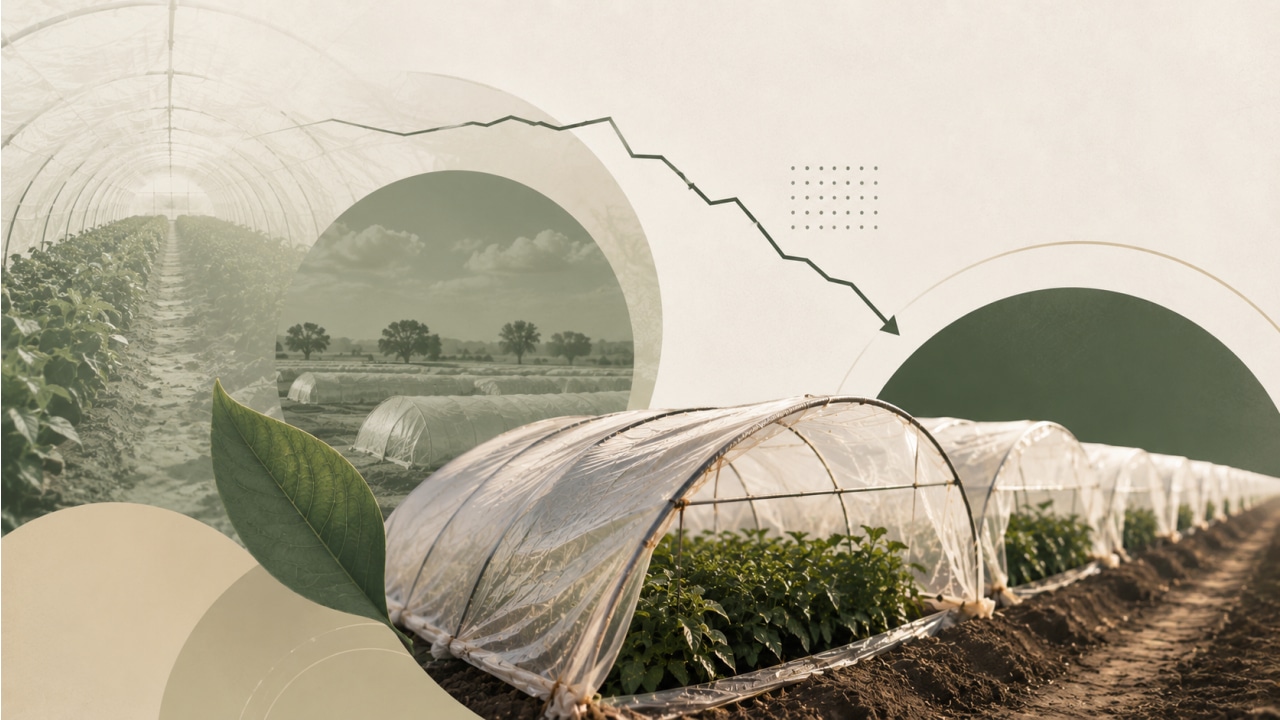
The structural evolution of the agriculture sector hinges on modernizing tunnel farming in Pakistan to ensure national food security. Drivers across the landscape often encounter rows of plastic-shielded fields—a calibrated ecosystem that drives 60% of the global vegetable market’s value. These controlled environments utilize heat-trapping principles to force off-season growth, effectively bypassing traditional seasonal limitations. However, despite a promising expansion to 200,000 acres by 2012, the momentum for this agricultural catalyst has recently plateaued due to systemic inefficiencies.
The Economic Tiers of Tunnel Farming in Pakistan
Modern agriculture in Pakistan operates through three distinct structural tiers, each requiring specific capital baselines. At the apex, high-efficiency poly-houses demand an investment of Rs. 9-10 million per acre. These systems produce high-value crops like premium peppers and strawberries, often yielding internal rates of return (IRR) exceeding 60%. Consequently, larger farms can recover their initial capital within two years by capturing the off-season price premium.
The mid-tier walk-in tunnels remain the most widely adopted commercial model. A galvanized iron structure typically costs Rs. 1.2-1.3 million per acre, while bamboo alternatives sit at approximately Rs. 0.6 million. These systems provide a strategic balance between cost and precision, allowing farmers to generate significant margins on cucumbers and brinjals. Conversely, low tunnels offer a basic entry point at Rs. 40,000 per acre, providing a baseline for strawberry and melon cultivation.
Structural Barriers to Scalability

Input Volatility vs. Price Enforcement
The primary inhibitor of tunnel farming in Pakistan is the drastic inflation of agricultural inputs. For instance, DAP fertilizer prices soared from Rs. 3,000 to Rs. 15,000 per bag, while diesel costs jumped 400%. While industrial suppliers raise prices without interference, farmers face aggressive price enforcement from local authorities. This economic distortion creates a scenario where the government subsidizes urban consumers at the direct expense of agricultural producers.
The Managerial Complexity Barrier
Precision farming is not a “sow and forget” system; it requires rigorous technical discipline. Tunnel farming demands constant monitoring of humidity, temperature, and fungal risks. Unfortunately, many growers lack access to trained labor and precision tools like hygrometers. Land fragmentation further complicates the adoption of modern systems at scale, as small-scale farmers struggle to manage the high “managerial headache” associated with sensitive crop environments.
The Situation Room Analysis
The Translation (Clear Context)
The logic behind the price volatility in vegetable markets is rooted in the perishable nature of the goods. Unlike wheat, vegetables cannot be stored for long periods to wait out market dips. When the government forcibly fixes prices below the cost of production, it destroys the incentive for farmers to invest in expensive tunnel technology. Specifically, if a farmer cannot sell at a premium that covers their 5x fertilizer costs, the system becomes unsustainable.
The Socio-Economic Impact
For the average Pakistani citizen, the stagnation of tunnel farming leads to higher food inflation and reduced nutritional diversity. If the sector fails to scale, the country must rely on expensive imports for off-season produce. For the rural professional, this gap represents a lost opportunity for high-skill employment and modern entrepreneurial ventures in the agricultural tech space.
The “Forward Path” (Opinion)
This development currently represents a Stabilization Move (Maintenance) rather than a breakthrough. While the technology is proven, the lack of credit support and the presence of market distortion prevent it from becoming a true momentum shift. To achieve progress, Pakistan must shift from political theatrics in vegetable markets to structural support for precision tools and transparent input pricing.








