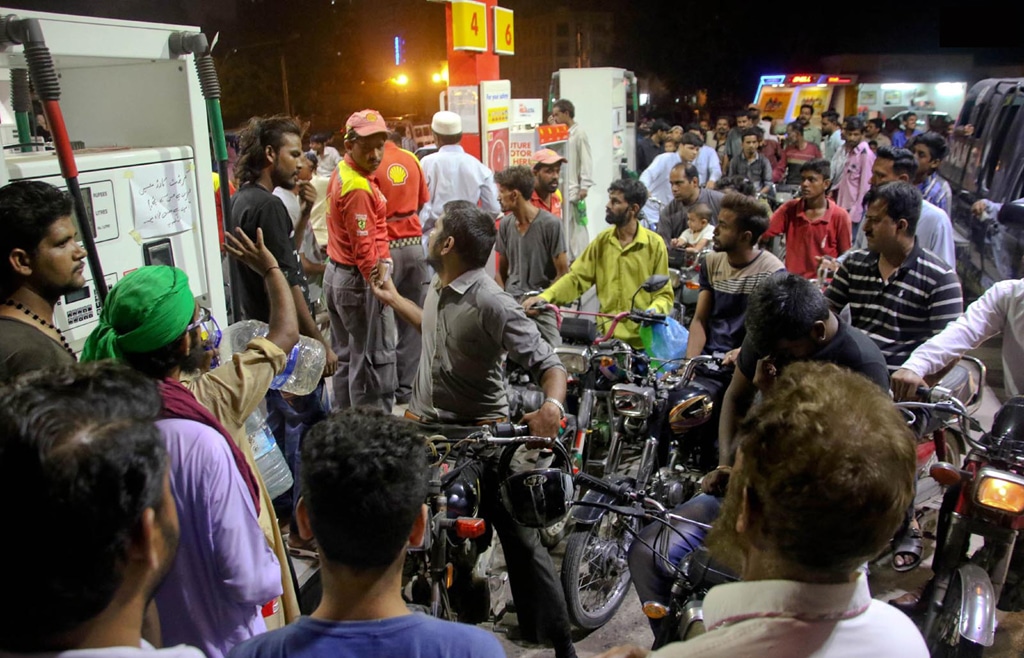
National economic efficiency requires structural transparency and precise calibration of energy costs. Consequently, the recent fuel price challenge filed in the Lahore High Court (LHC) serves as a critical audit of the government’s pricing logic. Judicial Activism Panel Chairman Azhar Siddique initiated the petition to contest the sudden escalation in petroleum rates and the shift toward an unmapped daily pricing mechanism.
Structural Objections to the Pricing Mechanism
The Ministry of Energy’s Petroleum Division issued notifications on July 10 and July 17, triggering a rapid sequence of price escalations. Initially, the government raised petrol to Rs. 310.71 and high-speed diesel to Rs. 323.30. Within just seven days, a second notification pushed petrol to Rs. 316.15 and diesel to a staggering Rs. 354.35 per litre. This fuel price challenge argues that such volatile shifts lack a disclosed legal framework or a statutory formula.

The Absence of Parliamentary Oversight
The petition contends that executive decisions regarding essential commodities must remain under parliamentary oversight to prevent arbitrary financial burdens. Specifically, the government allegedly increased the Petroleum Development Levy and the Climate Support Levy without providing a transparent breakdown of these components. Furthermore, the petitioner asks the LHC to suspend the July 17 notification, citing a violation of constitutional provisions meant to protect the economic rights of citizens.
The Situation Room Analysis
The Translation: Decoding the Pricing Shift
The government appears to be transitioning from a fortnightly pricing model to a “short-cycle” or daily adjustment system. While this may aim to align local rates with international market fluctuations in real-time, the lack of a publicized methodology creates a “black box” effect. This fuel price challenge demands that the state reveal the exact variables—including taxes, margins, and currency adjustments—used to calculate the final price at the pump.
The Socio-Economic Impact: Precision at the Pump
Fuel is the baseline catalyst for the entire Pakistani supply chain. Sudden price spikes do not merely affect luxury commuters; they fundamentally alter the cost of industrial production, agricultural logistics, and essential transportation. For the average household in Lahore or Karachi, these uncalibrated increases translate into higher food prices and reduced disposable income, placing an unsustainable weight on small businesses and low-income professionals.
The Forward Path: Momentum Shift or Stabilization?
We categorize this development as a Stabilization Move that currently lacks the necessary data transparency to be a “Progressive Shift.” While aligning with global market trends is technically sound, doing so without a clear statutory formula undermines public trust. For Pakistan to achieve a high-efficiency economy, the pricing of core energy assets must be predictable, transparent, and legally anchored. The LHC’s intervention could act as a catalyst for a more disciplined and open energy policy.