
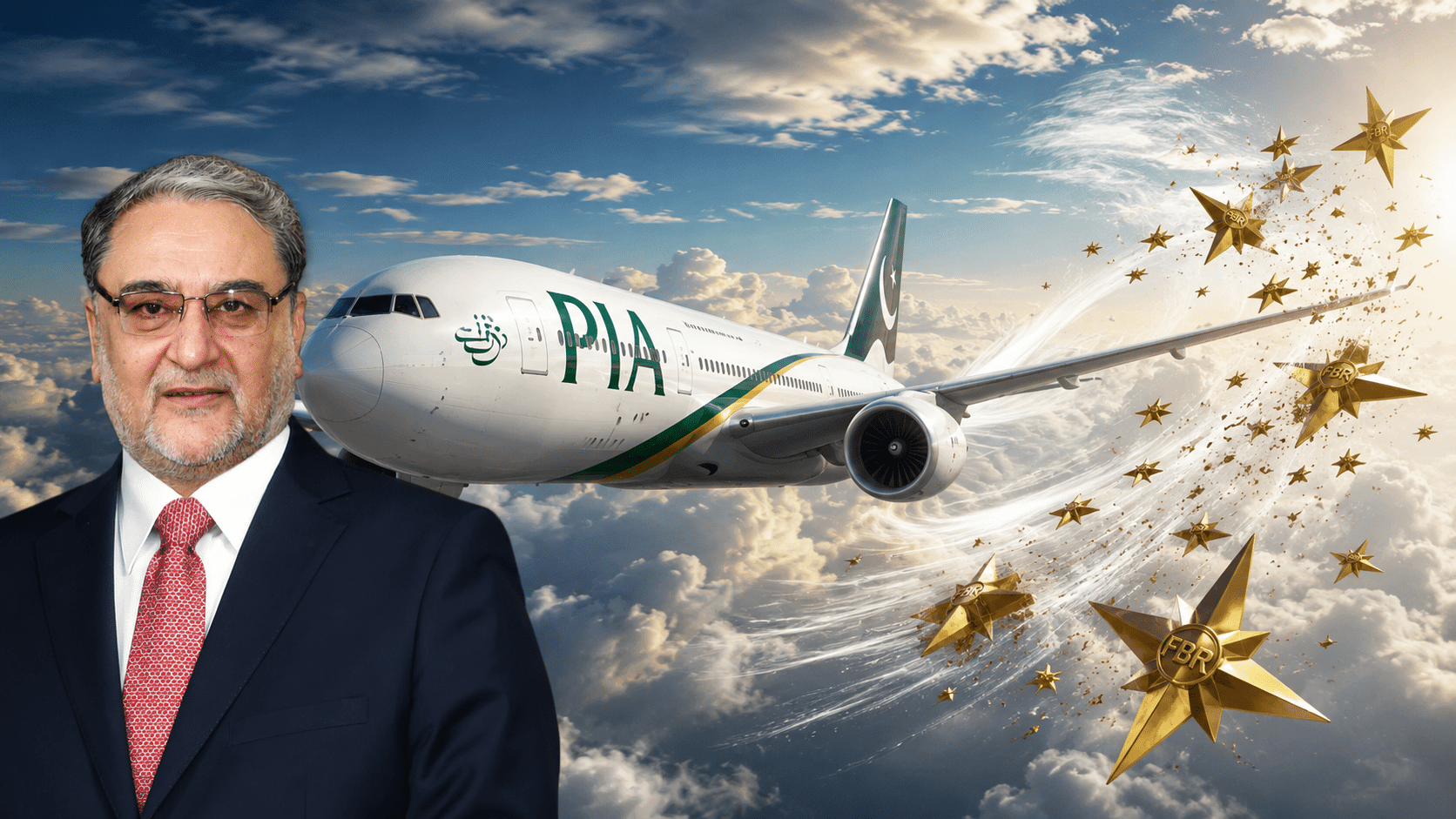
The Federal Board of Revenue (FBR) recently authorized a critical PIA tax waiver totaling Rs. 4.29 billion in default surcharges and penalties. This strategic fiscal intervention aims to recalibrate the national carrier’s balance sheet as it undergoes a high-stakes transition to private management. Consequently, the government is removing significant financial hurdles to ensure the PIA tax waiver facilitates a seamless divestment process.
Deciphering the FBR Regulatory Shift
The FBR issued SRO 1129(I)/2026 on Thursday, marking a pivotal moment in the airline’s financial restructuring. This announcement follows the appointment of Lt Gen (retd) Anwar Ali Hyder as the Chairman of Pakistan International Airlines Corporation Limited (PIACL). His leadership began shortly after the government transferred management control to the Arif Habib Corporation-led consortium.

The Structural Breakdown of Penalties
Specifically, the waiver covers two primary categories of tax liabilities. First, it exempts Rs. 263.82 million related to withholding tax for the period between April and December 2024. Second, the FBR waived a massive Rs. 4.03 billion in penalties concerning advance income tax for the 2024-2025 fiscal cycle. Collectively, these figures represent a total exemption of Rs. 4.293 billion in non-productive debt.

The Translation: Contextualizing the Waiver
In technical terms, “default surcharges” act as interest-based penalties for late payments. By removing these, the state is effectively cleaning the airline’s “credit score” to make it an attractive asset for the new consortium. However, this is not a total debt forgiveness. The FBR requires PIACL to settle its principal income tax liabilities within four years. This payment schedule includes a one-year grace period following the execution of the Share Purchase Agreement.
The Socio-Economic Impact
For the average Pakistani citizen, this move represents a calculated trade-off. While the treasury loses immediate penalty revenue, the move accelerates the privatization of a loss-making entity that has historically drained billions in taxpayer subsidies. If the divestment succeeds, it will foster a more competitive aviation market, potentially leading to better service standards and more efficient travel options for professionals and families across urban and rural Pakistan.
The Forward Path: Strategic Analysis
We categorize this development as a Momentum Shift. The waiver is a calibrated catalyst designed to fulfill conditions agreed upon with the successful bidder. Rather than a mere stabilization move, this represents an aggressive push toward finality in the PIACL divestment process. Precision in executing these tax exemptions is vital for maintaining investor confidence and ensuring the airline moves toward a self-sustaining operational baseline.








