Pakistan’s financial landscape is witnessing a calibrated surge as auto financing in Pakistan reached a historic peak of Rs. 382 billion in June 2026. This data represents a structural shift in consumer behavior and a robust recovery of the national automotive ecosystem. Consequently, the outstanding debt for vehicle purchases has climbed by 38 percent compared to the previous year, signaling a departure from the stagnation observed in 2024.
Breaking Down the Rs. 382 Billion Milestone
According to the latest precision data from Arif Habib Limited, the financing portfolio expanded by 3.4 percent within a single month. Specifically, the leap from Rs. 369 billion in May to the current baseline of Rs. 382 billion marks the highest level ever attained in the nation’s history. This growth serves as a catalyst for broader private sector activity, which now totals an impressive Rs. 11.16 trillion.
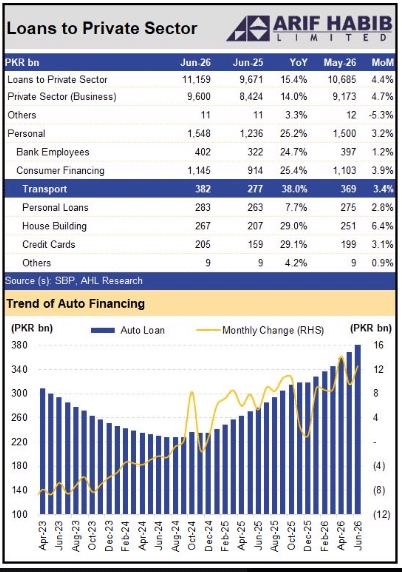
Furthermore, consumer financing is not limited to vehicles alone. Credit card balances surged by 29.1 percent to Rs. 205 billion, while house building finance rose by 29 percent. These metrics indicate that Pakistani households are increasingly utilizing formal credit channels to manage significant life transitions and assets.
The Translation: Contextualizing the Credit Surge
The “Next Gen” logic behind these numbers is clear: easing borrowing costs have unlocked suppressed demand. In 2024, aggressive monetary tightening pushed auto loans down to Rs. 225 billion. Today’s recovery stems from a strategic alignment of vehicle availability and improved manufacturing efficiency. With car and jeep production surging by 60 percent, the supply chain is finally meeting the precision requirements of a growing market.
The Socio-Economic Impact: Daily Life in Pakistan
This development directly influences the mobility and productivity of the Pakistani citizen. For urban professionals, increased access to auto financing in Pakistan means shorter commutes and enhanced safety through modern vehicle ownership. In rural and semi-urban areas, this credit flow supports small-scale logistics and family stability. Moreover, the 60 percent production hike translates to job security for thousands of workers within the local engineering and assembly sectors.
The Forward Path: Strategic Momentum Shift
This record-breaking data represents a clear Momentum Shift. We are no longer in a stabilization phase; the economy is entering an expansionary cycle driven by private sector credit. While the high debt levels require careful monitoring to prevent inflationary pressure, the current trajectory suggests a structural strengthening of the industrial base. Moving forward, maintaining this equilibrium will be vital for long-term national advancement.