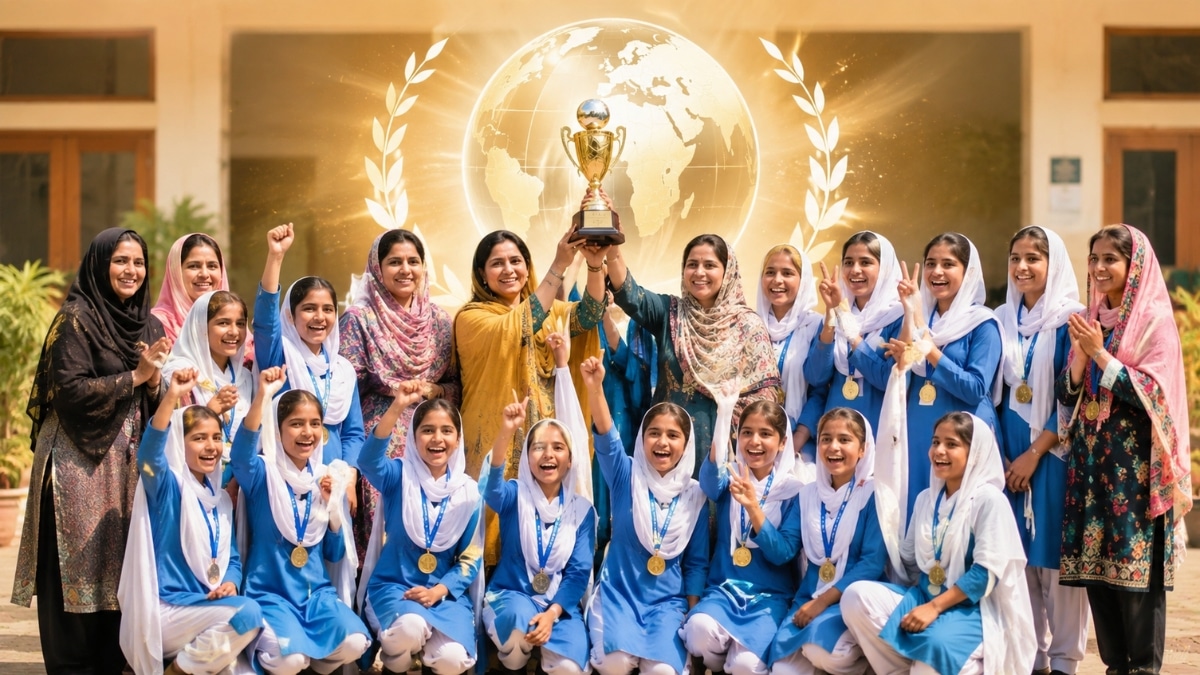
The global recognition of a Sindh government school marks a calibrated advancement in Pakistan’s public education sector. Specifically, the Government Girls Lower Secondary School Tando Mir Ghulam Hussain in Hyderabad has secured a position among the world’s Top 10 schools for the World’s Best School Prizes 2026. This selection validates the institution’s strategic commitment to community collaboration and educational excellence.
Global Standards for the Sindh Government School
T4 Education, an international body dedicated to highlighting outstanding educational practices, spearheaded the selection process. Consequently, this Sindh government school now stands alongside a prestigious group of institutions filtered from thousands of applicants globally. The World’s Best School Prizes evaluate performance across five core categories: Community Collaboration, Environmental Action, Innovation, Overcoming Adversity, and Supporting Healthy Lives.
An international panel of experts conducted a rigorous assessment of each application. Ultimately, the Hyderabad-based school emerged as a leader in the Community Collaboration category. This category specifically rewards schools that bridge the gap between the classroom and the local ecosystem to improve student outcomes.
The Mechanics of Community Collaboration
The school achieved this high-precision ranking by fostering deep engagement with students, parents, and local stakeholders. Furthermore, the administration introduced innovative STEAM (Science, Technology, Engineering, Arts, and Mathematics) projects to modernize the curriculum. These initiatives ensure that learning remains practical, engaging, and aligned with international technological benchmarks.
By organizing awareness campaigns and encouraging local participation, the school transformed its educational model into a community-led catalyst for change. This structural approach to learning ensures that students develop both academic proficiency and vital personal skills. As one of only two Pakistani schools on the 2026 shortlist, this achievement highlights the potential for public-sector innovation.
The Situation Room Analysis
The Translation (Clear Context)
In technical terms, this recognition signifies that the school has moved beyond “passive instruction” toward a “collaborative ecosystem” model. While traditional schools often operate in isolation, this Sindh government school utilized social capital to enhance its resources. By integrating parents and local leaders into the educational process, they created a self-sustaining support system that compensates for typical budgetary constraints in public infrastructure.
The Socio-Economic Impact
For the average Pakistani citizen, this development serves as a blueprint for localized reform. When a public school gains global standing, it increases the perceived value of government education, potentially driving higher enrollment rates in under-served areas. For students in Hyderabad, this means access to a curriculum that is now validated by global experts, creating a direct path toward more competitive higher education and career opportunities.
The Forward Path (Opinion)
This development represents a Momentum Shift. It proves that institutional excellence is not exclusive to high-fee private entities. The Sindh leadership’s support is a positive baseline, but the catalyst was the school’s internal leadership and community trust. To maintain this progress, the government must now focus on scaling this “Hyderabad Model” across the provincial network to ensure this isn’t an isolated success but a systemic upgrade.