
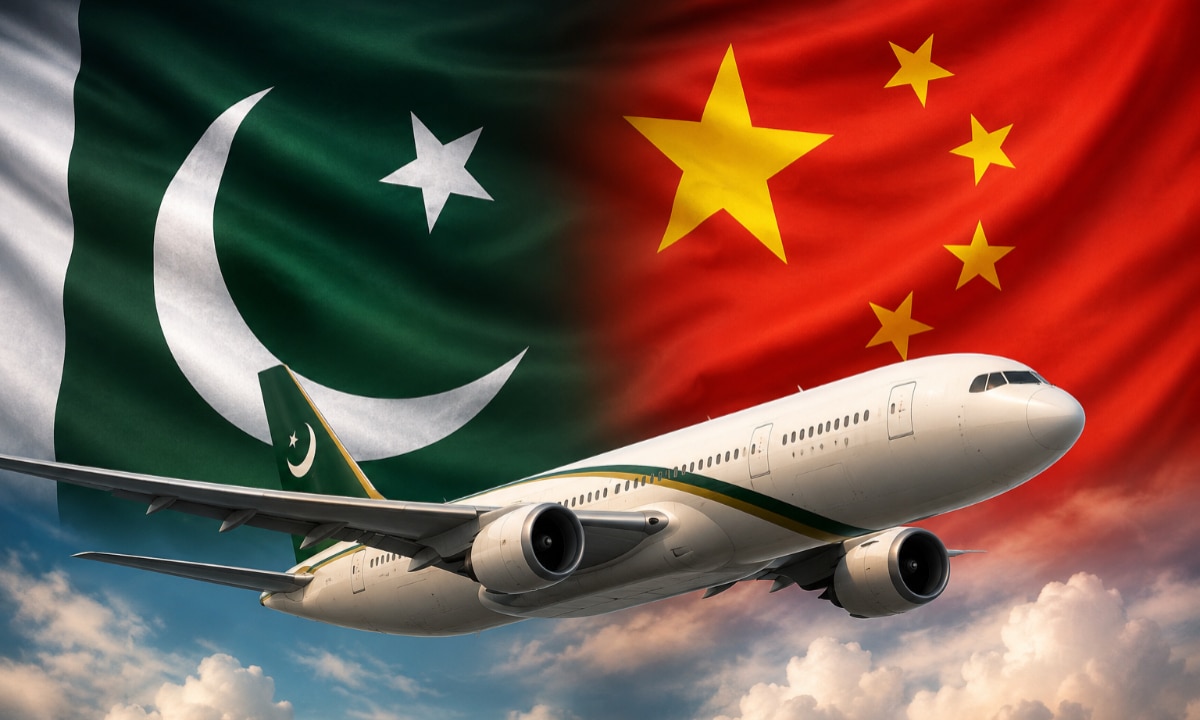
Pakistan International Airlines (PIA) recently calibrated its network to maximize China-Pakistan connectivity by integrating 25 major Chinese hubs into its primary flight operations. This strategic expansion leverages high-level partnerships with Air China and Shenzhen Airlines, allowing passengers to transition seamlessly to the direct Beijing-Islamabad route. Consequently, this initiative serves as a structural catalyst for regional mobility, benefiting thousands of students, professionals, and tourists.
Calibrating China-Pakistan Connectivity for Modern Trade
The new framework enables travelers to secure a single-ticket journey from diverse industrial and cultural centers. Through the collaboration with Air China, PIA now services 16 additional locations. These include high-growth cities such as Shanghai, Shenzhen, Guangzhou, Wuhan, and Xi’an. Furthermore, the partnership with Shenzhen Airlines extends this reach to nine more destinations, including Nantong, Nanning, and Wuxi. By simplifying the logistics of transit, PIA is effectively reducing the friction traditionally associated with cross-border travel.
- Seamless Integration: Single-ticket access from 25 cities via Beijing.
- Cost Efficiency: Competitive through-fares designed to reduce the economic burden on frequent travelers.
- Strategic Logistics: Synchronized flight schedules with Air China and Shenzhen Airlines.

The Translation (Clear Context)
In technical terms, PIA is implementing an “interline-style” synergy. Instead of requiring passengers to book separate tickets and re-check baggage between different airlines, this arrangement creates a unified travel corridor. This means that a student in Chengdu or a business owner in Quanzhou can check their luggage once and fly to Islamabad with a single boarding pass, despite using multiple carriers. It is a transition from fragmented travel to a precision-engineered network.
The Socio-Economic Impact
This development directly impacts the daily lives of the Pakistani diaspora and the local business community. For the thousands of Pakistani students enrolled in Chinese universities, the reduced fares represent a significant easing of financial constraints. Similarly, for the agricultural and textile sectors, easier access to Chinese markets facilitates rapid trade delegations. In urban centers like Islamabad, the influx of Chinese tourists and technical experts will likely stimulate the hospitality and service industries, reinforcing the local economy.

The Forward Path (Opinion)
This expansion represents a definitive Momentum Shift. While PIA has historically faced operational hurdles, this move toward “code-sharing” and strategic alliances signals a shift toward a more modern, asset-light business model. By leveraging the infrastructure of global partners like Air China, PIA can expand its footprint without the immediate need for a massive fleet expansion. This is a calibrated, strategic move that prioritizes system efficiency and national advancement over traditional, isolated growth.








